Painted-Leaf Begonia
The Painted-Leaf Begonia, better known to growers as the Rex Begonia, is a rhizomatous foliage plant prized for leaves that look hand-painted in silver, plum, rose and deep green.
Last reviewed: September 2026
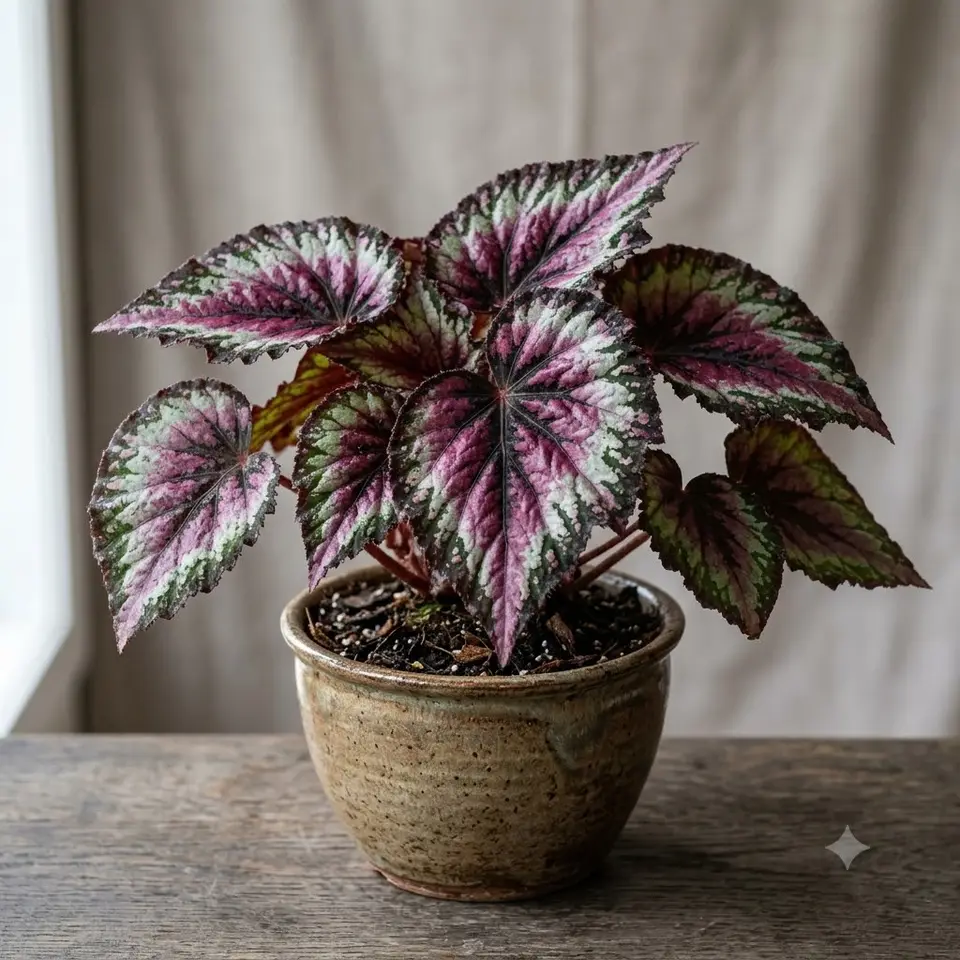 AI illustration
 Overview
The Painted-Leaf Begonia, better known to growers as the Rex Begonia, is a rhizomatous foliage plant prized for leaves that look hand-painted in silver, plum, rose and deep green. Collectors chase the endless cultivar variations, the metallic sheen and the dramatic asymmetric shapes, even though the plant has a reputation for being a little temperamental indoors. It is grown almost entirely for its leaves, since the flowers are small and forgettable (Begonia rex-cultorum).
Origin & Natural Habitat
The parent species, Begonia rex, comes from the humid subtropical forests of the eastern Himalayas, especially Arunachal Pradesh in northeastern India, extending into southern China and northern Vietnam. In the wild it is a shaded understory plant, creeping across damp, leaf-littered ground in warm, consistently humid air.
Appearance
The leaves are large, asymmetric and roughly ear-shaped, often with a distinctive spiral or "snail" curl where the leaf meets the stalk. They can reach 15 to 23 cm long and carry bold zones of silver, pink, purple, burgundy and green, frequently with a metallic or pearly overlay and a puckered, textured surface. Growth is low and spreading from a shallow surface rhizome, with most plants topping out around 30 to 45 cm tall and about as wide.
Why People Grow It - Qualities & Benefits
- Some of the most spectacular foliage colour and pattern of any houseplant, with no flowers needed
- Enormous cultivar diversity, so collectors can keep hunting new leaf forms and colourways
- Stays compact and shelf-friendly rather than climbing or sprawling far
- Thrives in the moderate, indirect light found in many interior rooms
Care
Light: Bright, indirect light. Direct sun scorches the leaves and can wash out the colours, while deep shade makes growth leggy and dull.
Water: Keep the soil evenly moist but never soggy, letting the top 2-3 cm dry before watering again. Water at the base and keep the foliage dry, since wet leaves invite mildew and rot.
Soil: A light, airy, fast-draining mix based on peat or coir with plenty of perlite. A shallow, wide pot suits the surface rhizome better than a deep one.
Temperature & Humidity: Warmth of 16 to 24°C is ideal, and it dislikes anything below about 13°C. This plant genuinely wants high humidity, ideally 50 to 60% or more, and honestly it can sulk or crisp at the edges in dry indoor air, so a pebble tray, grouping or a humid room helps a lot.
Feeding: Feed with a balanced liquid fertiliser at half strength roughly once a month during active spring and summer growth, and stop feeding in winter.
Extra: Be ready for winter rest - Rex Begonias often slow dramatically or partly die back in low light and cool temperatures, so cut back on water and be patient rather than assuming the plant is dead, since the rhizome usually pushes fresh leaves in spring. Toxic to cats and dogs (soluble oxalates; the underground rhizomes and tubers are the most toxic parts) - keep out of reach of pets and children.
Propagation
Propagate from leaf cuttings, which is part of the fun with this genus. Pin a whole healthy leaf flat onto moist mix and nick the main veins, or cut the leaf into wedges each containing a vein, and keep them warm and humid until plantlets form. Dividing the rhizome is also reliable for mature plants.
Common Problems & Pests
- Powdery mildew and grey mould (botrytis) on the foliage, encouraged by wet leaves and stagnant, overly damp air
- Rhizome and root rot from overwatering or heavy, poorly draining soil
- Mealybugs, thrips and occasional spider mites, especially on stressed plants in dry air
Toxicity & Safety
Begonias, including the Painted-Leaf Begonia, are toxic to cats and dogs. They contain soluble oxalates, with the highest concentration in the tubers and underground rhizomes. If a pet chews the plant, typical signs include oral irritation, intense drooling and vomiting, and in larger ingestions kidney effects are possible. The sap can also irritate sensitive skin, so it is worth washing your hands after taking cuttings or repotting.
Pros & Cons
Pros
- Show-stopping, ever-varied foliage with no reliance on flowers
- Compact and well-suited to bright indoor spots and plant shelves
Cons
- Fussy about humidity and prone to mildew if the leaves stay wet
- Can go dormant or die back in winter, which unsettles newer growers
Best Suited For
- Collectors who enjoy foliage variety and can provide steady warmth and humidity
- Growers with a bright, indirect spot who do not mind a plant that rests in winter
FAQ
Why are the edges of my Rex Begonia turning brown and crispy?
This is almost always low humidity, and sometimes underwatering or cold draughts. Raise the ambient moisture with a pebble tray or humid room, keep watering consistent and move it away from heat sources and cold windows.
Is my Rex Begonia dead if it drops its leaves in winter?
Usually not. Many Rex Begonias go semi-dormant in cool, low-light winters and shed foliage. Keep the rhizome barely moist, hold off on feeding, and wait for fresh growth as light returns in spring.
Gear for growing painted-leaf begonia
Links go to Amazon or a partner store (such as Adagio Teas) and may earn us a commission at no extra cost to you. As an Amazon Associate we earn from qualifying purchases. We link gear types, not sponsors' picks: you choose the exact product.