Panda Plant
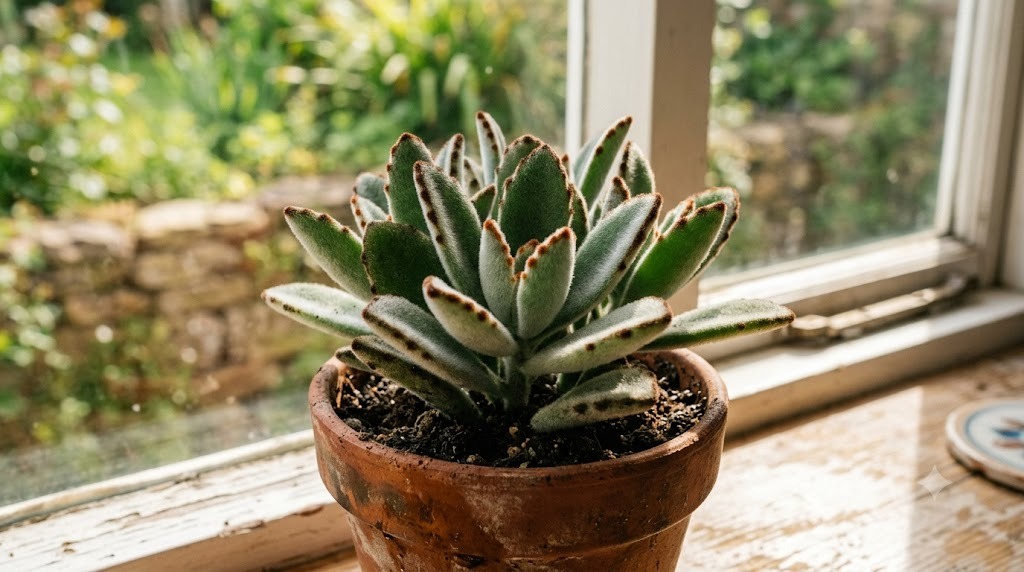
The panda plant is a charming, fuzzy succulent whose plump grey-green leaves are coated in soft, velvety silver hairs and edged with chocolate-brown 'panda' spots.
Last reviewed: July 2026
Overview
The panda plant is a charming, fuzzy succulent whose plump grey-green leaves are coated in soft, velvety silver hairs and edged with chocolate-brown 'panda' spots. Slow, easy and irresistibly touchable, it is a popular novelty succulent for a bright windowsill - though it is toxic to pets.
Origin & Natural Habitat
Kalanchoe tomentosa is native to Madagascar, growing on rocky ground. It is grown worldwide as an easy, distinctive fuzzy-leaved houseplant.
Appearance
Upright stems set with thick, oval, fleshy leaves covered in dense, soft silvery hairs, each leaf tipped and edged with rows of rust-brown to chocolate spots - the 'panda' markings. It grows slowly into a small, branching shrublet.
Why People Love It - Qualities & Benefits
People love the soft, velvety, tactile leaves and the cute brown-edged markings. It is easy, slow and compact, and its fuzzy texture makes it a favourite novelty and gift succulent.
Care
Light
Bright light with a little direct sun keeps it compact and enhances the leaf colour and markings - a sunny windowsill is ideal. In low light it stretches and the fuzz and markings fade.
Watering
Water when the soil is fully dry, then soak and drain. Water into the soil, not over the fuzzy leaves, which can trap water and mark or rot. Keep drier in winter. It tolerates drought far better than wet feet.
Soil & Potting
A gritty, free-draining succulent mix in a pot with drainage. Good drainage prevents the rot that overwatering causes.
Humidity & Temperature
Warm, dry air suits it; it dislikes humidity, which can spoil the hairy leaves. Ordinary dry room air is ideal; keep it above about 10°C.
Feeding
A dilute succulent feed once or twice in the growing season is plenty. It is slow-growing and needs little feeding.
Repotting
Repot every couple of years in spring as it grows. Handle the fuzzy leaves gently, as marks and bruises show. It stays small, so it is happy in a modest pot for a long time.
Propagation
Easy from leaf or stem cuttings: remove a healthy leaf or short stem, let it callus for a few days, and set it on gritty soil to root. Water only lightly until established.
Common Problems & Pests
Overwatering rot is the main danger, made worse if water sits on the hairy leaves. Mealybugs can hide in the fuzz. Stretching and fading markings mean too little light.
Toxicity & Safety
The panda plant is a kalanchoe, and kalanchoes are toxic to cats and dogs if eaten - they can cause vomiting and, less commonly, heart problems. Keep it well out of reach of pets and children, and if a pet chews it, contact a vet. This is a plant to enjoy at a safe height.
Pros & Cons
Pros: irresistibly fuzzy and tactile, easy, slow and compact, easy to propagate. Cons: toxic to cats and dogs, hairy leaves dislike water and humidity, needs good light to keep its markings.
Best Suited For
A lovely, easy novelty succulent for a bright windowsill - best in a pet-free home, or kept well out of any animal's reach.
FAQ
Is the panda plant safe for cats? No - as a kalanchoe it is toxic to cats and dogs; keep it out of reach.
Why is mine getting tall and losing its spots? Too little light - move it brighter and new growth stays compact and well-marked.
Gear for growing panda plant
Links go to Amazon or a partner store (such as Adagio Teas) and may earn us a commission at no extra cost to you. As an Amazon Associate we earn from qualifying purchases. We link gear types, not sponsors' picks: you choose the exact product.