Iron Cross Begonia
The Iron Cross Begonia is a rhizomatous begonia grown purely for its dramatic foliage: heavily puckered, apple-green leaves stamped with a bold, chocolate-brown marking that resembles a Maltese or German iron cross.
Last reviewed: September 2026
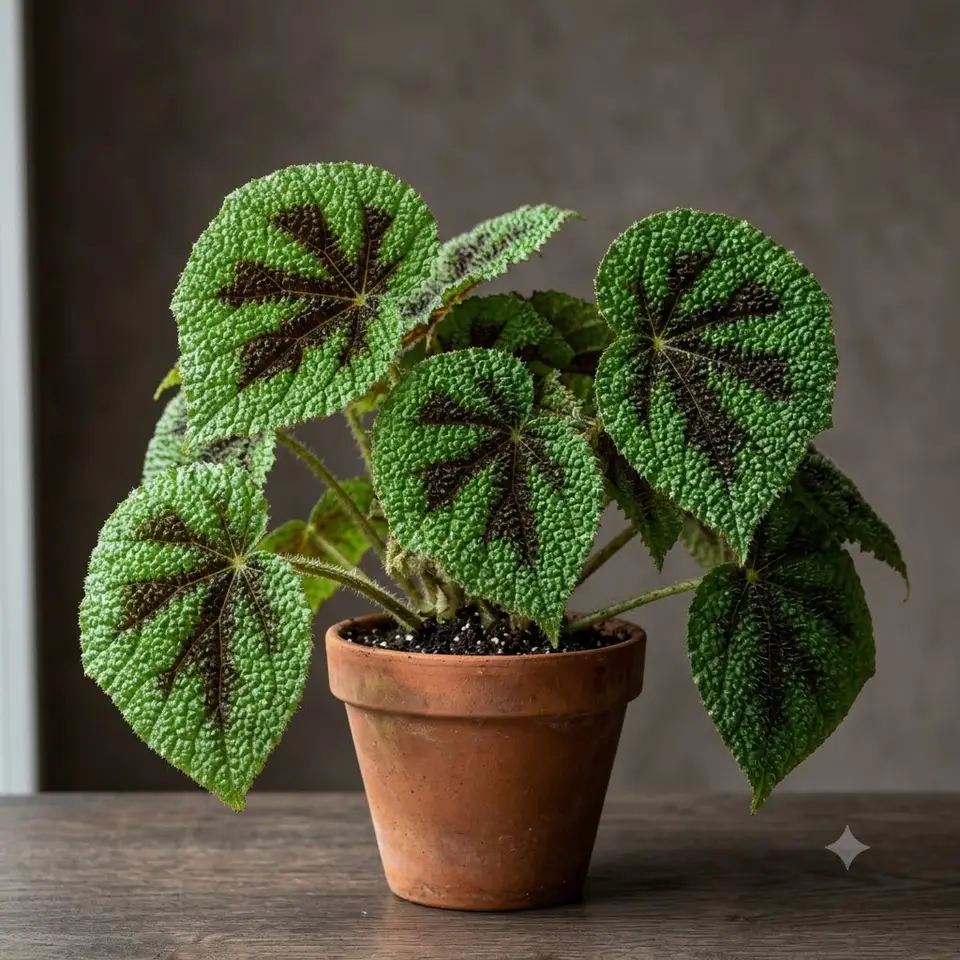 AI illustration
 Overview
The Iron Cross Begonia is a rhizomatous begonia grown purely for its dramatic foliage: heavily puckered, apple-green leaves stamped with a bold, chocolate-brown marking that resembles a Maltese or German iron cross. Collectors prize it for that unmistakable pattern and its low, spreading habit, though it asks for more humidity and attention than an average houseplant. It is known botanically as (Begonia masoniana).
Origin & Natural Habitat
It is native to southern China (notably Guangxi province) and northern Vietnam, where it grows on the shaded, humid floor of subtropical forests. In the wild it creeps across leaf litter and rock in dappled light with consistently warm, moist air.
Appearance
The leaves are large, roughly heart-shaped and asymmetrical, reaching about 15 to 20 cm long, with a deeply textured, bubbled surface and fine reddish hairs along the margins. Each bright green blade carries a central cross-shaped band of deep bronze to purple-brown, the plant's signature feature. It grows from a creeping surface rhizome rather than a stem, staying low and mounding to around 30 to 45 cm tall and wide at maturity.
Why People Grow It - Qualities & Benefits
- The striking iron-cross leaf pattern is unlike anything else in a foliage collection
- Compact, spreading habit suits terrariums, shelves and shallow pots
- Foliage interest is year-round; it never needs to bloom to look good
- A rewarding step-up plant for growers ready to move beyond beginner begonias
Care
Light: Bright, indirect light. Direct sun scorches and bleaches the leaves, while deep shade flattens the color and stretches the growth. An east window or a metre or so back from a brighter one is ideal.
Water: Keep the mix lightly, evenly moist but never soggy. Water when the top 2-3 cm feel dry, and avoid wetting the fuzzy leaves, which hold moisture and rot easily. Ease off in winter as growth slows.
Soil: A light, airy, fast-draining mix. Peat or coco coir blended with perlite and a little orchid bark or leaf mold works well, giving the shallow rhizome roots both moisture and air.
Temperature & Humidity: Warmth-loving: 18 to 27°C, and it dislikes anything below about 13°C. Humidity is the real challenge - it wants 50% or higher, and crisp browning edges are common in dry indoor air. A pebble tray, grouping with other plants, a terrarium or a humidifier all help.
Feeding: Feed lightly with a balanced, diluted liquid fertilizer every 3 to 4 weeks during spring and summer. Skip feeding in the darker, cooler months.
Extra: This is a rhizomatous begonia, not a tuberous one, so it does not die back to nothing, but it slows noticeably in winter and can drop a leaf or two - resist the urge to overwater during that rest. Its biggest quirk is a genuine hatred of dry air and wet, cold feet. Toxic to cats and dogs (soluble calcium oxalates, most concentrated in the rhizome and roots) - keep out of reach of pets and children.
Propagation
Propagate by rhizome division or by leaf cuttings. Divide a healthy rhizome into sections, each with roots, and pot them up. For leaf propagation, pin a leaf onto moist mix or cut it into wedges with a main vein and keep it warm and humid until plantlets form; patience is required, as rooting is slow.
Common Problems & Pests
- Powdery mildew and botrytis thrive on the fuzzy leaves in stagnant, humid air; keep airflow moving and leaves dry
- Root and rhizome rot from overwatering or heavy, wet soil is a frequent killer
- Spider mites, mealybugs and thrips can appear, especially when air is dry or the plant is stressed
- Crispy brown leaf edges are the classic sign of humidity that is too low
Toxicity & Safety
Like all begonias, the Iron Cross Begonia is toxic to cats and dogs. It contains soluble calcium oxalates, which are most concentrated in the underground rhizome and roots. If chewed, it can cause oral irritation, intense drooling, vomiting and difficulty swallowing, and in pets that eat larger amounts of the underground parts the effects can be more serious. The sap may also irritate sensitive skin, so wash your hands after handling or dividing it, and keep it away from curious pets and children.
Pros & Cons
Pros
- One of the most visually distinctive foliage begonias you can grow
- Stays compact and thrives in terrariums and cases
Cons
- Fussy about humidity and quick to brown in dry rooms
- Prone to mildew and rot if watering and airflow are not managed
Best Suited For
- Foliage collectors who can offer steady warmth and higher humidity
- Terrarium and cabinet growers wanting a bold, patterned centerpiece
FAQ
Does the Iron Cross Begonia go dormant?
Not fully. As a rhizomatous begonia it keeps its leaves rather than dying back like a tuberous type, but growth slows sharply in winter. Cut back on water and feeding during that rest and it will pick up again in spring.
Why are the leaf edges turning brown and crispy?
This almost always points to humidity that is too low, sometimes combined with underwatering or cold drafts. Raise the ambient humidity with a tray, humidifier or enclosure, and keep the plant away from heating vents.
Sources
Pet toxicity: checked against the ASPCA Animal Poison Control Center lists of toxic and non-toxic plants for cats and dogs, entry "Iron Cross Begonia" (Begonia masoniana): toxic to cats and dogs. Lists read on 10 October 2026.
Gear for growing iron cross begonia
Links go to Amazon or a partner store (such as Adagio Teas) and may earn us a commission at no extra cost to you. As an Amazon Associate we earn from qualifying purchases. We link gear types, not sponsors' picks: you choose the exact product.