Kangaroo Paw Fern
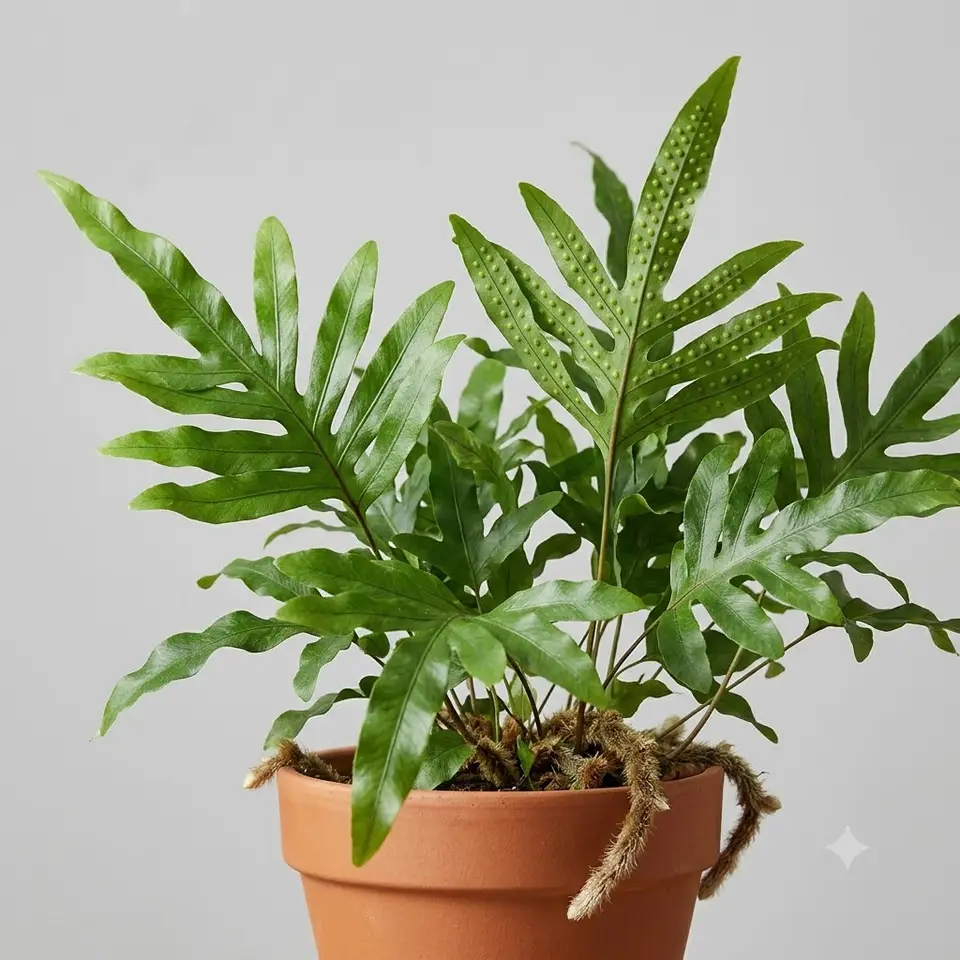
The kangaroo paw fern has fronds shaped like a kangaroo's foot - broad, irregularly-lobed, glossy leaves on a creeping furry rhizome that clambers over the pot rim.
Last reviewed: September 2026
 AI illustration
 Overview
The kangaroo paw fern has fronds shaped like a kangaroo's foot - broad, irregularly-lobed, glossy leaves on a creeping furry rhizome that clambers over the pot rim. A tough, un-ferny fern that tolerates ordinary rooms with ease. (Microsorum diversifolium.)
Origin & Natural Habitat
Australia and New Zealand, growing as a hardy epiphyte and ground-creeper - hence its toughness and drier-air tolerance.
Appearance
Glossy, leathery, irregularly-lobed 'paw-shaped' fronds on a fuzzy creeping rhizome that spreads over the soil and pot edge; a spreading, textural habit.
Why People Grow It - Qualities & Benefits
- Tough and dry-air tolerant
- Distinctive paw-shaped glossy fronds
- Creeping rhizome adds character
- Pet-safe (non-toxic true fern)
Care
Light: Bright indirect to medium light; no harsh direct sun.
Water: Keep lightly, evenly moist; tolerates some drying between waterings better than delicate ferns.
Soil: Airy, well-draining epiphyte-leaning mix; don't bury the creeping rhizome.
Temperature & Humidity: 12-24°C; copes with average home humidity - one of its virtues.
Feeding: Half-strength balanced feed monthly in spring-summer.
Extra: Let the furry rhizome creep over the rim - it's part of the look and shouldn't be buried. A great fern for people who find others too fussy.
Propagation
Divide the creeping rhizome, keeping fronds and roots on each piece.
Common Problems & Pests
Crisping = too dry/harsh light; rot = buried rhizome or soggy soil. Genuinely hardy.
Toxicity & Safety
Non-toxic to cats and dogs.
Best Suited For
- Beginners and forgiving-fern seekers
- Pet households (this fern is non-toxic)
- Shade and bright-indirect spots
- Terrariums and humid rooms
FAQ
Why is it called kangaroo paw?
The broad, irregularly-lobed fronds resemble a kangaroo's foot - nothing to do with the unrelated kangaroo paw flower.
Is it hardy indoors?
Yes - it's among the tougher, more dry-air-tolerant ferns, happy in ordinary rooms with bright-to-medium light.
Gear for growing kangaroo paw fern
Links go to Amazon or a partner store (such as Adagio Teas) and may earn us a commission at no extra cost to you. As an Amazon Associate we earn from qualifying purchases. We link gear types, not sponsors' picks: you choose the exact product.