Ladyfinger Cactus
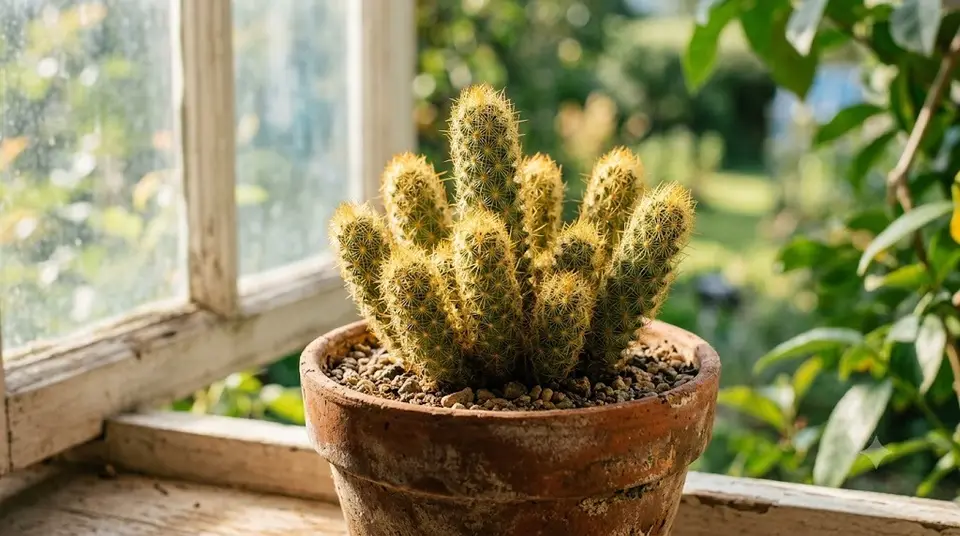
The ladyfinger cactus is a neat, easy mammillaria that forms clusters of slender, upright golden columns like a bundle of little fingers.
Last reviewed: July 2026
 AI illustration
 Overview
The ladyfinger cactus is a neat, easy mammillaria that forms clusters of slender, upright golden columns like a bundle of little fingers. Fast for a cactus, forgiving, and dotted with rings of small cream flowers in spring, it is a classic windowsill species for beginners and collectors alike.
Origin & Natural Habitat
Mammillaria elongata comes from the rocky highlands of central Mexico, growing in crevices and on ledges. It is one of the most widespread and easiest mammillarias in cultivation.
Appearance
Clusters of finger-thick, elongated stems densely covered in star-shaped clusters of golden-yellow to brown spines, giving a warm bronze glow. Small cream to pale yellow flowers appear in rings near the stem tips in spring.
Why People Love It - Qualities & Benefits
People love the tidy golden fingers, the speed with which it clusters into a full pot, and its easy, forgiving nature. It is inexpensive, widely available and hard to get wrong.
Care
Light
Bright light with several hours of direct sun keeps the fingers upright, compact and well-coloured - a sunny windowsill is ideal. Poor light gives pale, leaning, stretched growth.
Watering
Soak, then let the soil dry out completely before watering again, roughly fortnightly in summer and rarely in winter. Keep nearly dry through a cool winter rest for spring flowers.
Soil & Potting
A gritty, free-draining cactus mix in a pot with drainage. It is not fussy as long as the roots never sit wet.
Humidity & Temperature
Warm, dry air suits it; it dislikes humidity. Ordinary dry room air is fine; give a cool, dry, frost-free winter rest.
Feeding
A dilute cactus feed once or twice in the growing season is plenty.
Repotting
Repot every couple of years in spring when the cluster fills the pot, handling with folded card. Offsets can be split off at the same time.
Propagation
Easy from offsets: detach a finger, let it callus for a day or two, and set it on gritty soil to root. It also grows readily from seed.
Common Problems & Pests
Overwatering rot is the main risk. Mealybugs can hide between the crowded stems; red spider mite can bronze the tips. Stretched, pale growth means too little light.
Toxicity & Safety
The ladyfinger cactus is not toxic to people or pets, but its spines can prick, so keep it out of reach of children and animals.
Pros & Cons
Pros: neat golden clusters, fast and forgiving, easy to propagate, cheap and widely available. Cons: spiny, needs strong light to stay compact, rots if overwatered.
Best Suited For
A great first mammillaria for a sunny windowsill and a staple of any small cactus collection.
FAQ
How fast does it grow? Quick by cactus standards - a single finger becomes a clustered pot within a few seasons.
Why is mine leaning and pale? Too little light - move it to your sunniest window.
Gear for growing ladyfinger cactus
Links go to Amazon or a partner store (such as Adagio Teas) and may earn us a commission at no extra cost to you. As an Amazon Associate we earn from qualifying purchases. We link gear types, not sponsors' picks: you choose the exact product.