Hornwort
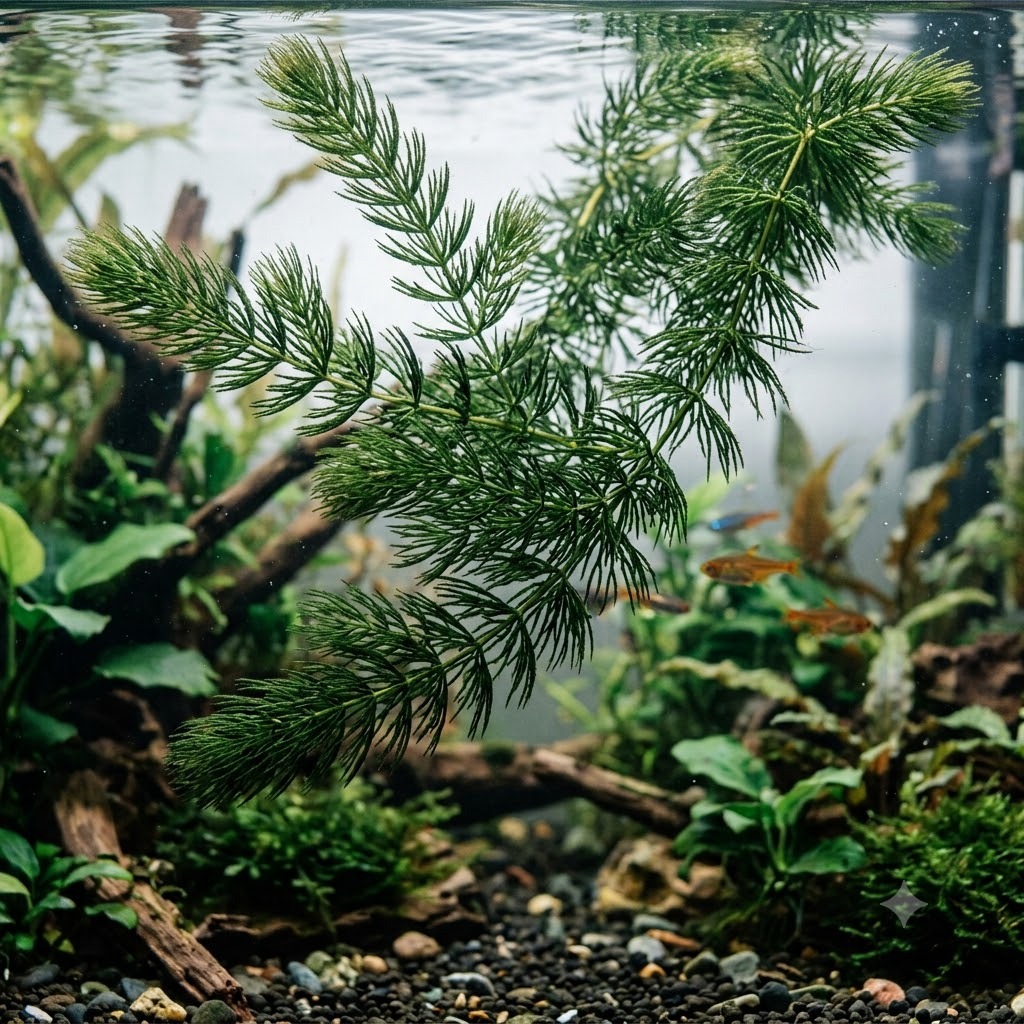
Hornwort is one of the fastest, toughest plants in the hobby - a rootless stem plant with whorls of stiff green needles that can drift as a loose tangle or be anchored in bunches.
🗓️ Last reviewed: July 2026
Overview
Hornwort is one of the fastest, toughest plants in the hobby - a rootless stem plant with whorls of stiff green needles that can drift as a loose tangle or be anchored in bunches. It soaks up nitrates, shelters fry, and shrugs off cold water, which makes it a staple for ponds, goldfish tanks and new setups. The trade-offs are constant trimming and a habit of shedding needles everywhere when conditions change. (Ceratophyllum demersum.)
Origin & Natural Habitat
Nearly cosmopolitan - still and slow-moving waters on every continent except Antarctica, including North America. Where it has been introduced outside its range (New Zealand is the best-known case) it is a serious waterway weed, so never release aquarium or pond plants into natural waterways.
Appearance
Long, brittle stems densely packed with whorls of forked, needle-like leaves; mid to dark green. There are no true roots - floated, it forms a drifting thicket; planted, the buried stem ends simply hold it in place while it grows upward.
Why People Grow It - Qualities & Benefits
- Very fast nutrient uptake - useful against algae in new or heavily stocked tanks
- Cold-tolerant, happy in unheated tanks and ponds
- Dense cover for fry and shrimp
- Needs no substrate - can simply float
Care
Light: Undemanding, but growth and density track the light. In low light it gets sparse and leggy; in strong light it can grow several centimetres a day.
Water: Roughly 10-28°C, pH 6.0-8.0, soft to hard. One of the most forgiving plants in the hobby, though sudden changes trigger needle drop.
Substrate: None needed. Float it, or push the cut stem ends gently into gravel - they have no roots, so they anchor loosely at best.
CO₂ & feeding: Not required. It feeds from the water column, so liquid fertiliser helps in lean tanks; root tabs do nothing for it.
Placement: Background bunches, floating cover, or pond oxygenator. Keep it away from delicate slow plants it would shade.
Extra: ⚠️ Hornwort often sheds most of its needles when moved to new water, leaving bare stems and a mess in the filter. New growth usually resumes within a couple of weeks - trim the old stems back rather than discarding the plant.
Propagation
Cut or snap the stems - every healthy fragment keeps growing. This is also why it spreads so easily in the wild; dispose of trimmings in the bin, never in waterways.
Common Problems & Pests
Needle shedding after any big change; brittle stems that fragment and clog filter intakes; shading out lower plants when the floating mat gets thick. Most fish leave the stiff needles alone, though goldfish and other big grazers will still tear at it; pests are almost never an issue.
Toxicity & Safety
Not known to be toxic to cats, dogs or aquarium livestock. Safe with shrimp and fry - in fact one of the best plants for them.
Best Suited For
- New tanks that need fast nutrient uptake
- Coldwater and goldfish setups, ponds
- Breeding tanks needing instant cover
- Anyone who wants growth with zero technology
FAQ
Why is my hornwort dropping all its needles?
Adaptation shock - it commonly sheds when moved to different water, temperature or light. Keep the stems, trim the bald sections, and new side shoots should appear within a couple of weeks.
Should I plant hornwort or float it?
Floating suits it better - it has no roots and grows fastest near the light. Planted bunches look tidier but the buried stem sections often rot and float free again.