Hoya Bella
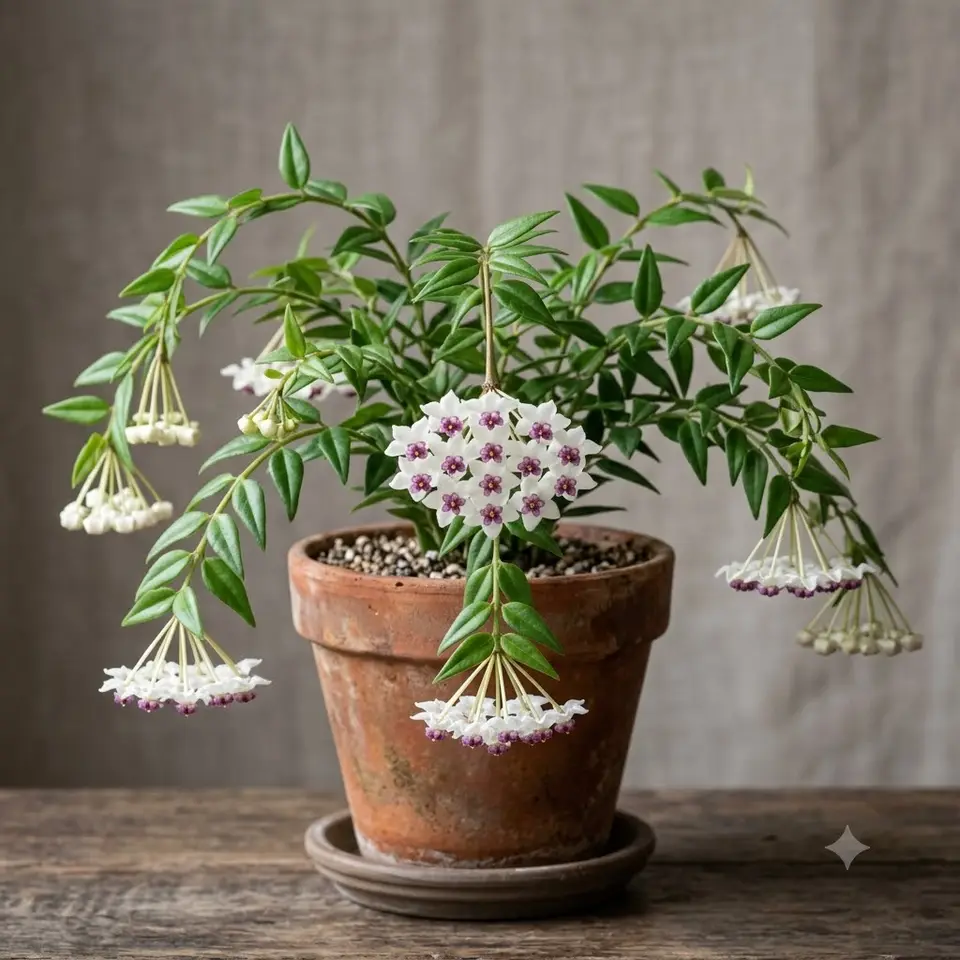
Hoya bella is a dainty, arching miniature shrublet whose thin little leaves disappear each summer under dozens of jasmine-scented white-and-purple stars.
Last reviewed: October 2026
 AI illustration
 Overview
Hoya bella is a dainty, arching miniature shrublet whose thin little leaves disappear each summer under dozens of jasmine-scented white-and-purple stars. It asks for slightly different care than the succulent hoyas, and repays it with the genus's most generous flowering. (Hoya lanceolata ssp. bella.)
Origin & Natural Habitat
Himalayan foothills of India, Myanmar and southern China - cooler, moister, higher than most hoya homelands; it grows as a true epiphyte in moss on branches.
Appearance
Small lance leaves on slender arching-then-cascading stems 30-60 cm; profuse summer umbels of porcelain-white stars with amethyst crowns, sweetly jasmine-scented - often blooming the first year.
Why People Grow It - Qualities & Benefits
- The most flower-per-plant of any common hoya
- Perfumes a whole room on summer evenings
- Compact: a hoya for small spaces
- Blooms young, no five-year wait
Care
Light: Bright indirect; gentler than the sun-lovers - think orchid light, not cactus light.
Water: More even moisture than succulent hoyas: water when the top third dries; its thin leaves store less. Never swampy.
Soil: Extra-airy epiphyte mix - fine bark + perlite + sphagnum; it hates heavy soil most of all hoyas.
Temperature & Humidity: 15-26°C - appreciates cooler nights (Himalayan genes); avoid hot dry drafts.
Feeding: Weakly, every two weeks in the flowering season.
Extra: Hang it at nose height: the down-facing umbels and evening jasmine scent are designed (literally) to be looked up at. Leave every spur for rebloom.
Propagation
Tip cuttings root fast in sphagnum; bella also layers itself where stems touch moss - the easiest 'oops, more plants' hoya.
Common Problems & Pests
- Drying out (thin leaves crisp faster than succulent kin)
- Root rot in dense mixes: the #1 bella killer
- Aphids on buds
- Leaf drop from hot dry air
Toxicity & Safety
Non-toxic to cats and dogs; sap mildly irritating as with all hoyas.
Pros & Cons
Pros
- Blooms young and massively
- Heavenly evening fragrance
- Compact hanging habit
- Fast to propagate
Cons
- Less drought-armor than most hoyas
- Dislikes heat waves
- Shorter-lived unless refreshed from cuttings
Best Suited For
- Hanging baskets at face height
- Small apartments needing scent
- Cooler bright rooms
- Impatient hoya-curious growers
FAQ
Why is bella care advice different from my other hoyas?
Geography: it's a cool-foothill epiphyte, not a dry-forest succulent - more even moisture, airier roots, gentler light. Treat it half-orchid.
When does it flower?
Summer, generously, often in its first year from a cutting - the anti-kerrii. Feed weakly every two weeks and don't move it once budded.
Why did leaves crisp and drop in August?
Heat + dry air + a missed watering - bella's thin leaves have no reserves. A cooler spot and steadier moisture restore it from the stems.
Gear for growing hoya bella
Links go to Amazon or a partner store (such as Adagio Teas) and may earn us a commission at no extra cost to you. As an Amazon Associate we earn from qualifying purchases. We link gear types, not sponsors' picks: you choose the exact product.