Hoya Australis
Hoya australis is a glossy, round-leafed, sun-loving vine from Australia that grows with un-hoya-like enthusiasm and produces honey-scented white stars with red throats.
Last reviewed: October 2026
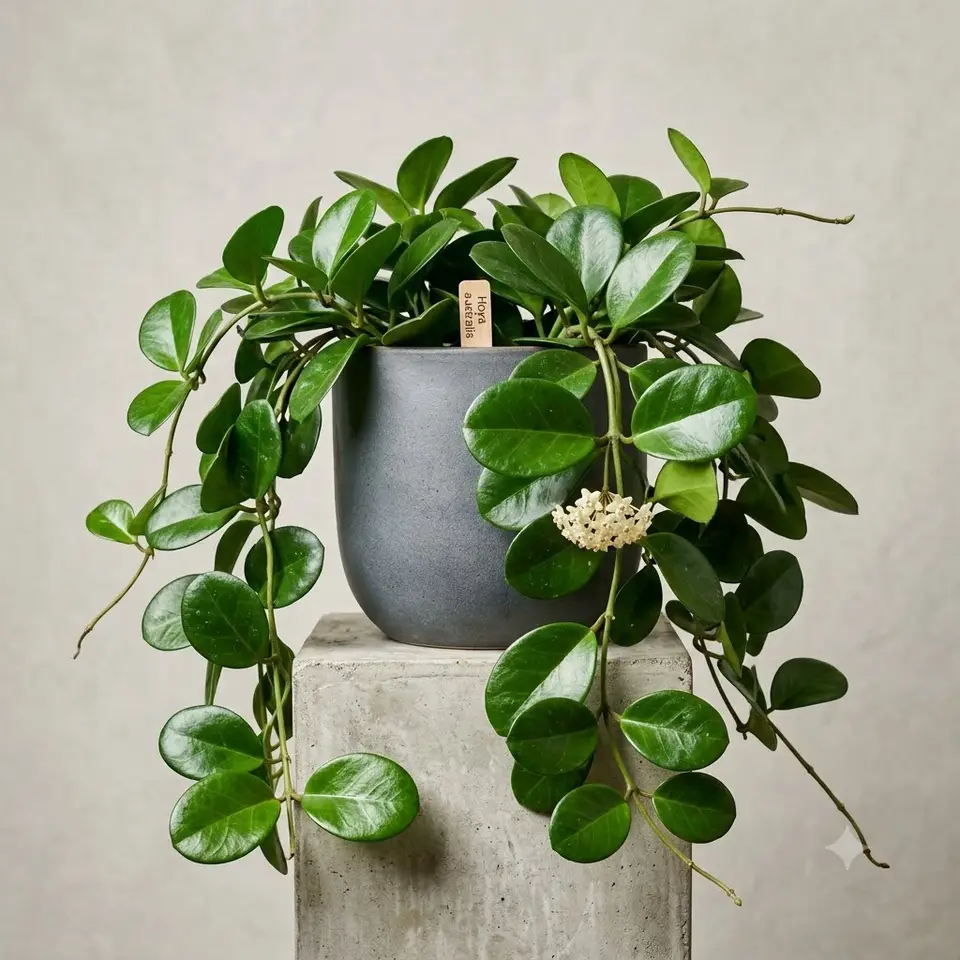 AI illustration
 Overview
Hoya australis is a glossy, round-leafed, sun-loving vine from Australia that grows with un-hoya-like enthusiasm and produces honey-scented white stars with red throats. Big, cheerful and tolerant, it's the golden retriever of hoyas. (Hoya australis.)
Origin & Natural Habitat
Eastern Australia and nearby islands - rainforest margins, rocky outcrops, even dunes; it sees more sun than most hoyas in the wild.
Appearance
Rounded glossy leaves (reddish in sun) on robust twining vines to 3 m+; 'Lisa' is the popular cream-variegated form. Umbels of white, red-eyed, honey-perfumed stars on mature plants.
Why People Grow It - Qualities & Benefits
- Vigorous, chunky, satisfying growth
- Takes more direct sun than most hoyas
- Honey-scented flower umbels
- 'Lisa' variegation for brightness
Care
Light: Bright with real direct sun happily accepted (acclimate gradually); the sun blush on new leaves is a feature.
Water: Every 1-2 weeks growing, fully dry between; thick leaves buffer neglect.
Soil: Chunky hoya mix; a slightly larger pot than typical hoya advice suits its vigor.
Temperature & Humidity: 16-30°C; tough within reason, no frost.
Feeding: Monthly half-strength through the warm months.
Extra: Best trellised - the vines are strong and want structure; a hoop turns sprawl into a wreath of gloss. Blooms best root-snug and unmoved.
Propagation
Node cuttings root readily in water or sphagnum; 'Lisa' propagates identically, keeping her cream margins.
Common Problems & Pests
- Scale and mealybug occasionally
- Etiolated stringy growth in dim corners
- Slow to bloom if over-potted or over-moved
Toxicity & Safety
Non-toxic to cats and dogs; sap can irritate skin.
Pros & Cons
Pros
- Fast, robust, glossy
- Sun-tolerant flexibility
- Fragrant classic blooms
- Great variegate available
Cons
- Needs space and support
- Bloom wants patience + sun
- Plain green form is common (price your expectations)
Best Suited For
- Sunny windows other hoyas fear
- Hoops, arches, plant walls
- Beginners scaling up from pothos
- Scent gardeners indoors
FAQ
Why are new leaves red?
Sun-stress pigments - harmless and generally admired; leaves green up as they mature or with less light.
Australis or pubicalyx as a first hoya?
Both excellent: australis for glossy round leaves and honey scent, pubicalyx for splashy foliage and darker flowers. Vigor is comparable - flip a coin, or take both cuttings.
Can it live outside in summer?
In a bright, sheltered spot above 10°C nights it thrives outdoors seasonally - acclimate to sun over two weeks and check for hitchhiking pests on return.
Gear for growing hoya australis
Links go to Amazon or a partner store (such as Adagio Teas) and may earn us a commission at no extra cost to you. As an Amazon Associate we earn from qualifying purchases. We link gear types, not sponsors' picks: you choose the exact product.