Eyelash Begonia
The Eyelash Begonia is a small rhizomatous begonia named for the fine, dark hairs that fringe the edges of its leaves like tiny lashes.
Last reviewed: September 2026
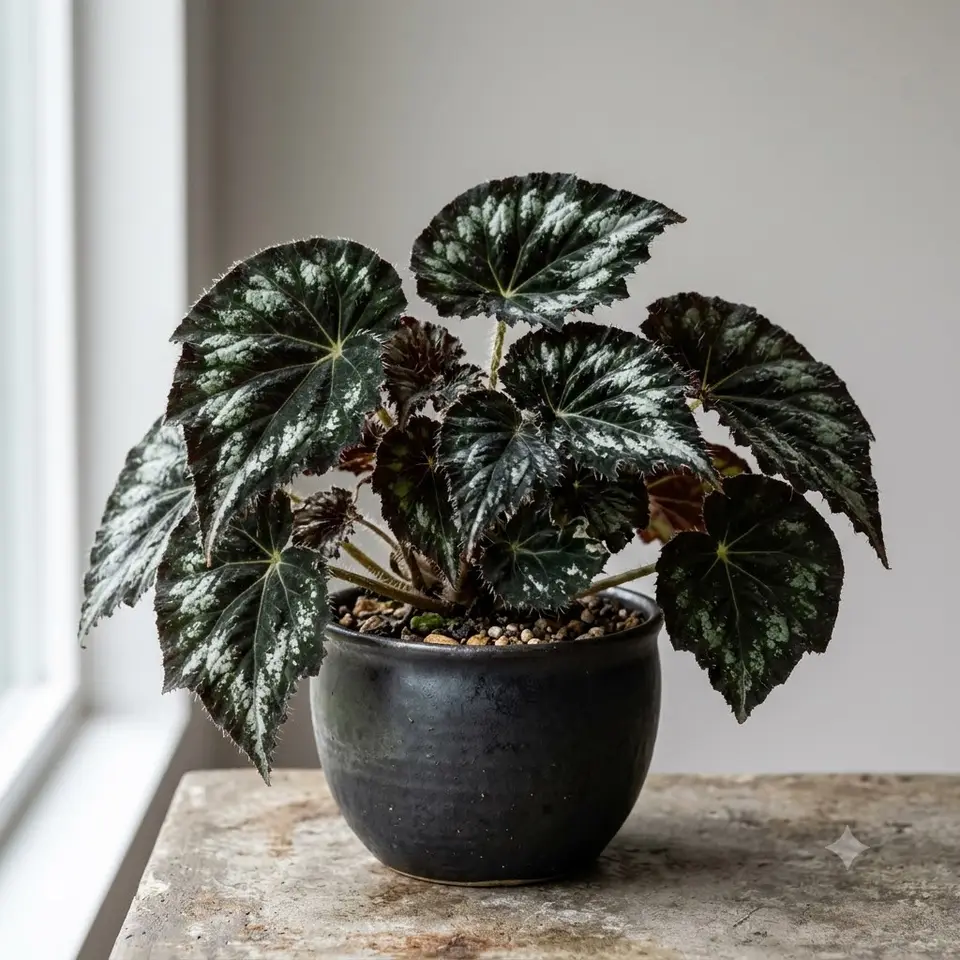 AI illustration
 Overview
The Eyelash Begonia is a small rhizomatous begonia named for the fine, dark hairs that fringe the edges of its leaves like tiny lashes. Collectors love it for its compact size, patterned foliage, and the way those bristled margins catch the light, making it a standout on a humid shelf or in a terrarium. It is botanically known as Begonia bowerae.
Origin & Natural Habitat
Eyelash Begonia is native to the shaded, humid cloud forests and rocky slopes of southern Mexico, particularly the states of Oaxaca and Chiapas. In the wild it creeps along leaf litter and mossy rocks in filtered light, spreading by a surface rhizome.
Appearance
The leaves are small and lopsided-heart-shaped, usually 5 to 10 cm long, in bright to olive green often marked with chocolate-brown or bronze blotches along the edges. The signature feature is the row of short, stiff hairs (cilia) fringing each leaf margin, plus fine hairs where the leaf meets the stalk. It grows low and spreading from a creeping rhizome rather than upright, typically staying under 20 to 25 cm tall, and can send up airy sprays of small pink or white flowers in late winter to spring.
Why People Grow It - Qualities & Benefits
- Distinctive fringed, patterned leaves that few other houseplants offer
- Stays small and compact, ideal for shelves, terrariums, and cabinets
- Spreads slowly into a full, mounding clump over time
- Easy to propagate and share, so one plant becomes many
Care
Light: Bright, indirect light. Direct sun scorches the leaves and fades the markings, while deep shade makes growth leggy and dull. An east window or a spot a metre or so back from a brighter window works well.
Water: Keep the soil lightly moist but never soggy. Water when the top 2-3 cm feel dry, and let excess drain fully. Rhizomatous begonias rot easily, so err on the drier side and avoid splashing water onto the leaves and rhizome.
Soil: A light, airy, fast-draining mix. A blend of peat or coco coir with plenty of perlite, orchid bark, or pumice keeps the shallow roots and rhizome oxygenated. A wide, shallow pot suits the surface-creeping habit better than a deep one.
Temperature & Humidity: Warmth-loving, happiest between 18 and 26°C, and it dislikes cold drafts and anything below about 13°C. It genuinely prefers higher humidity, ideally 50% or more; in dry indoor air the leaf edges can brown and crisp, so a pebble tray, a humidifier, or a terrarium helps a lot. Be honest with yourself here, this is a plant that rewards humidity.
Feeding: Feed with a balanced liquid fertilizer diluted to half strength every 3 to 4 weeks during spring and summer. Stop or reduce feeding in the darker winter months when growth slows.
Extra: Unlike tuberous begonias, the Eyelash Begonia is rhizomatous and does not go fully dormant, but its growth slows noticeably in winter, so cut back on water then to avoid rot. Toxic to cats and dogs (soluble calcium oxalates, most concentrated in the rhizome and underground parts) - keep out of reach of pets and children.
Propagation
Propagates readily from the rhizome. Cut a 3 to 5 cm section of rhizome that has a growth point and lay it on top of moist mix, or take a leaf cutting and pin it flat with the veins nicked. Kept warm and humid, new plantlets form within a few weeks. Rhizome division of a mature clump is the fastest and most reliable method.
Common Problems & Pests
- Powdery mildew is the most common issue; begonias are prone to it, so keep air moving and avoid wetting the foliage
- Rhizome and root rot from overwatering or a heavy, wet mix - the number one killer of this plant
- Mealybugs in leaf joints, and spider mites when the air is too dry, along with occasional fungus gnats in constantly damp soil
Toxicity & Safety
Eyelash Begonia is toxic to cats and dogs. Like other begonias it contains soluble calcium oxalates, with the highest concentration in the rhizome and underground parts. If chewed, it can cause oral irritation, intense drooling, difficulty swallowing, and vomiting. The sap may also irritate sensitive skin, so wash your hands after taking cuttings and keep the plant away from curious pets and small children.
Pros & Cons
Pros
- Unusual fringed, patterned foliage on a compact, shelf-friendly plant
- Very easy to propagate and forgiving of a light trim
Cons
- Needs steady humidity and can crisp at the edges in dry rooms
- Prone to powdery mildew and rot if airflow or watering is off
Best Suited For
- Collectors who can offer humidity, such as a terrarium, cabinet, or pebble tray
- Growers wanting a small, distinctive begonia rather than a large statement plant
FAQ
Why are my Eyelash Begonia's leaf edges turning brown and crispy?
This is almost always low humidity or inconsistent watering. Raise the humidity with a pebble tray or humidifier, keep it out of dry drafts, and water when the top 2-3 cm dry rather than letting it swing from bone dry to soaked.
Does the Eyelash Begonia go dormant in winter?
Not fully. Because it is rhizomatous rather than tuberous, it stays evergreen but slows down in low winter light. Simply water less and pause feeding until growth picks back up in spring.
Sources
Pet toxicity: checked against the ASPCA Animal Poison Control Center lists of toxic and non-toxic plants for cats and dogs, genus-wide entry "Begonia" (Begonia spp.): toxic to cats and dogs. Lists read on 10 October 2026.
Gear for growing eyelash begonia
Links go to Amazon or a partner store (such as Adagio Teas) and may earn us a commission at no extra cost to you. As an Amazon Associate we earn from qualifying purchases. We link gear types, not sponsors' picks: you choose the exact product.