Feather Cactus
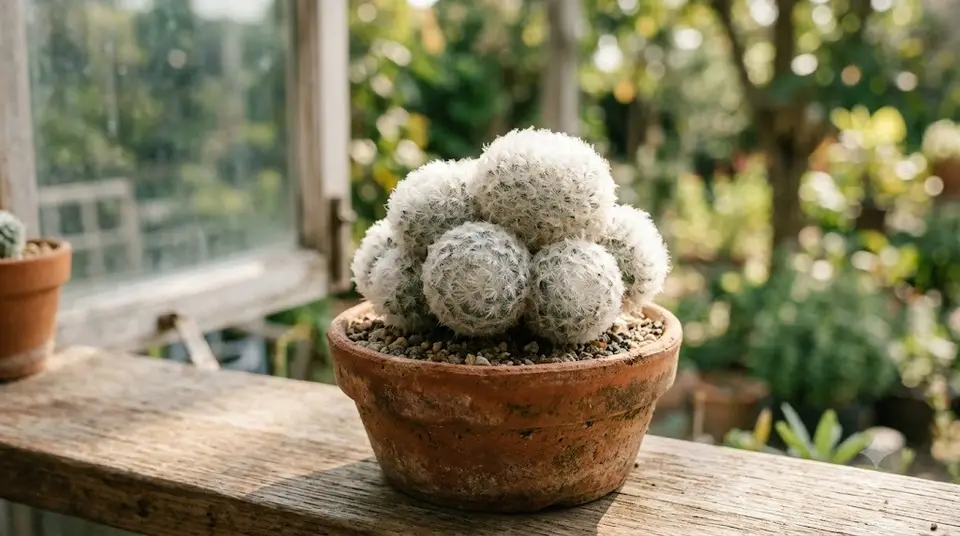
The feather cactus looks like a cluster of little snowballs wrapped in down - its spines have evolved into soft, white, feather-like plumes that beg to be touched.
Last reviewed: October 2026
 AI illustration
 Overview
The feather cactus looks like a cluster of little snowballs wrapped in down - its spines have evolved into soft, white, feather-like plumes that beg to be touched. It is a genuinely soft cactus, safe to stroke gently, and an easy, striking oddity for a bright, dry windowsill.
Origin & Natural Habitat
Mammillaria plumosa comes from a small area of limestone cliffs in northeastern Mexico, where its feathery coat shades it from fierce sun and traps dew. It is prized in cultivation for that unique soft armour.
Appearance
Low mounds of small round heads completely hidden beneath soft, white, feathery interlacing spines, like balls of down or fresh snow. Small greenish-white to pale yellow flowers peek through the fluff in late autumn and winter.
Why People Love It - Qualities & Benefits
People love that it is a cactus you can actually touch (the plumes are soft), and the snowball look is unlike anything else. It stays small, clusters politely and is easy given sun and restraint with water.
Care
Light
Bright light with direct sun keeps the feathery coat dense and white - a sunny windowsill is ideal. In shade the coat thins and the heads stretch.
Watering
Water sparingly: soak, then let the soil dry out completely, and keep it nearly dry in winter. Water the soil, not the fluff - moisture trapped in the plumes marks them and invites rot. The white coat also hides the body, so check the soil, not the plant, to judge thirst.
Soil & Potting
A very gritty, sharply draining cactus mix, ideally with a little limestone chip to echo its cliff home, in a pot with drainage.
Humidity & Temperature
Dry air is essential - humidity mats and browns the beautiful plumes and encourages rot. Ordinary dry room air is ideal; give a cool, dry, frost-free winter rest.
Feeding
A dilute cactus feed once or twice in the growing season is ample for this small, slow plant.
Repotting
Repot only every few years in spring when the cluster fills the pot. The soft coat makes handling easy, but keep the plumes dry and clean while you work.
Propagation
Easy from offsets: detach a downy head, callus it briefly, and set it on gritty soil to root. Also grows from seed.
Common Problems & Pests
Rot from water trapped in the plumes or soggy soil is the main danger. The white coat can yellow with age, dust or dampness - keep it dry and bright. Mealybugs can hide invisibly in the fluff, so inspect occasionally.
Toxicity & Safety
The feather cactus is not toxic to people or pets, and its plume-like spines are soft to a gentle touch (one of the few genuinely strokeable cacti), though rough handling can still find the firmer spines beneath.
Pros & Cons
Pros: unique soft snowball look, touchable, small and tidy, easy in sun with dry care. Cons: plumes mark if wetted, humidity is its enemy, pests hide in the coat.
Best Suited For
A charming curiosity for a bright, dry windowsill - ideal for anyone who wants the softest cactus in the room.
FAQ
Can I really touch it? Gently, yes - the feathery plumes are soft, unlike almost any other cactus.
How do I keep it white? Sun, dry air, and watering the soil rather than the fluff.
Gear for growing feather cactus
Links go to Amazon or a partner store (such as Adagio Teas) and may earn us a commission at no extra cost to you. As an Amazon Associate we earn from qualifying purchases. We link gear types, not sponsors' picks: you choose the exact product.