Fairy Castle Cactus
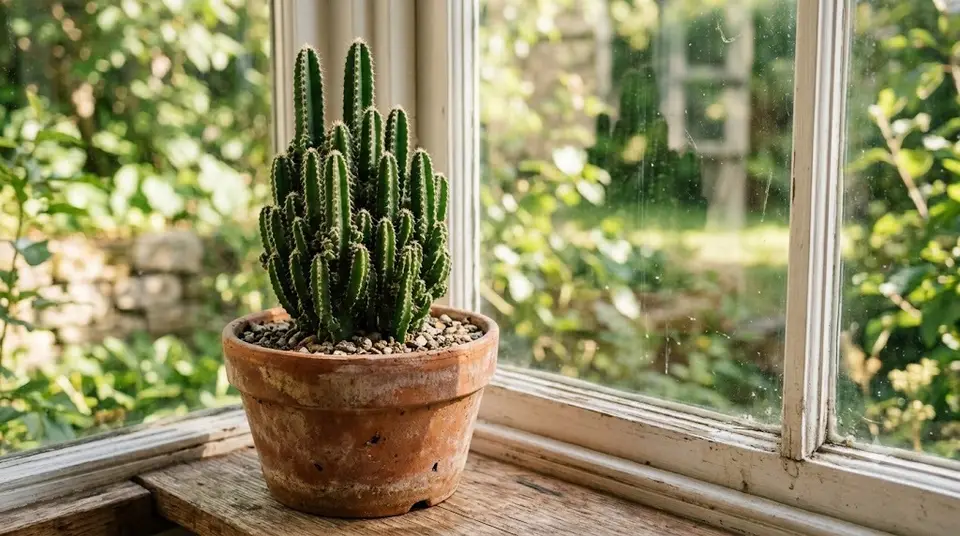
The fairy castle cactus is a charming, slow-growing cactus that branches into a cluster of green vertical columns of different heights, looking just like the turrets of a miniature castle.
Last reviewed: July 2026
 AI illustration
 Overview
The fairy castle cactus is a charming, slow-growing cactus that branches into a cluster of green vertical columns of different heights, looking just like the turrets of a miniature castle. Easy, compact and endlessly cute, it is a popular beginner and children's cactus - as long as you ignore the fake flowers it is often sold wearing.
Origin & Natural Habitat
'Fairy Castle' is a cultivated form of Acanthocereus tetragonus, a night-blooming cereus native to the Americas from Florida and Texas down through Mexico and into South America. The clustering, castle-like habit is a compact selected form grown as an easy houseplant.
Appearance
A cluster of upright, five-sided green columns that branch and grow to different heights, forming a turreted 'castle' shape. The ribs carry small white areoles and short spines. It grows very slowly and rarely flowers indoors - so any bright bloom perched on top is almost always a fake straw flower glued on by the seller.
Why People Love It - Qualities & Benefits
People love the whimsical castle shape, the compact size, and how genuinely easy and slow it is - perfect for a windowsill, a desk or a child's room. It is a friendly, low-fuss introduction to cacti.
Care
Light
Bright light with some direct sun keeps the columns firm, green and compact - a sunny windowsill is ideal. Too little light gives pale, thin, stretched growth that loses the neat castle form.
Watering
Soak thoroughly, then let the soil dry out completely before watering again, roughly every couple of weeks in summer and rarely in winter. Like all cacti it rots if kept wet, so err dry.
Soil & Potting
A gritty, free-draining cactus mix in a pot with a drainage hole. Sharp drainage is essential to prevent rot at the base.
Humidity & Temperature
Warm, dry air suits it; it dislikes humidity. Ordinary room air is fine. Keep it above about 10°C and give a cooler, drier winter rest.
Feeding
A dilute cactus fertiliser once or twice through the warm growing season is plenty. It is slow-growing and needs little feeding.
Repotting
Repot only every few years when pot-bound, in spring, handling with folded card because of the small spines. It stays small and slow, so it is content in the same pot for a long time.
Propagation
Very easy: remove one of the branching columns, let the cut end callus for several days, and set it in dry gritty soil to root. Offsets and cuttings root readily.
Common Problems & Pests
Overwatering rot at the base is the main danger, often showing as soft brown patches. Mealybugs and scale can appear. Pale, stretched, leaning growth means too little light. If a glued-on fake flower falls off, that's normal - it was never real.
Toxicity & Safety
The fairy castle cactus is not toxic to people or pets, but its small spines can prick, so keep it out of reach of children and animals and handle with a little care.
Pros & Cons
Pros: whimsical castle shape, compact, very easy and slow, easy to propagate. Cons: rarely flowers indoors (the flowers on shop plants are usually fake), spines can prick, needs good light to stay compact.
Best Suited For
A lovely, low-fuss first cactus for a bright windowsill, a desk or a child's room - easy, characterful and near-impossible to kill if you keep it dry and bright.
FAQ
Is the bright flower on top real? Almost never - fairy castle cacti rarely flower indoors, so shops usually glue on a dried straw flower.
Why is it growing pale and thin? Too little light - move it to your sunniest window and new growth stays green and compact.
Gear for growing fairy castle cactus
Links go to Amazon or a partner store (such as Adagio Teas) and may earn us a commission at no extra cost to you. As an Amazon Associate we earn from qualifying purchases. We link gear types, not sponsors' picks: you choose the exact product.