Escargot Begonia
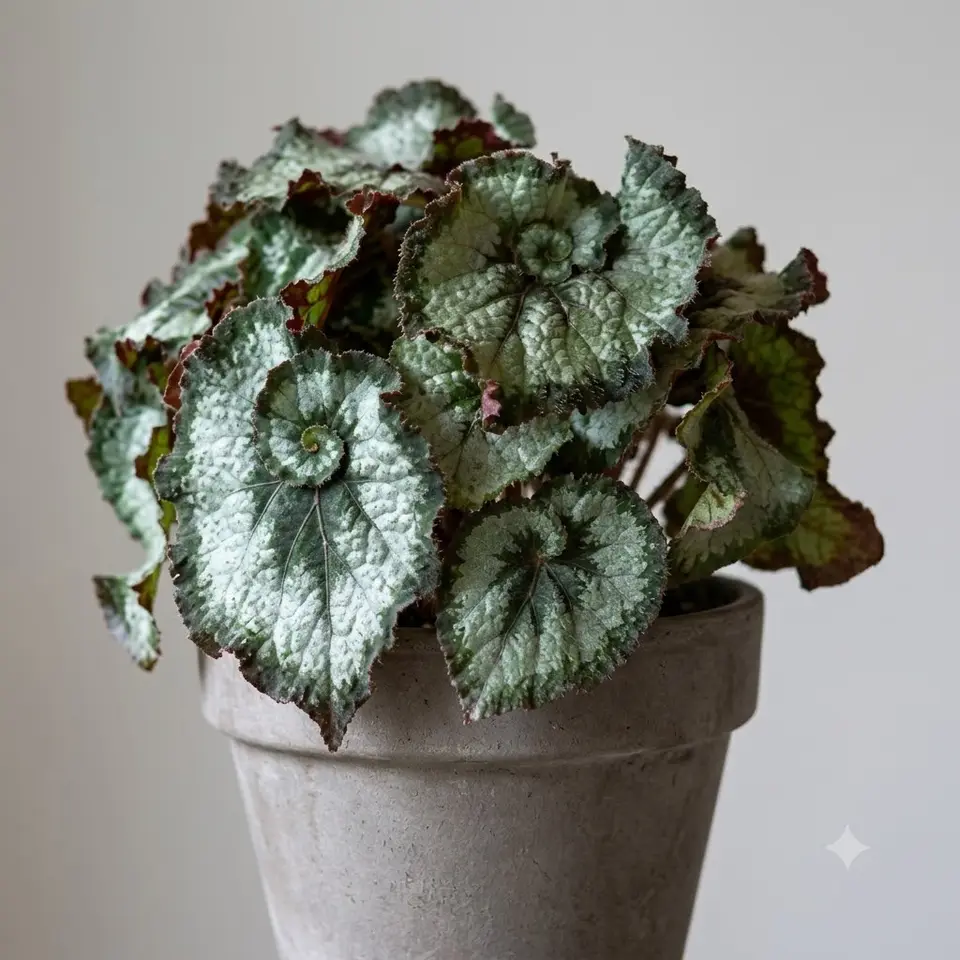
The Escargot Begonia is a rhizomatous rex begonia prized for one showstopping feature: each leaf spirals inward at the base like a snail shell, wrapped in silvery-green and deep plum banding.
Last reviewed: September 2026
 AI illustration
 Overview
The Escargot Begonia is a rhizomatous rex begonia prized for one showstopping feature: each leaf spirals inward at the base like a snail shell, wrapped in silvery-green and deep plum banding. Collectors chase it for that living-jewel foliage, though it earns a reputation as a fussy diva that demands humidity and patience. It is a named cultivar of the rex begonia group (Begonia rex-cultorum 'Escargot').
Origin & Natural Habitat
The parent species, Begonia rex, hails from the humid, shaded understory of the eastern Himalayas, northeastern India (Assam and Arunachal Pradesh), and into southern China and Vietnam. 'Escargot' itself is a horticultural hybrid cultivar bred for its dramatic spiral leaf, not a wild plant.
Appearance
The signature leaf is a lopsided asymmetric heart that coils tightly at the stem end into a snail-shell swirl, ringed in bands of silver, pewter, olive and burgundy-purple. Individual leaves reach about 15 to 20 cm across, with a slightly puckered, hairy texture and reddish undersides. It grows in a low, spreading clump from a creeping surface rhizome rather than a tall stem, staying compact at roughly 20 to 30 cm tall and a bit wider.
Why People Grow It - Qualities & Benefits
- Unmistakable spiral leaf pattern that looks hand-painted and photographs beautifully
- Stays compact, so it fits terrariums, cloches, and small shelf spaces
- Grown purely for foliage, so it looks striking year-round without needing to flower
- A genuine collector conversation piece that rewards good humidity with lush growth
Care
Light: Bright, indirect light. Direct sun scorches the leaves and fades the colors, while deep shade makes it leggy and dull. An east window or a metre or so back from a brighter one is ideal.
Water: Keep the mix lightly and evenly moist but never soggy. Water when the top 2-3 cm feel dry, and water at the soil line, not over the leaves. It is very prone to rot, so err slightly dry rather than wet.
Soil: A light, airy, fast-draining mix. A peat- or coco-based blend cut with perlite and a little orchid bark works well. Plant the rhizome shallow, sitting on top of the soil, not buried.
Temperature & Humidity: Warmth of about 18 to 24°C suits it; avoid anything below 13°C and cold drafts. Humidity is the hard part - it genuinely wants 50% or higher, and dry indoor air causes crispy edges and stalled growth. A pebble tray, grouping with other plants, a terrarium, or a humidifier all help.
Feeding: Feed with a balanced liquid fertilizer diluted to half strength every 3 to 4 weeks during active spring and summer growth. Stop feeding in winter.
Extra: Rex begonias can go semi-dormant in low light and cold, sometimes dropping most of their leaves in winter; do not toss the plant, just keep the rhizome barely moist and it usually reflushes in spring. Toxic to cats and dogs (soluble oxalates, concentrated in the rhizome and roots) - keep out of reach of pets and children.
Propagation
Propagate by rhizome division or leaf cuttings. Cut a healthy leaf with a bit of stem, or lay a leaf flat and nick the main veins, then pin it onto moist soil in a humid, covered container. New plantlets form at the cuts over several weeks. Dividing a section of rhizome with roots attached is the fastest, most reliable route.
Common Problems & Pests
- Powdery mildew is the classic rex begonia problem in stagnant, humid air; keep airflow moving and the leaves dry
- Rhizome and stem rot from overwatering or burying the rhizome; the base turns mushy and brown
- Crispy brown leaf edges from low humidity, plus occasional mealybugs, thrips, and spider mites in dry conditions
Toxicity & Safety
Begonias, including this cultivar, are toxic to cats and dogs. They contain soluble oxalates, which are most concentrated in the underground rhizome and roots. Chewing can cause intense oral irritation and burning, drooling, mouth pawing, and vomiting, and large ingestions of the underground rhizome pose a greater risk. The sap can also irritate sensitive skin, so wash your hands after handling or taking cuttings.
Pros & Cons
Pros
- One of the most visually distinctive foliage plants you can own
- Compact and terrarium-friendly, ideal for humid enclosed setups
Cons
- Fussy about humidity and quick to rot if overwatered
- Can drop its leaves and go dormant in winter, alarming new owners
Best Suited For
- Intermediate collectors who can provide steady humidity or a terrarium
- Foliage lovers who want a statement plant and do not have pets that chew leaves
FAQ
Why are my Escargot Begonia's leaf edges turning brown and crispy?
Almost always low humidity or letting it dry out too far. Raise ambient humidity with a tray, humidifier, or enclosure, and keep the mix evenly moist rather than swinging between bone-dry and soaked.
My plant lost most of its leaves in winter - is it dead?
Probably not. Rex begonias often go semi-dormant in short, cold, dim days. Keep the rhizome barely moist, hold off on fertilizer, and it usually pushes fresh spiral leaves again when light and warmth return in spring.
Gear for growing escargot begonia
Links go to Amazon or a partner store (such as Adagio Teas) and may earn us a commission at no extra cost to you. As an Amazon Associate we earn from qualifying purchases. We link gear types, not sponsors' picks: you choose the exact product.