Sarah Bernhardt Peony
'Sarah Bernhardt' is the classic pink garden peony (Paeonia 'Sarah Bernhardt'), prized for enormous double blooms of soft rose-pink that fade to blush at the petal edges.
Last reviewed: July 2026
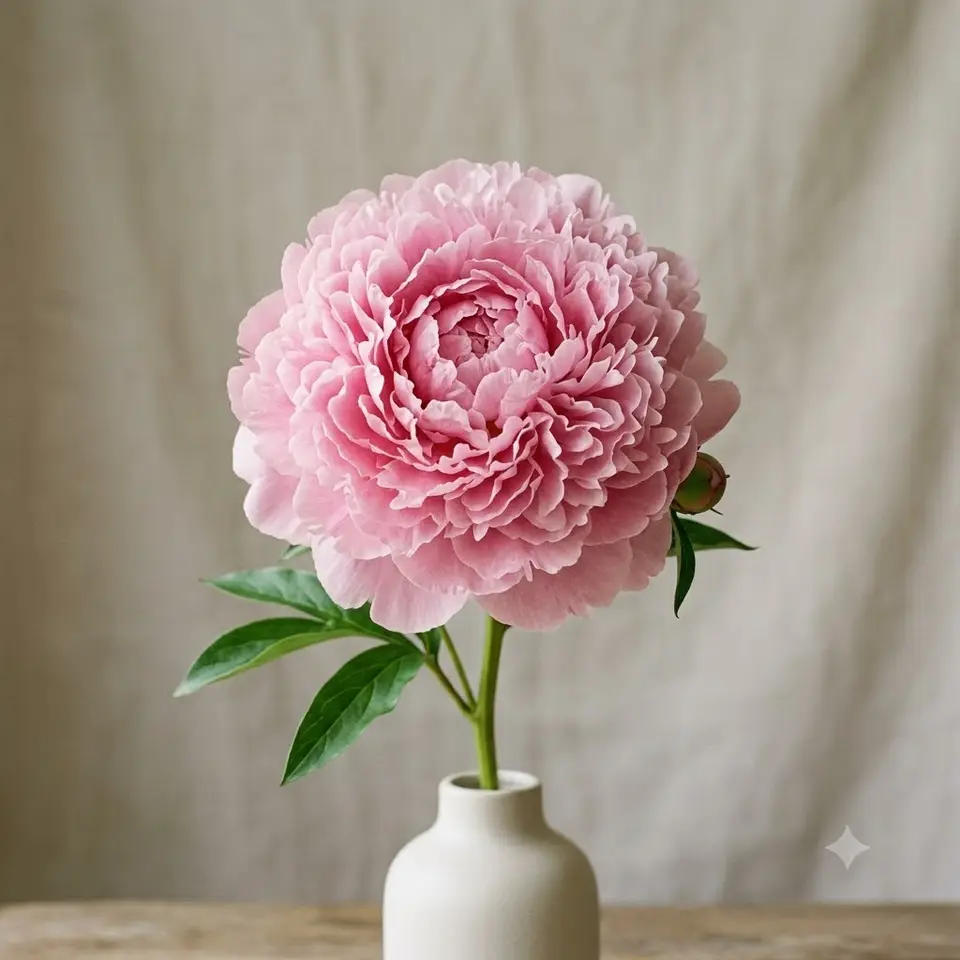 AI illustration
 Overview
'Sarah Bernhardt' is the classic pink garden peony (Paeonia 'Sarah Bernhardt'), prized for enormous double blooms of soft rose-pink that fade to blush at the petal edges. What sets this cultivar apart is the combination of that generous, ruffled flower form, a genuine sweet fragrance, and a reliable, long-lived constitution that keeps it flowering in the same spot for decades. It is one of the most widely planted herbaceous peonies in the world and a staple of the cut-flower garden.
Origin & Background
The genus Paeonia is native across the temperate Northern Hemisphere, with the parent species Paeonia lactiflora originating in the grasslands and hillsides of eastern Asia, particularly northern China, Mongolia, and eastern Siberia. 'Sarah Bernhardt' itself is a French cultivar introduced by the renowned breeder Victor Lemoine in 1906, named for the celebrated stage actress. More than a century later it remains a benchmark against which other pink peonies are measured.
Appearance
The flowers are large, fully double, and bomb to rose form, typically 15-20 cm (6-8 inches) across, in a soft apple-blossom pink that pales toward the ruffled outer petals. Bloom time is late spring into early summer, generally late May through June depending on climate. The plant forms a rounded, bushy clump of glossy, deeply divided dark green foliage, reaching about 80-100 cm (32-40 inches) tall with a similar spread. In autumn the foliage takes on bronze and burgundy tones before the plant dies back to the ground for winter, re-emerging with reddish shoots the following spring.
Why People Grow It - Qualities & Benefits
- Huge, romantic double blooms with a genuine sweet fragrance
- Exceptional longevity - established clumps can thrive for 50 years or more
- Superb, long-lasting cut flower for vases and bouquets
- Cold-hardy and low-maintenance once settled, needing little beyond staking
Care
Light: Full sun is best, at least 6 hours daily; it tolerates light afternoon shade but flowers most freely in the open. Water: Moderate and even during active growth and budding; established plants are fairly drought-tolerant but resent waterlogged soil. Soil: Deep, fertile, well-drained loam rich in organic matter, with a neutral to slightly alkaline pH around 6.5-7.0. Hardiness: USDA zones 3-8. Bloom or Season: Late spring to early summer, with each clump flowering for roughly 7-10 days; blooms are heavy and often need support. Extra: Plant the eyes no more than 3-5 cm (1-2 inches) below the surface - burying peonies too deep is the most common reason they fail to bloom. Toxic to cats and dogs. Peonies contain paeonol, concentrated in the bark and roots; ingestion causes vomiting and diarrhoea.
Planting & Propagation
Plant bare-root divisions in early autumn in a permanent, sunny position, setting the eyes just 3-5 cm below the soil surface. Propagation is by division of the tuberous roots in early autumn: lift a mature, well-established clump, wash the soil away, and cut it into sections each carrying 3-5 healthy eyes (growth buds) and a portion of storage root. Replant immediately at the correct shallow depth. Peonies grow very slowly from seed and rarely come true to the parent, so division is the only practical way to reproduce this cultivar; divisions may sulk for a year before settling into full flower.
Common Problems & Pests
- Botrytis blight (grey mould), which blackens stems and buds in cool, wet springs - improve airflow and remove affected growth
- Flopping stems, as the heavy double blooms bend to the ground after rain unless staked or ring-supported
- Failure to bloom, almost always caused by planting too deep, too much shade, or a clump that is still too young
Toxicity & Safety
'Sarah Bernhardt', like all peonies, is toxic to cats and dogs. The plants contain paeonol, a compound most concentrated in the bark and roots. If a pet chews or ingests plant material, the typical signs are vomiting and diarrhoea. Reactions are generally mild to moderate rather than life-threatening, but it is sensible to site plants away from pets that like to dig or nibble, and to contact a veterinarian if a large amount is eaten.
Pros & Cons
Pros
- Spectacular, fragrant blooms and decades of reliable flowering
- Hardy, long-lived, and undemanding once established
Cons
- Heavy flowers flop and usually need staking
- Short flowering window and slow to recover after transplanting or division
Best Suited For
- Cottage gardens, mixed perennial borders, and dedicated cutting gardens
- Cold-winter regions where reliable dormancy suits its chilling needs
FAQ
Why won't my Sarah Bernhardt Peony flower?
The usual cause is planting depth - the eyes should sit only 3-5 cm below the surface. Too much shade or a division that is still establishing (often needing 2-3 years) can also delay blooming.
Do I need to stake it?
Usually yes. The large double blooms hold a lot of water and tend to bow to the ground after rain, so a grow-through support ring installed in early spring keeps the display upright.
Gear for growing sarah bernhardt peony
Links go to Amazon or a partner store (such as Adagio Teas) and may earn us a commission at no extra cost to you. As an Amazon Associate we earn from qualifying purchases. We link gear types, not sponsors' picks: you choose the exact product.