Sagae Hosta
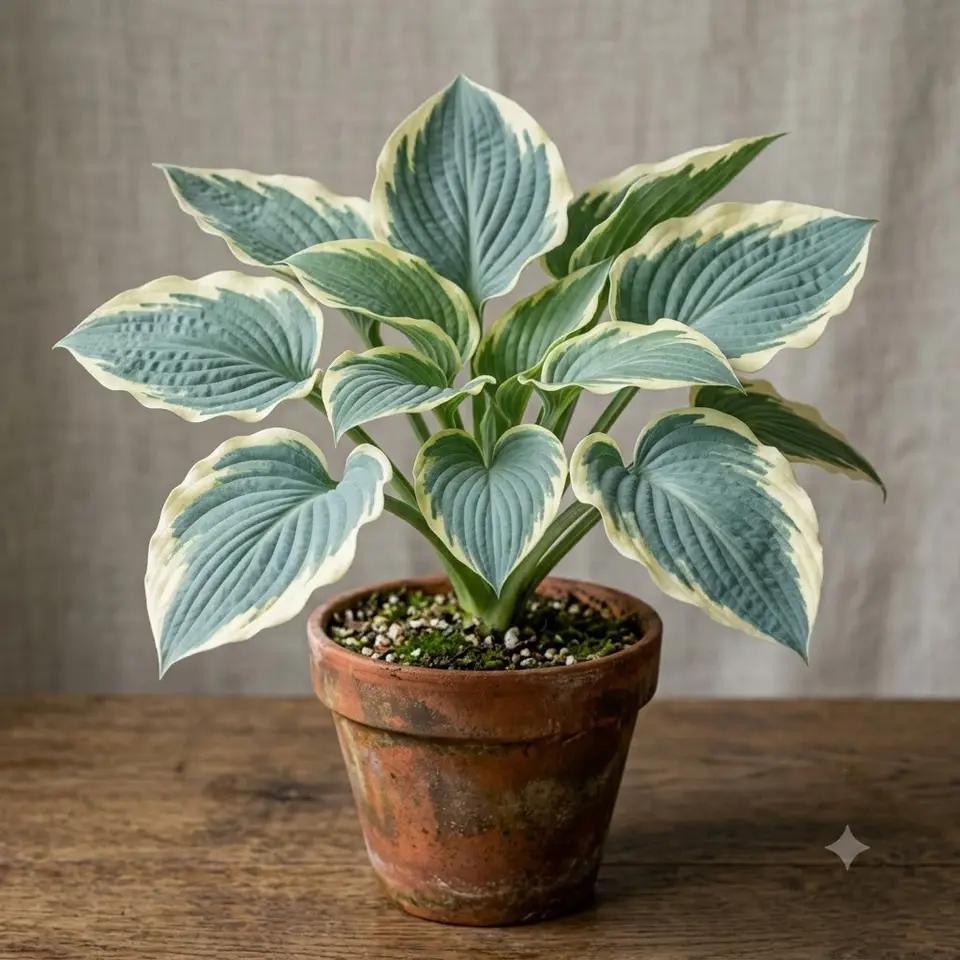
Sagae is a large, upright, vase-shaped hosta prized for its thick blue-green leaves edged with a wide, irregular band of creamy-yellow that ages to gold (Hosta 'Sagae').
Last reviewed: September 2026
 AI illustration
 Overview
Sagae is a large, upright, vase-shaped hosta prized for its thick blue-green leaves edged with a wide, irregular band of creamy-yellow that ages to gold (Hosta 'Sagae'). It stands out from lower, mounding hostas because of its tall arching posture and heavy, corrugated substance, which gives a border real vertical presence. It was named the American Hosta Growers Association Hosta of the Year in 2000, a nod to how reliable and handsome it is in the garden.
Origin & Background
The hostas are a genus of shade-loving perennials native to northeast Asia, chiefly Japan, China and Korea, where they grow on wooded slopes, stream banks and rocky ground. 'Sagae' arose in Japan and takes its name from the town of Sagae in Yamagata Prefecture; it was long circulated in the trade as a variegated form of Hosta fluctuans before being formally recognised under its own cultivar name.
Appearance
The leaves are large, broadly oval to heart-shaped and noticeably thick, with a frosty blue-green to grey-green centre and a wide, wavy, irregular margin that opens creamy-yellow and deepens toward gold as the season goes on. They are carried on stout, upright petioles that give the plant a distinctive vase-like, arching outline rather than a flat mound. Mature clumps reach roughly 70 to 85 cm tall in foliage and spread about 1.5 to 1.8 m wide over time. In early to mid summer, tall scapes rise well above the leaves, often 1.2 to 1.5 m, bearing pale lavender, bell-shaped flowers. The foliage holds well into autumn before yellowing and dying back with the first hard frosts.
Why People Grow It - Qualities & Benefits
- Bold, upright vase shape adds height and structure that most hostas lack
- Thick, corrugated leaves resist tearing and shrug off light hail and weather
- Bright creamy-gold margins light up shade and pair with almost any planting
- Long-lived, low-maintenance clumps that improve and widen year after year
Care
Light: Part shade to full shade; a little gentle morning sun brightens the gold margins, but hot afternoon sun scorches the leaves. Water: Consistent, even moisture, especially in the first couple of seasons and during dry spells; it dislikes drying out. Soil: Rich, humus-heavy, well-drained soil that stays evenly moist; slightly acidic to neutral pH (about 6.0 to 7.0) is ideal. Hardiness: USDA zones 3 to 8. Bloom or Season: Foliage plant from spring emergence through autumn, with pale lavender flowers in early to mid summer; leaves turn soft yellow before dormancy. Extra: This is a slow-to-establish, large cultivar, so give it room from the start and be patient for two or three years before it hits full size. Toxic to cats and dogs - hostas contain saponins, and ingestion causes vomiting, diarrhoea and depression.
Planting & Propagation
Plant in spring or early autumn, setting the crown level with the soil surface and spacing well to allow for a 1.5 to 1.8 m spread. Enrich the hole with compost and mulch to conserve moisture and feed the shallow roots. Propagate by division in early spring as the shoots (pips) emerge: lift the clump, slice it into sections each with roots and several eyes using a sharp spade or knife, and replant promptly at the same depth, keeping the divisions watered until re-established.
Common Problems & Pests
- Slugs and snails chew holes in the leaves, though the thick substance of 'Sagae' makes it more resistant than thin-leaved hostas
- Deer and rabbits browse the foliage readily in many gardens
- Crown rot and foliar nematodes can appear in poorly drained soil or overly wet, crowded conditions
Toxicity & Safety
Sagae Hosta is toxic to cats and dogs. All parts of the plant contain saponins, natural compounds that irritate the digestive tract when eaten. Signs of ingestion include vomiting, diarrhoea and depression or lethargy. Keep curious pets away from the plants, discourage chewing, and contact a veterinarian if your animal eats a significant amount or shows ongoing symptoms.
Pros & Cons
Pros
- Striking upright form and large size make an instant focal point in shade
- Tough, thick leaves and a long lifespan with very little effort
Cons
- Toxic to cats and dogs, so a poor fit for gardens where pets graze
- Slow to reach full size and needs generous space once mature
Best Suited For
- Shade and woodland borders where a bold, architectural perennial is wanted
- Patient gardeners with room for a large clump and no free-roaming pets nearby
FAQ
How big does Sagae Hosta get?
Expect a foliage mound around 70 to 85 cm tall and a spread of roughly 1.5 to 1.8 m at maturity, with flower scapes rising to 1.2 or 1.5 m. It is one of the larger, more upright hostas, so plan for that space from the outset.
Does Sagae Hosta need full shade?
It grows best in part shade to shade. A touch of morning sun helps the gold margins colour up, but strong afternoon sun will scorch and fade the leaves, so a spot with dappled or filtered light is ideal.
Gear for growing sagae hosta
Links go to Amazon or a partner store (such as Adagio Teas) and may earn us a commission at no extra cost to you. As an Amazon Associate we earn from qualifying purchases. We link gear types, not sponsors' picks: you choose the exact product.