Rouge Cardinal Clematis
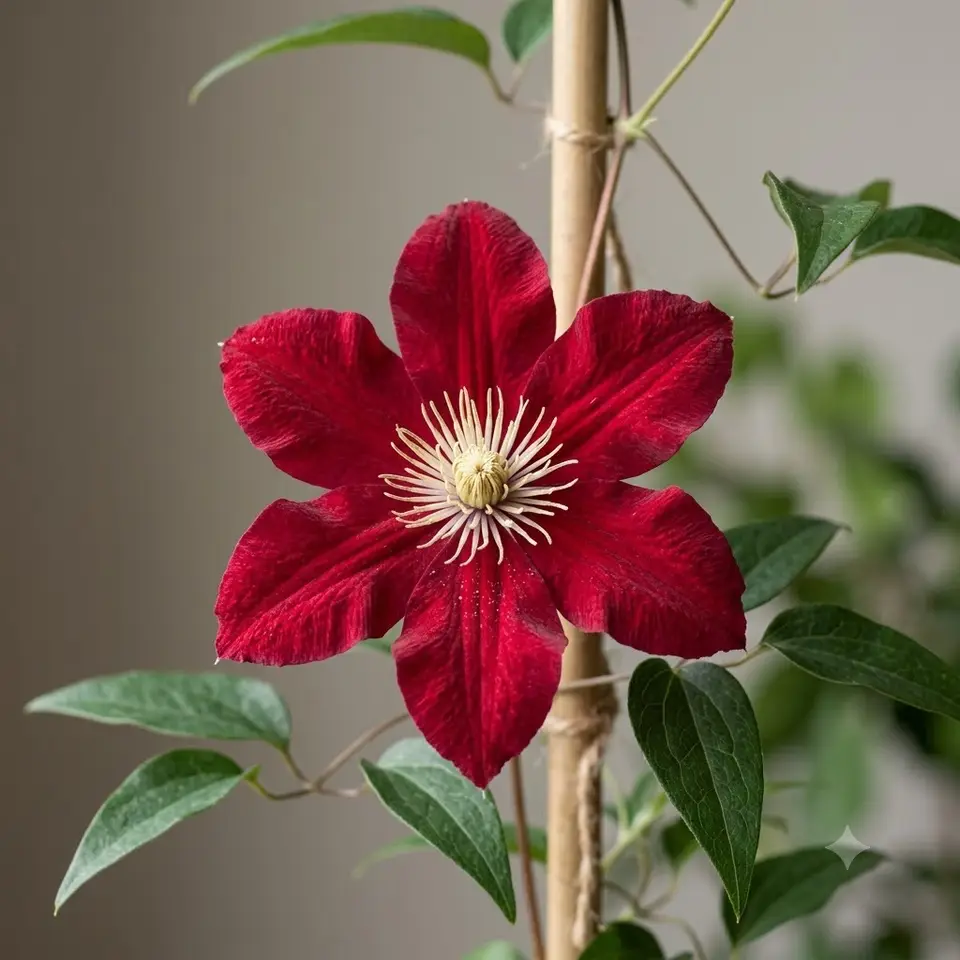
Rouge Cardinal is a large-flowered climbing clematis prized for its deep, velvety crimson blooms (Clematis 'Rouge Cardinal').
Last reviewed: October 2026
 AI illustration
 Overview
Rouge Cardinal is a large-flowered climbing clematis prized for its deep, velvety crimson blooms (Clematis 'Rouge Cardinal'). It flowers on the current season's growth, so it blooms reliably through summer even after a hard early-spring pruning. Its moderate size and glowing scarlet tone make it one of the more manageable and dependable reds for a fence, trellis or obelisk.
Origin & Background
The genus Clematis is widespread across the temperate Northern Hemisphere, with species native to Europe, Asia and North America, where many scramble through hedgerows and woodland edges. 'Rouge Cardinal' itself is a garden hybrid raised in France by the breeder Girault and introduced around 1968. Like most large-flowered clematis, it descends from a complex mix of Asian parent species selected over generations for flower size and colour.
Appearance
The flowers are the main draw: broad, flat blooms roughly 12 to 15 cm across, made up of overlapping sepals in a deep velvety crimson to ruby red, set off by a boss of creamy to pale pink stamens at the centre. Blooming runs from early or midsummer into early autumn, with the richest colour in the first flush. The plant is a moderate climber, reaching about 2.5 to 4 m tall with a spread of up to 1 m (the Royal Horticultural Society's figures), clinging by twining leaf stalks. The mid-green divided foliage is a quiet backdrop in summer; the plant dies back in winter and re-sprouts from low buds in spring.
Why People Grow It - Qualities & Benefits
- Intense, long-holding crimson colour that reads well from a distance
- Compact size suits containers, small trellises and mixed borders
- Blooms on new wood, so pruning is simple and forgiving
- Pairs beautifully with pale roses, silver foliage or white walls
Care
Light: Full sun to partial shade; it flowers best with at least six hours of sun on the top growth while the roots stay cool and shaded. Water: Moderate and consistent; keep the root zone evenly moist, never waterlogged, and water deeply in dry spells. Soil: Fertile, humus-rich, well-drained soil that stays cool; neutral to slightly alkaline pH is ideal but it tolerates a range. Hardiness: USDA zones 4 to 9. Bloom or Season: Early or midsummer into early autumn, with a strong first flush and lighter repeat. Extra: This is a Pruning Group 3 clematis - cut all stems back to a pair of strong buds about 20 to 30 cm above the ground in late winter or early spring. A classic rule is to keep its head in sun and its feet in shade, using low plants or mulch to cool the roots. Note for pet owners: clematis is toxic to cats and dogs.
Planting & Propagation
Plant in spring or autumn, setting the crown about 5 to 8 cm deeper than it sat in the pot to encourage strong basal shoots and to help it recover if stems are damaged. Dig in compost, water well and mulch to keep roots cool. Named cultivars like this one do not come true from seed, so propagate by internodal semi-hardwood cuttings taken in summer, or by simple layering, pinning a low stem to the soil in summer until it roots.
Common Problems & Pests
- Clematis wilt, a fungal dieback that can collapse stems suddenly, especially on young plants
- Powdery mildew and slugs or snails grazing fresh spring shoots
- Aphids and earwigs occasionally disfiguring buds and new growth
Toxicity & Safety
Clematis is toxic to cats and dogs. The sap and all plant parts contain protoanemonin, an irritant released when the tissue is chewed or crushed. In pets this typically causes drooling, mouth and skin irritation, and sometimes vomiting or diarrhoea. Signs are usually mild, since the plant's bitter taste discourages animals from eating much, but it is sensible to site the plant away from pets that like to chew and to rinse any sap off skin.
Pros & Cons
Pros
- Deep, saturated velvety crimson
- Easy Group 3 pruning and compact, container-friendly size
Cons
- Vulnerable to clematis wilt, particularly when young
- Needs its roots kept cool and moist to perform well
Best Suited For
- Gardeners wanting a bold red climber for a trellis, obelisk or large pot
- Small gardens and mixed borders where a restrained, tidy climber is welcome
FAQ
When and how do I prune Rouge Cardinal?
It is a Pruning Group 3 clematis, so cut every stem down to a healthy pair of buds about 20 to 30 cm above the soil in late winter or early spring. It flowers on new growth, so this hard prune does not cost you any bloom.
Why are the flowers smaller or fewer than expected?
Usually too little sun, dry roots, or a young plant still establishing. Give it a sunny top, keep the root zone cool and evenly moist, and feed in spring; flowering typically improves in the second and third years.
Gear for growing rouge cardinal clematis
Links go to Amazon or a partner store (such as Adagio Teas) and may earn us a commission at no extra cost to you. As an Amazon Associate we earn from qualifying purchases. We link gear types, not sponsors' picks: you choose the exact product.