Rocket City Daylily
Rocket City is a classic, tall daylily prized for its large, glowing tangerine-orange blooms accented by a deeper red-bronze eyezone and throat (Hemerocallis 'Rocket City').
Last reviewed: October 2026
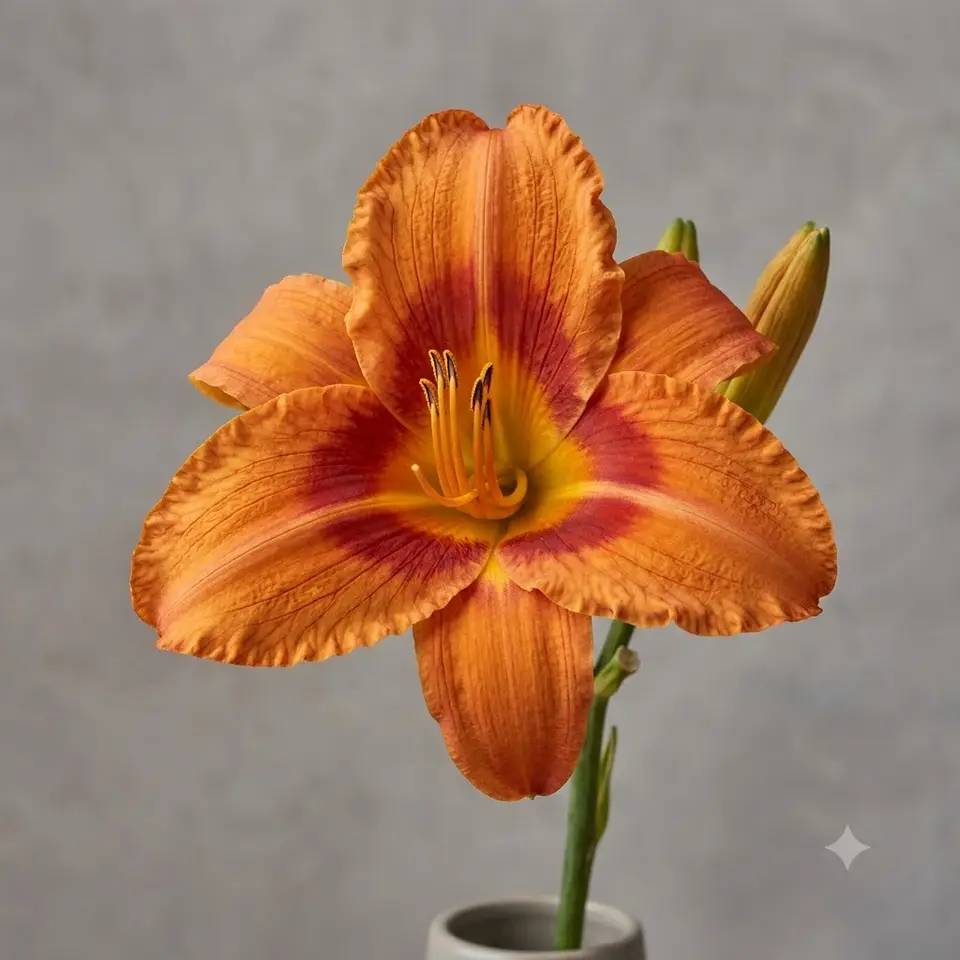 AI illustration
 Overview
Rocket City is a classic, tall daylily prized for its large, glowing tangerine-orange blooms accented by a deeper red-bronze eyezone and throat (Hemerocallis 'Rocket City'). It is a robust, cold-hardy dormant variety that stands well above the foliage, making it a strong mid-border colour plant. Vigorous and forgiving, it remains a favourite in older garden collections and naturalised plantings.
Origin & Background
The genus Hemerocallis is native to eastern Asia, ranging across China, Korea, Japan, and parts of eastern Russia, where the wild species grow in meadows, forest edges, and along streams. Despite the common name, daylilies are not true lilies (they sit in the family Asphodelaceae). 'Rocket City' is a named garden hybrid, registered by hybridizer W. B. Hardy in 1967 and named in a nod to Huntsville, Alabama - the "Rocket City" of the American space programme.
Appearance
'Rocket City' produces broad, bright orange to bronze-orange flowers, typically around 15 cm across, each marked with a darker red to copper-bronze eyezone above a rich throat that gives the bloom depth. The flowers are held on strong, well-branched scapes that rise to roughly 85 to 90 cm, standing clear above the arching, strap-like green foliage. Each individual bloom lasts a single day, but a succession of buds keeps the plant flowering for weeks in mid to late summer. As a dormant type, the foliage dies back completely in autumn and returns from the crown in spring.
Why People Grow It - Qualities & Benefits
- Big, luminous orange blooms that read from a distance and carry the border in high summer
- Tall, upright scapes that lift colour above lower perennials
- Tough and adaptable - shrugs off heat, humidity, and average soils
- Cold-hardy and reliably perennial, coming back stronger each year
Care
Light: Full sun for the best flowering; tolerates light afternoon shade, though bloom count drops in deeper shade. Water: Moderate and even; water regularly through the bloom season, then average moisture. Established clumps handle short dry spells. Soil: Adaptable to most garden soils; prefers moist, well-drained, fertile loam with a slightly acidic to neutral pH (about 6.0 to 7.0). Hardiness: USDA zones 3 to 9. Bloom or Season: Mid to late summer, with a display lasting several weeks as successive buds open. Extra: As a dormant daylily it dies back fully in winter and is very cold-tolerant, so leave the crown in place. Important pet-safety note: daylilies are extremely dangerous to cats and can cause fatal kidney failure even in tiny amounts - keep this plant well away from cats and call a vet at once if a cat eats any part.
Planting & Propagation
Plant in spring or early autumn, setting the crown about 2.5 cm below the soil surface and spacing clumps 45 to 60 cm apart to allow for spread. Water in well and mulch lightly to conserve moisture. Propagate by division every 3 to 5 years: lift the clump in early spring or after flowering, wash off the soil, and pull or cut the fans apart so each division has roots and several leaves, then replant promptly. Division also keeps vigorous clumps blooming freely.
Common Problems & Pests
- Daylily rust and leaf streak can spot or discolour foliage in humid conditions; remove affected leaves and improve airflow
- Aphids and thrips may distort buds and new growth
- Crown or root rot in soggy, poorly drained soil - avoid waterlogging
Toxicity & Safety
Daylilies are a serious, potentially fatal poisoning risk to cats. Ingesting even a small amount - a bite of leaf or petal, a little pollen, or water from a vase that held the flowers - can trigger acute kidney failure in cats. This is a medical emergency: if a cat eats or chews any part of the plant, contact a veterinarian or a pet poison helpline immediately, as prompt treatment greatly improves the outcome. For dogs the danger is much lower, usually causing only mild, temporary drooling or stomach upset. Wash hands after handling and keep cuttings and cut flowers out of reach of cats. The ASPCA lists daylilies (Hemerocallis) as toxic to cats. For dogs, the ASPCA lists them as non-toxic.
Pros & Cons
Pros
- Vivid, large orange blooms with striking eyezone contrast
- Extremely hardy, low-maintenance, and long-lived
Cons
- Each flower lasts only one day
- Genuinely hazardous to cats, so a poor fit for cat-owning households
Best Suited For
- Sunny mixed borders and cottage-style plantings that want tall, bold summer colour
- Low-fuss, naturalised, or mass plantings in cold-winter climates (zones 3 to 9)
FAQ
How tall does Rocket City get and how far apart should I space it?
Expect scapes of about 85 to 90 cm above the foliage. Space clumps 45 to 60 cm apart to give them room to form full, free-flowering stands.
Is it safe around pets?
Not around cats - daylilies can cause fatal kidney failure in cats even in small amounts, so treat any ingestion as an emergency and see a vet at once. It is far less dangerous to dogs, typically causing only mild stomach upset.
Gear for growing rocket city daylily
Links go to Amazon or a partner store (such as Adagio Teas) and may earn us a commission at no extra cost to you. As an Amazon Associate we earn from qualifying purchases. We link gear types, not sponsors' picks: you choose the exact product.