Primal Scream Daylily
Primal Scream is a large-flowered daylily prized for its intense tangerine-orange blooms held on tall, well-branched scapes (Hemerocallis 'Primal Scream').
Last reviewed: October 2026
 AI illustration
 Overview
Primal Scream is a large-flowered daylily prized for its intense tangerine-orange blooms held on tall, well-branched scapes (Hemerocallis 'Primal Scream'). What sets it apart is the sheer size and glow of the flower - roughly 18 to 19 cm across - paired with long, gently twisting, recurved petals that give it an informal, almost spidery flair. It is a vigorous, dependable performer that reads as a beacon of colour in the mid-to-late summer border.
Origin & Background
The daylily genus Hemerocallis is native to eastern Asia, with wild species spread across China, Korea, and Japan; garden daylilies today are almost entirely the product of intensive hybridising rather than any single wild plant. Primal Scream is a modern tetraploid cultivar introduced by hybridiser Curt Hanson in 1994. It earned strong recognition from daylily judges, including the American Hemerocallis Society's Award of Merit, which reflects both its garden performance and its popularity among growers.
Appearance
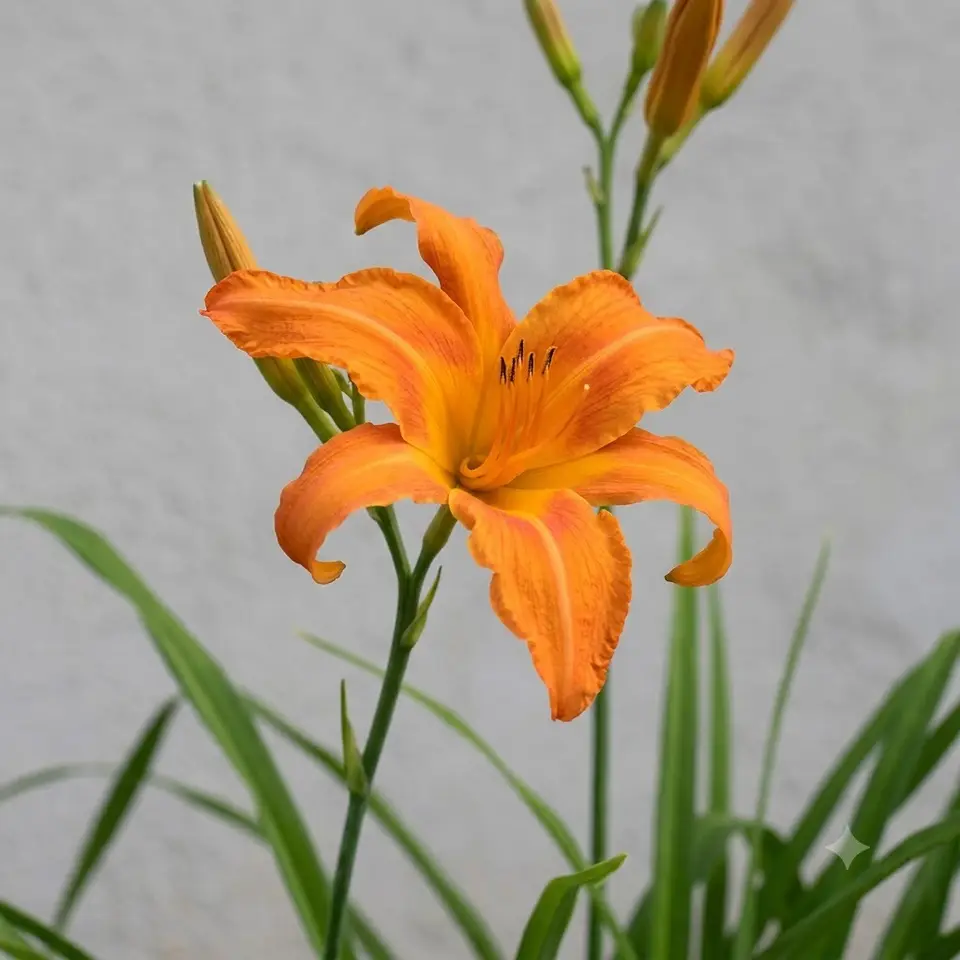
The flowers are a saturated tangerine to bright orange with a subtle golden throat, each bloom around 18 to 19 cm wide. The petals are long, ruffled, and recurved, twisting slightly so the flower has a loose, dynamic form rather than a flat round face. Foliage is arching, strap-shaped, and green, forming a tidy clump. Mature scapes reach roughly 86 cm tall, with the clump spreading to about 60 to 75 cm wide over time. It is a dormant daylily, meaning the foliage dies back in winter and returns in spring; bloom comes in the mid-to-late season, often with some rebloom in good conditions.
Why People Grow It - Qualities & Benefits
- Huge, vivid tangerine-orange flowers that carry colour across a garden
- Tall, well-branched scapes that lift the blooms above the foliage for a strong display
- Tough, low-maintenance, and forgiving - excellent for beginners
- Good rebloom potential, extending the flowering window in warmer summers
Care
Light: Full sun is best for the richest colour and most blooms; it tolerates light afternoon shade, though flowering drops in deeper shade. Water: Average, even moisture; established clumps are quite drought-tolerant but bloom better with regular water during bud set and flowering. Soil: Adaptable to most garden soils; prefers fertile, well-drained loam with a slightly acidic to neutral pH (about 6.0 to 6.5). Avoid waterlogged spots. Hardiness: USDA zones 3 to 9. Bloom or Season: Mid-to-late summer, with each scape flowering over several weeks; individual blooms last a single day, but the clump produces a long succession, and it may rebloom. Extra: Bright orange can fade slightly under harsh midday sun in the hottest zones, so a little afternoon relief keeps the colour crisp. Important pet-safety note: daylilies are extremely dangerous to cats - even small amounts of any part can cause fatal kidney failure - so keep this plant well away from cats and call a vet immediately if a cat ingests any of it.
Planting & Propagation
Plant in spring or early autumn, setting the crown about 2.5 cm below the soil surface in a sunny, well-drained spot, spacing clumps 45 to 60 cm apart. Water in well and mulch lightly to conserve moisture. Propagate by division every 3 to 5 years when clumps become crowded: lift the whole clump, wash or shake off soil, and pull or cut it into fans, each with roots and a few leaves, then replant promptly. Division is the reliable way to keep this cultivar true, since seed will not come true to type.
Common Problems & Pests
- Daylily rust and leaf streak can spot or yellow the foliage in humid conditions; remove affected leaves and improve air circulation
- Aphids and thrips may distort buds and new growth, occasionally spreading virus
- Crown rot can set in on heavy, poorly drained soils, so avoid overwatering and planting too deep
Toxicity & Safety
Daylilies (Hemerocallis) are a serious, potentially fatal hazard to cats. Ingesting even a small amount of any part - petals, leaves, stems, pollen, or even the water from a vase - can trigger acute kidney failure in cats, and without prompt treatment it can be deadly. If you keep cats, treat this plant as a genuine danger: do not grow it where cats can reach it, and if a cat eats or chews any part, or is seen with pollen on its fur, contact a veterinarian or emergency animal clinic immediately - fast treatment greatly improves the outcome. For dogs the risk is much lower, usually limited to mild drooling, vomiting, or diarrhoea if eaten. This is an ornamental garden plant and no part of it should be eaten by people. The ASPCA lists daylilies (Hemerocallis) as toxic to cats. For dogs, the ASPCA lists them as non-toxic.
Pros & Cons
Pros
- Bold, large tangerine-orange flowers with excellent garden presence
- Extremely easy to grow, hardy, and long-lived with minimal care
Cons
- Seriously toxic to cats, making it unsuitable for many pet households
- Each bloom lasts only one day, so spent flowers need occasional tidying
Best Suited For
- Beginner gardeners wanting a reliable, high-impact perennial
- Sunny borders, mass plantings, and pollinator-friendly cottage gardens without cats present
FAQ
How big does Primal Scream Daylily get?
Expect scapes around 86 cm tall with flowers roughly 18 to 19 cm across, and a clump spreading to about 60 to 75 cm wide as it matures.
Is Primal Scream Daylily safe around pets?
It is dangerous to cats - even small amounts can cause fatal kidney failure, so seek veterinary care immediately if a cat ingests any part. It poses only mild digestive upset to dogs, but the cat risk means it is best avoided in homes with cats.
Gear for growing primal scream daylily
Links go to Amazon or a partner store (such as Adagio Teas) and may earn us a commission at no extra cost to you. As an Amazon Associate we earn from qualifying purchases. We link gear types, not sponsors' picks: you choose the exact product.