Limelight Hydrangea
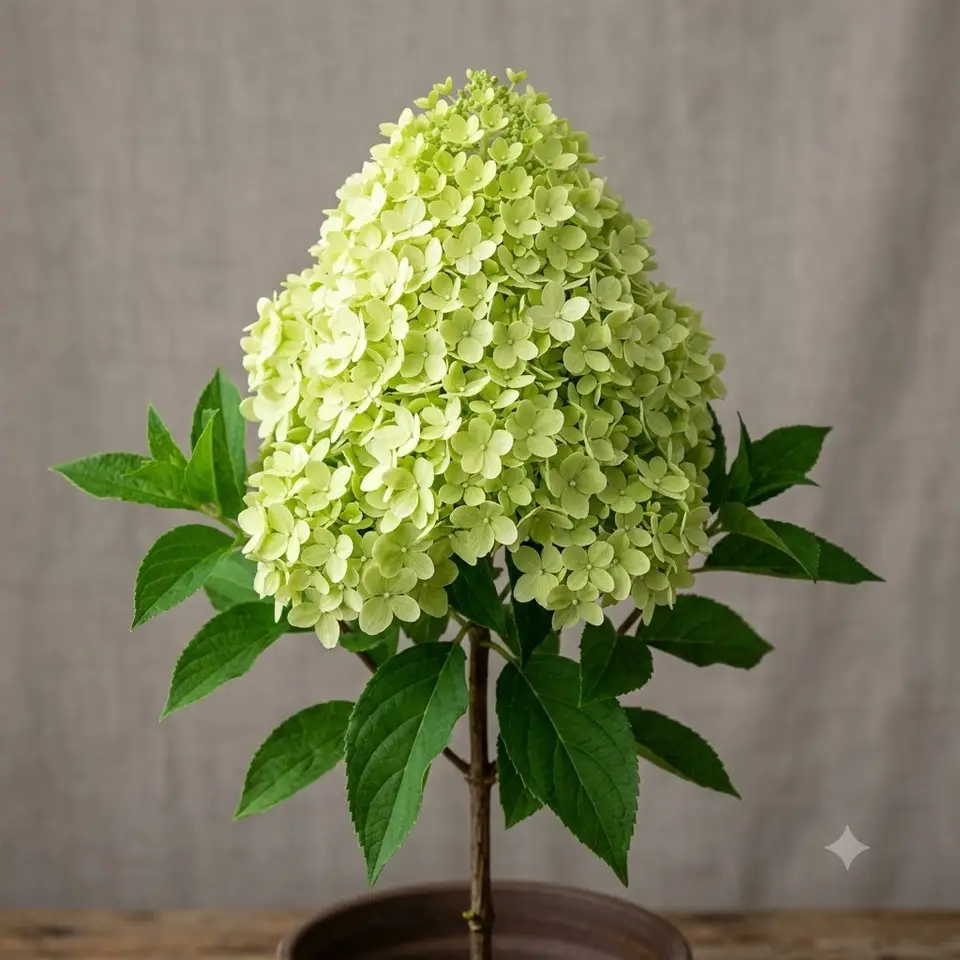
Limelight is a panicle hydrangea prized for the cool, lime-green tint of its huge cone-shaped flower heads, a colour that sets it apart from the usual creamy-white paniculatas (Hydrangea 'Limelight').
Last reviewed: September 2026
 AI illustration
 Overview
Limelight is a panicle hydrangea prized for the cool, lime-green tint of its huge cone-shaped flower heads, a colour that sets it apart from the usual creamy-white paniculatas (Hydrangea 'Limelight'). It is one of the toughest and most reliable hydrangeas you can grow, blooming dependably on new growth even in colder gardens. The chartreuse blooms shift through white and then dusky pink as the season turns, giving months of changing colour from a single shrub.
Origin & Background
The species behind this cultivar, panicle hydrangea (Hydrangea paniculata), is native to eastern Asia, growing wild across China, Japan, Korea and the Russian Far East, where it forms a large shrub or small tree. 'Limelight' itself is a selected cultivar raised in the Netherlands by nurseryman Pieter Zwijnenburg and introduced to gardens in the early 2000s. It quickly became one of the most widely planted paniculata selections thanks to its distinctive green flowers and sturdy habit.
Appearance
The flower heads are large, dense, upright panicles roughly 20 to 30 cm long that open a soft lime-green in mid to late summer. As they age they pass to creamy white, then take on rose and burgundy tones through autumn, and the dried heads often persist into winter. The plant makes a rounded, multi-stemmed deciduous shrub with dark green oval leaves, typically reaching about 1.8 to 2.4 m tall with a similar spread at maturity, though it can be kept smaller by pruning. Bloom time runs from roughly July through September, with the colour show carrying on well after the initial flush.
Why People Grow It - Qualities & Benefits
- Blooms on new wood, so flowering is reliable even after a hard winter or a late frost
- Huge, long-lasting flower heads that change colour from green to white to pink over the season
- Very cold hardy and low fuss, tolerating a wide range of soils and conditions
- Excellent as a cut flower fresh and holds its form beautifully when dried
Care
Light: Full sun to part shade; at least six hours of sun gives the strongest, most upright blooms, though afternoon shade helps in hot climates. Water: Moderate and even moisture, especially while establishing; water deeply in dry spells but avoid waterlogged soil. Soil: Adaptable to most soils, from loam to clay, if reasonably well drained and enriched with organic matter. Unlike bigleaf hydrangeas, panicle hydrangeas do not change flower colour with soil pH, so the lime-to-pink shift happens regardless of whether your soil is acid or alkaline. Hardiness: USDA zones 3 to 8. Bloom or Season: Mid to late summer into autumn, roughly July to September, with faded heads holding on for winter interest. Extra: Because it flowers on new wood, prune in late winter or early spring to shape and encourage bigger blooms. Note that this plant is toxic to cats, dogs and horses if eaten.
Planting & Propagation
Plant in autumn or spring, setting the shrub at the same depth it grew in its pot and spacing plants around 1.5 to 2 m apart to allow for the mature spread. Water in well and mulch to conserve moisture. Named cultivars like Limelight do not come true from seed, so propagate from cuttings instead: take softwood cuttings in early summer or hardwood cuttings in late autumn and root them in a free-draining, moist mix. Simple layering also works well - pin a low, flexible stem to the ground, let it root over a season, then sever and transplant it.
Common Problems & Pests
- Flower heads can flop on very long stems after rain, especially on plants that are over-fed or heavily shaded
- Powdery mildew and leaf spot may appear in humid, crowded conditions with poor air flow
- Aphids and occasional spider mites can gather on soft new growth
Toxicity & Safety
Limelight, like other hydrangeas, is toxic to cats, dogs and horses. The leaves and flowers contain a cyanogenic glycoside, and eating them can cause vomiting, diarrhoea and lethargy. Poisoning is uncommon because the plant is not especially palatable and a pet would usually need to eat a fair amount, but it is sensible to discourage chewing on the foliage or spent blooms and to contact a vet if you suspect a large quantity has been eaten.
Pros & Cons
Pros
- Reliable flowering on new wood, so no worry about losing buds to winter cold
- Long season of colour with minimal care, suited to beginners
Cons
- Can grow quite large and may need annual pruning to stay in bounds
- Blooms may need staking or careful siting to stop them flopping
Best Suited For
- Beginner gardeners wanting a dependable, high-impact flowering shrub
- Cold-climate gardens (down to zone 3) needing summer and autumn colour
FAQ
Does the flower colour change with soil pH?
No. That trick belongs to bigleaf hydrangeas. Limelight is a panicle hydrangea, so its green-to-white-to-pink shift is driven by the season and maturity of the blooms, not by whether your soil is acid or alkaline.
When and how should I prune it?
Prune in late winter or early spring, before new growth starts. Because it flowers on the current year's wood, you can cut it back fairly hard to build a strong framework and encourage larger flower heads without sacrificing that season's bloom.
Gear for growing limelight hydrangea
Links go to Amazon or a partner store (such as Adagio Teas) and may earn us a commission at no extra cost to you. As an Amazon Associate we earn from qualifying purchases. We link gear types, not sponsors' picks: you choose the exact product.