Incrediball Hydrangea
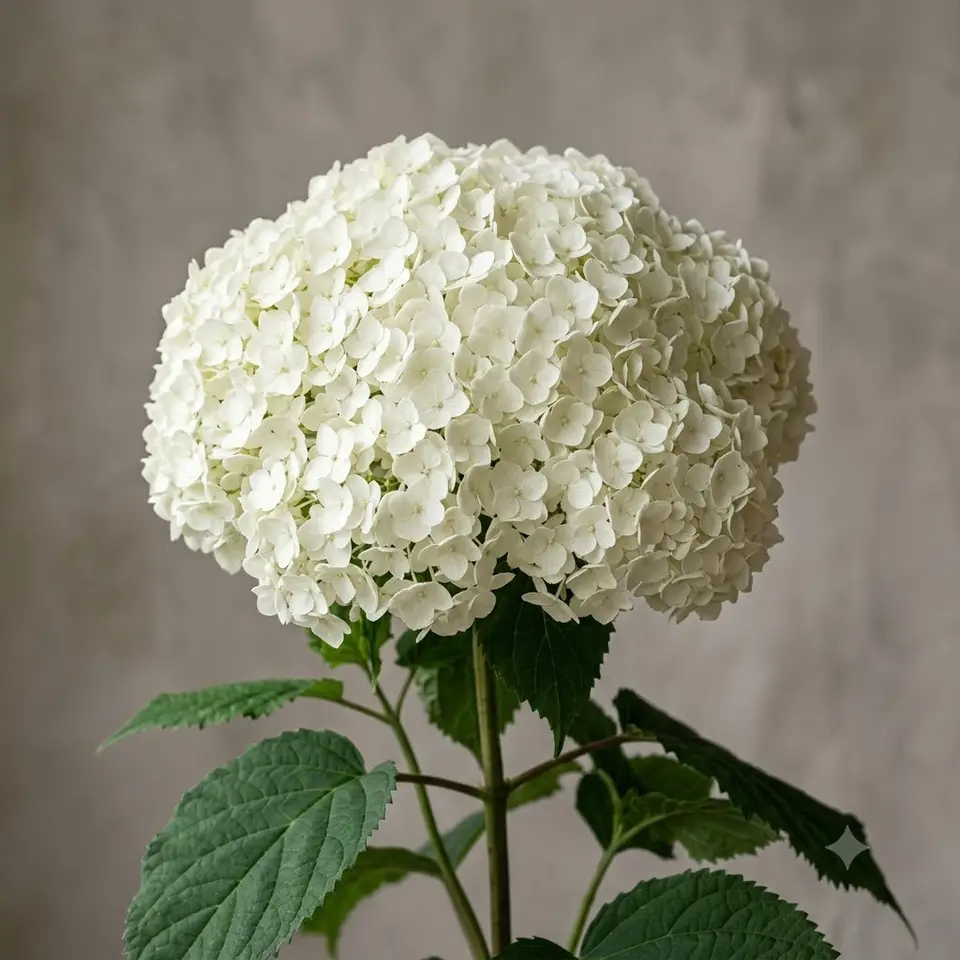
Incrediball is a smooth hydrangea bred as a sturdier successor to the classic 'Annabelle', carrying enormous rounded white flower heads on stems strong enough to hold them upright (Hydrangea arborescens 'Incrediball').
Last reviewed: September 2026
 AI illustration
 Overview
Incrediball is a smooth hydrangea bred as a sturdier successor to the classic 'Annabelle', carrying enormous rounded white flower heads on stems strong enough to hold them upright (Hydrangea arborescens 'Incrediball'). What sets this cultivar apart is the combination of basketball-sized blooms and thick, self-supporting canes that resist the flopping that plagues older smooth hydrangeas. Because it flowers on new wood, it blooms reliably every year even after a hard winter or a spring pruning.
Origin & Background
The genus Hydrangea includes species native to the Americas and eastern Asia, and the parent species here, Hydrangea arborescens, grows wild in woodlands and along stream banks across the eastern United States. Incrediball is a modern selection (cultivar name 'Abetwo') developed to improve on 'Annabelle', chosen specifically for its larger flower heads and notably stronger stems that keep the blooms from collapsing after rain.
Appearance
The flowers open pale green, mature to clean white, and fade back to soft green and tan as the season ends, forming huge rounded mophead clusters that can reach 25 to 30 cm across. Blooms appear from early summer and carry on into late summer and early autumn, sitting above bright green, coarsely toothed foliage. Mature plants form a rounded shrub roughly 1.2 to 1.5 m tall and 1.2 to 1.5 m wide. Unlike bigleaf hydrangeas, the flower colour does not shift with soil pH; it stays in the white to green range regardless of soil chemistry. The dried heads often persist into winter for extra structure.
Why People Grow It - Qualities & Benefits
- Very large white blooms that create a strong focal point in summer borders
- Thick, upright stems that resist flopping far better than older smooth hydrangeas
- Blooms dependably on new wood, so flowering is not lost to winter cold or spring pruning
- Cold hardy and low fuss, making it a forgiving choice for beginner gardeners
Care
Light: Full sun to part shade; in hot regions afternoon shade helps prevent wilting and keeps blooms fresh. Water: Moderate and consistent; it likes evenly moist soil and will wilt quickly in drought, so water deeply during dry spells. Soil: Fertile, well-drained soil rich in organic matter; it tolerates a range of pH. Note that bigleaf hydrangeas can swing blue to pink with soil pH, but this smooth hydrangea stays white to green regardless. Hardiness: USDA zones 3 to 9. Bloom or Season: Early summer through early autumn, with a long display as heads shift from green to white and back to green. Extra: Prune hard in late winter or early spring to encourage strong new stems and the biggest flower heads, since it blooms entirely on new growth. Note: this plant is toxic to cats, dogs and horses; the leaves and flowers contain a cyanogenic glycoside and ingestion can cause vomiting, diarrhoea and lethargy.
Planting & Propagation
Plant in spring or early autumn in a hole as deep as the root ball and twice as wide, setting the crown level with the soil and watering in well. Named cultivars like this are not grown from seed, as seedlings will not come true; instead propagate from softwood cuttings taken in early summer or hardwood cuttings in the dormant season. Simple layering also works well: bend a low, flexible stem down, nick the underside, pin it into the soil until it roots, then sever and transplant.
Common Problems & Pests
- Wilting and leaf scorch in hot, dry, or overly sunny sites without enough water
- Aphids and spider mites, which can cluster on tender new growth
- Leaf spot and powdery mildew in humid conditions or where air circulation is poor
Toxicity & Safety
Incrediball is toxic to cats, dogs and horses. The leaves and flowers contain a cyanogenic glycoside, which on ingestion can lead to vomiting, diarrhoea and lethargy. Serious poisoning is uncommon because animals rarely eat large amounts, but it is sensible to site the plant away from pets that tend to chew foliage and to contact a vet if you suspect ingestion.
Pros & Cons
Pros
- Huge white blooms on strong stems that stay upright
- Reliable annual flowering on new wood, even after cold winters
Cons
- Wilts quickly if it dries out and needs steady moisture
- Blooms are so large they can weigh stems down in heavy rain despite the sturdier canes
Best Suited For
- Gardeners wanting a big, dependable summer-flowering shrub with minimal fuss
- Cold-climate borders and mass plantings where a strong white focal point is wanted
FAQ
Do I need to prune Incrediball hydrangea?
Yes, and it is easy. Cut stems back in late winter or early spring before new growth starts. Because it flowers on new wood, hard pruning encourages vigorous stems and the largest blooms without any risk of losing that year's flowers.
Will the flowers turn blue in acidic soil?
No. Unlike bigleaf hydrangeas, this smooth hydrangea does not change colour with soil pH. The blooms open green, mature to white, and age back to green regardless of your soil chemistry.
Sources
Pet toxicity: checked against the ASPCA Animal Poison Control Center lists of toxic and non-toxic plants for cats and dogs, entry "Hydrangea" (Hydrangea arborescens): toxic to cats and dogs. Lists read on 10 October 2026.
Gear for growing incrediball hydrangea
Links go to Amazon or a partner store (such as Adagio Teas) and may earn us a commission at no extra cost to you. As an Amazon Associate we earn from qualifying purchases. We link gear types, not sponsors' picks: you choose the exact product.