Hosta
This guide covers hostas as shade perennials, from size classes and leaf colors to slugs, division, plant viruses and the risk to pets.
Last reviewed: November 2026
 AI illustration
Overview
This guide covers hostas as shade perennials, from size classes and leaf colors to slugs, division, plant viruses and the risk to pets. RHS counts them among the best foliage plants and calls them easy to grow and long-lived (RHS, how to grow hostas). NC State puts the genus at 22 species and more than 2,000 cultivars, so a rule for one kind may not suit the next (NC State, Hosta). The main job is keeping slugs and snails off the leaves, and an RHS study found no benefit from several popular barriers (RHS, slugs and snails). All parts are toxic for cats, dogs and horses (NC State, Hosta).
Origin & Natural Habitat
Hostas are herbaceous perennials in the asparagus family, Asparagaceae, whose wild range covers China, Korea, Japan and the Russian Far East (NC State, Hosta). NC State dates their arrival in America to the mid-1800s, and says the name Hosta commemorates Nicholaus Thomas Host, an Austrian physician and botanist of the 19th century (NC State, Hosta).
Two species come up most often. Hosta plantaginea comes from China, smells strongly and puts up with heat, while H. sieboldiana comes from Japan, has waxy blue leaves and prefers shade and cooler weather (NC State, Hosta).
Appearance
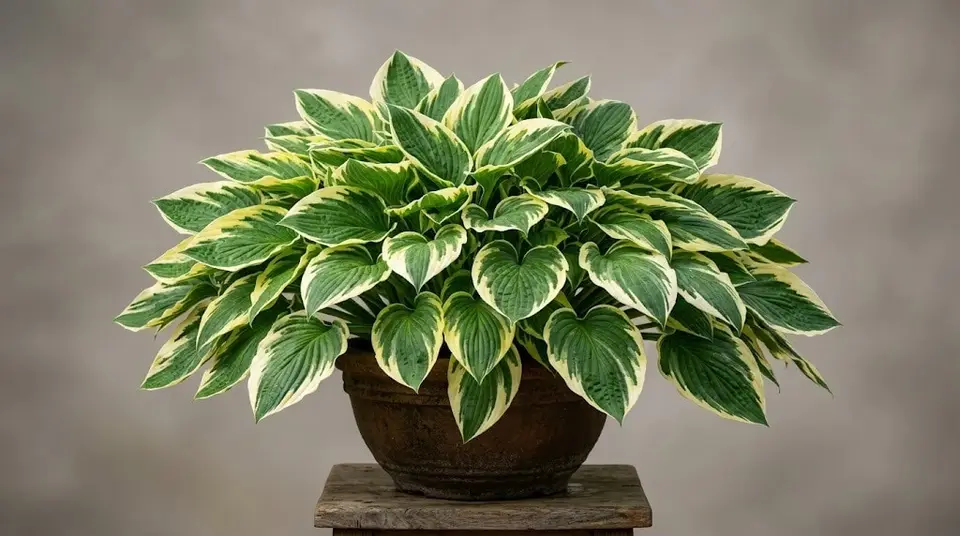
Hostas spread from rhizomes into leafy clumps (NC State, Hosta). Clemson describes leaf shapes from round or oval to heart-shaped or strap-like, and surfaces that are flat, wavy or puckered (Clemson, hosta). The flowers are trumpets or bells in white, lavender or purple, and NC State notes that some hybrids reach red, yellow or pink (NC State, Hosta). Depending on the plant, they open anywhere from early summer to fall (Clemson, hosta).
The American Hosta Society sorts hostas by mature height, and NC State reprints the scale (NC State, Hosta):
| Size class | Mature height | Source |
|---|---|---|
| Dwarf | Less than 4 inches (10 cm, computed) | NC State, Hosta |
| Miniature | 4 to 6 inches (10-15 cm, computed) | NC State, Hosta |
| Small | 6 to 10 inches (15-25 cm, computed) | NC State, Hosta |
| Medium | 10 to 18 inches (25-46 cm, computed) | NC State, Hosta |
| Large | 18 to 28 inches (46-71 cm, computed) | NC State, Hosta |
| Giant | More than 28 inches (71 cm, computed) | NC State, Hosta |
The society also uses five leaf-color groups: green, blue, gold, medio-variegated (pale middle, dark edge) and marginal variegated (the reverse) (NC State, Hosta).
For the genus as a whole, the two American sources give different ceilings (NC State, Hosta, Clemson, hosta):
| Source | Height | Spread |
|---|---|---|
| NC State, Hosta | 4 in to 2 ft 6 in | 6 in to 3 ft (15-91 cm, computed) |
| Clemson, hosta | Mostly 1 to 2½ feet (30-76 cm, computed), the largest 4 feet (1.2 m, computed) | Not given for the genus |
Clemson adds that growing conditions change the size, so treat a plant label as a guide (Clemson, hosta).
Why People Grow It - Uses & Benefits
- Leaves for shady corners: NC State says the foliage, not the flower, is the main reason to grow most kinds (NC State, Hosta).
- A size for each job: NC State suggests dwarf and miniature kinds for rock gardens or tight spots, small and medium ones as ground cover, and large and giant ones as a backdrop (NC State, Hosta).
- A very long life: Clemson says a hosta in a good spot may outlive its gardener (Clemson, hosta).
- Low maintenance: NC State rates the genus low-maintenance, and RHS calls it easy to grow (NC State, Hosta, RHS, how to grow hostas).
- Scented evening flowers: H. plantaginea has large white flowers that open in the evening, and NC State calls it the most fragrant of the genus and a frequent cut flower (NC State, Hosta plantaginea).
- Visitors in flower: NC State says bees, butterflies and hummingbirds come to the blooms (NC State, Hosta).
Care
Light & Position
Partial shade is the safest choice for most hostas (RHS, how to grow hostas). NC State says they do well in dappled shade or with sun in the morning (NC State, Hosta), and Clemson adds that even sun-tolerant cultivars do best with shade in the afternoon (Clemson, hosta).
Leaf color changes the advice, and the sources do not fully agree. RHS says blue-leaved kinds do well in light shade and yellow-leaved ones like some sun (RHS, how to grow hostas). NC State reports that blue-leaved forms need deep shade and green-leaved ones accept partial shade, and it advises full or dappled shade in the South to keep color strong and avoid leaf burn (NC State, Hosta). Too much sun turns leaves pale and can cause dieback, mainly in dry spells (Clemson, hosta).
If you want more sun, start with H. plantaginea. NC State and Clemson both name it the most heat- and sun-tolerant species (NC State, Hosta plantaginea, Clemson, hosta). Clemson grows it anywhere from shade up to about three-quarters of the day in sun (Clemson, hosta), and NC State allows full sun in cooler climates if the soil stays moist (NC State, Hosta plantaginea).
Shelter matters too. RHS says hostas are a poor match for exposed, windy spots (RHS, how to grow hostas), and NC State warns that wind and hail can damage exposed leaves (NC State, Hosta).
Soil
Use soil that stays moist, drains well and holds plenty of organic matter (NC State, Hosta, Clemson, hosta). NC State prefers it slightly acidic and says hostas cannot stand soggy ground, especially in winter, since poor drainage can bring root and crown rot (NC State, Hosta). RHS accepts fertile soils including heavy clay if you work in garden compost or well-rotted manure (RHS, how to grow hostas). Dry soil is the weak point: RHS calls hostas not really suitable for it, and if yours leans dry it suggests kinds with thicker, waxier leaves (RHS, how to grow hostas).
Watering
Keep the soil evenly moist while the plant is in leaf (RHS, how to grow hostas, Clemson, hosta). Clemson asks for at least an inch of water a week when rain falls short, and extra in heat, in sun or near the roots of trees and shrubs (Clemson, hosta). RHS gives a simple test: dig down beside the plant and aim for soil that is at least slightly damp to 15 cm (6 in) (RHS, how to grow hostas). Plants in pots dry out quickly and need regular summer watering (RHS, how to grow hostas).
Two side effects are worth knowing. A plant that dries out browns along the leaf edge (RHS, how to grow hostas). On blue kinds, hard rain or heavy-handed watering can rub off the waxy coating that gives the color, and the leaf fades to green (Clemson, hosta).
Feeding
How much a hosta needs depends on the soil. RHS says that in fertile ground a yearly mulch of garden compost or rotted manure is enough on its own, while poorer soil gets a general-purpose fertilizer in early spring and then a mulch (RHS, how to grow hostas). Clemson uses a balanced slow-release fertilizer once growth begins and warns against heavy rates (Clemson, hosta). In pots, RHS gives a general-purpose liquid feed once a month while the plant is growing (RHS, how to grow hostas). No source gives one dose for all, so follow the product label.
Temperature & Humidity
We found no humidity figure for hostas in the sources we checked. Heat is the real limit: NC State warns about leaf burn in the South, and RHS says a hot, sunny place with dry soil does not suit them (NC State, Hosta, RHS, how to grow hostas).
Pruning & Deadheading
Hostas need no regular pruning (RHS, how to grow hostas). Take off damaged or tatty leaves when you see them, then cut down the dying foliage and old flower stalks in autumn (RHS, how to grow hostas). Clemson says that clearing dead leaves and tidying around the plant in fall helps control diseases and slugs (Clemson, hosta).
The sources differ on flower stalks. RHS lets you leave them until the autumn tidy or remove them as the blooms fade (RHS, how to grow hostas), while Clemson takes them off after flowering so the plant puts its strength into growth instead of seed (Clemson, hosta).
Hardiness zones & winter care
Hostas are tough in the cold, and the sources add details that matter in a mild climate (RHS, how to grow hostas, NC State, Hosta, Clemson, hosta):
| Source | Applies to | Figure |
|---|---|---|
| RHS, how to grow hostas | Hostas in general | Fully hardy, dormant from late autumn to mid-spring |
| NC State, Hosta | Genus | USDA zones 3a to 9b |
| NC State, Hosta | Winter rest | Below 40 °F (4 °C, computed) for a couple of months |
| NC State, Hosta | Foliage dies back | At 28 °F, a little below freezing, or colder |
| Clemson, hosta | H. plantaginea | No long dormant period needed |
Checked: 22 November 2026
Clemson calls H. plantaginea cultivars ideal for the South and says they do well on the coast because they need no long dormancy (Clemson, hosta). In spring, frost can damage new leaves: RHS says you can cover them with two or three layers of fleece when frost is forecast, though it calls this a job for the very keen (RHS, how to grow hostas). Pots can waterlog in winter, so RHS stands them at the foot of a wall or fence, where it is drier (RHS, how to grow hostas).
Repotting & Containers
RHS plants hostas in large containers 30-45 cm (1 ft to 18 in) across, with drainage holes and a peat-free multipurpose or loam-based compost, for example John Innes No. 3 (RHS, how to grow hostas). Set the top of the rootball at the level it had in the old pot, water well, and keep watering while the plant is in leaf (RHS, how to grow hostas). Miniatures need good drainage, and a gravel mulch around them stops soil splashing onto the leaves (RHS, how to grow hostas). Pots may help with slugs, but RHS warns that vine weevil can then become the problem (RHS, how to grow hostas).
Planting & Propagation
RHS says planting can happen in any season, with midsummer the one to avoid, because the ground tends to be hot and dry (RHS, how to grow hostas). Clemson favors early fall or spring before the leaves unfold (Clemson, hosta). Dig a hole as deep as the rootball and twice as wide, loosen the roots with your fingers, refill, firm and water in (RHS, how to grow hostas). Keep watering through the first summer and add a mulch of well-rotted organic matter to hold moisture (RHS, how to grow hostas).
Spacing
RHS spaces hostas up to 90 cm (3 ft) apart, with bigger kinds further apart (RHS, how to grow hostas). Clemson gives 1 to 3 feet (30-91 cm, computed), and it also suggests wider spacing as one way to reduce slug trouble (Clemson, hosta).
When to divide
The sources set different intervals. NC State's interval is 3 to 5 years, in early spring as the leaves come up (NC State, Hosta). RHS says every 4-5 years, in autumn or early spring (RHS, how to grow hostas). Clemson says hostas do best left alone for several years, and that dividing in summer heat means far more aftercare (Clemson, hosta).
Propagation steps
- Pick early spring or autumn (RHS, how to grow hostas).
- Lift the clump with a fork, or tip it out of its pot, without harming the growing points on top (RHS, how to grow hostas).
- Rest it on a plastic sheet or a board (RHS, how to grow hostas).
- Cut down between the shoots using an old kitchen knife or a sharp spade, and keep your tools clean (RHS, how to grow hostas, Clemson, hosta).
- Leave one to three good buds on each piece and trim off damaged roots (RHS, how to grow hostas).
- Replant at the old depth, with shoots just showing above the soil, and water (RHS, how to grow hostas).
Divisions match the parent, and flowers should follow from the second year (RHS, how to grow hostas). Seed is different: RHS and NC State both say it will generally not give you the same plant, and RHS adds that seed from variegated hostas gives plain leaves (RHS, how to grow hostas, NC State, Hosta).
Common Problems & Pests
RHS calls hostas largely trouble-free in moist, fertile soil with some shade, apart from slugs and snails (RHS, how to grow hostas).
Slugs and snails: what the sources back
RHS says some feeding is normal and that these animals cannot and should not be wiped out, so protect the plants that matter most (RHS, slugs and snails). It names hosta among the few plants that get severely eaten (RHS, slugs and snails).
| Method | What the source says | Source |
|---|---|---|
| Copper tape, bark mulch, eggshells, sharp grit, wool pellets | No reduction in slug damage in a recent RHS garden study | RHS, slugs and snails |
| Thicker leaves | RHS names 'Devon Green' and Clemson 'Sum & Substance' as less eaten | RHS, how to grow hostas, Clemson, hosta |
| Torch and hand-picking | Search on mild, damp evenings and collect them | RHS, slugs and snails |
| Morning watering | Evening watering helps them move around at night | RHS, slugs and snails |
| Beer traps | Sunk into the soil near the plant and emptied, every morning if you can; Clemson adds a raised cover against rain, dogs and cats | RHS, slugs and snails, Clemson, snails and slugs |
| Nematode drench | Hits all slugs, including harmless kinds, and rarely snails; needs moist soil at 5-20 °C (41-68 °F) and may do less in heavy clay | RHS, slugs and snails |
The sources split on bait. RHS says not to use slug pellets, even organic ones, because they harm garden wildlife (RHS, slugs and snails). Clemson keeps baits as a last resort, prefers iron phosphate, which it says does far less harm than metaldehyde to birds, pets and non-target insects, and says to consult the label (Clemson, snails and slugs). We do not recommend a product, and if you use one, follow its label.
Mulch pulls both ways too: RHS uses it to hold moisture (RHS, how to grow hostas), and Clemson says that clearing mulch and leaf litter near the plants discourages slugs (Clemson, snails and slugs).
Pests at a glance
Each row comes from the source named beside it (NC State, Hosta, Clemson, hosta, RHS, how to grow hostas, Clemson, snails and slugs):
| Problem | Signs or cause | Source |
|---|---|---|
| Slugs and snails | Large ragged holes, from spring until the first frost | Clemson, snails and slugs |
| Foliar nematodes | Yellow and brown between the main veins | Clemson, hosta |
| Hosta virus X and other viruses | Mottling, ring spots, puckered or twisted leaves, no cure | Clemson, hosta |
| Hosta anthracnose | Big whitish spots, brown at the edge, on leaves and stalks; take off affected leaves | Clemson, hosta |
| Leaf spot | Rare | NC State, Hosta |
| Root and crown rot | Poorly drained soil | NC State, Hosta |
| Vine weevil | A risk for container plants | RHS, how to grow hostas |
| Scorched, brown leaves | Dry soil or too much sun | RHS, how to grow hostas |
| Voles | Eat the roots and can kill the plant | Clemson, hosta |
| Deer and rabbits | Browse the leaves | NC State, Hosta |
Checked: 22 November 2026
Two habits help with the problems you cannot treat. Clemson says viruses travel with insects and with sap, including when you divide a plant or cut off leaves and flower stalks, and that Hosta virus X is more common on some cultivars such as 'Sum & Substance' (Clemson, hosta). An infected plant should be dug out and destroyed (NC State, Hosta, Clemson, hosta). Clemson also suggests buying in late summer or fall, when foliar nematode damage can be seen, and leaving behind any with yellow and brown between the veins (Clemson, hosta).
If leaves scorch, RHS says the best long-term fix is to replant in more shade (RHS, how to grow hostas).
Toxicity & Safety
Toxic for cats, dogs and horses. NC State says all parts of hostas are toxic to these three animals (NC State, Hosta). The card gives no symptoms and no warning for people, so we do not add any. Keep pets from chewing the leaves, and if one eats it and seems unwell, call your vet or a pet poison helpline. Slug bait is a second danger in a hosta bed, because Clemson warns that it can poison pets too (Clemson, hosta).
For other plants, see our plant list for cats and dogs.
Best Suited For
Good fit if:
- you have partial shade and soil that stays moist (RHS, how to grow hostas);
- you want foliage more than flowers (NC State, Hosta);
- you need ground cover, edging or a plant for a rock garden (NC State, Hosta);
- you are ready to deal with slugs from spring onward (Clemson, snails and slugs);
- you want scent in a warmer garden and can choose H. plantaginea (NC State, Hosta plantaginea, Clemson, hosta).
Think twice if:
- you keep cats, dogs or horses that chew plants (NC State, Hosta);
- your garden is hot, sunny and dry (RHS, how to grow hostas);
- deer, rabbits or voles are common where you live (NC State, Hosta, Clemson, hosta);
- the site is windy and exposed (RHS, how to grow hostas).
FAQ
Why are my hosta leaves full of holes? Usually slugs and snails, which feed at night and leave ragged holes and slime trails (RHS, slugs and snails). If you see yellow and brown between the veins instead, think of foliar nematodes (Clemson, hosta).
Do copper tape and eggshells stop slugs? An RHS study set up like a real garden saw no drop in slug damage with wool pellets, sharp grit, eggshells, bark mulch or copper tape (RHS, slugs and snails).
Can hostas grow in full sun? Most do better with shade in the afternoon (Clemson, hosta). H. plantaginea takes the most sun, and NC State allows full sun in cooler climates if the soil stays moist (NC State, Hosta plantaginea).
Are hostas safe for pets? No. NC State says all parts are toxic for cats, dogs and horses (NC State, Hosta). If a pet eats it and seems unwell, call your vet.
Why are my hosta leaves turning brown at the edges? RHS links brown, scorched leaves to dry soil or too much sun and says replanting in more shade is the best long-term fix (RHS, how to grow hostas).
Why did my blue hosta turn green? Clemson says the waxy coating behind the blue color can be rubbed off by strong rain or vigorous watering (Clemson, hosta).
When should I divide hostas? NC State says once in 3 to 5 years, early in spring, and RHS every 4-5 years, in autumn or early spring (NC State, Hosta, RHS, how to grow hostas).
Sources
The facts on this page link to these sources:
- RHS, how to grow hostas (rhs.org.uk)
- NC State, Hosta (plants.ces.ncsu.edu)
- RHS, slugs and snails (rhs.org.uk)
- Clemson, hosta (hgic.clemson.edu)
- NC State, Hosta plantaginea (plants.ces.ncsu.edu)
- Clemson, snails and slugs (hgic.clemson.edu)
General information only. If you suspect poisoning, call a poison control center, a doctor or a vet straight away.
Kit for planting and dividing hostas
Links go to Amazon or a partner store (such as Adagio Teas) and may earn us a commission at no extra cost to you. As an Amazon Associate we earn from qualifying purchases. We link gear types, not sponsors' picks: you choose the exact product.