Hybrid Tea Roses
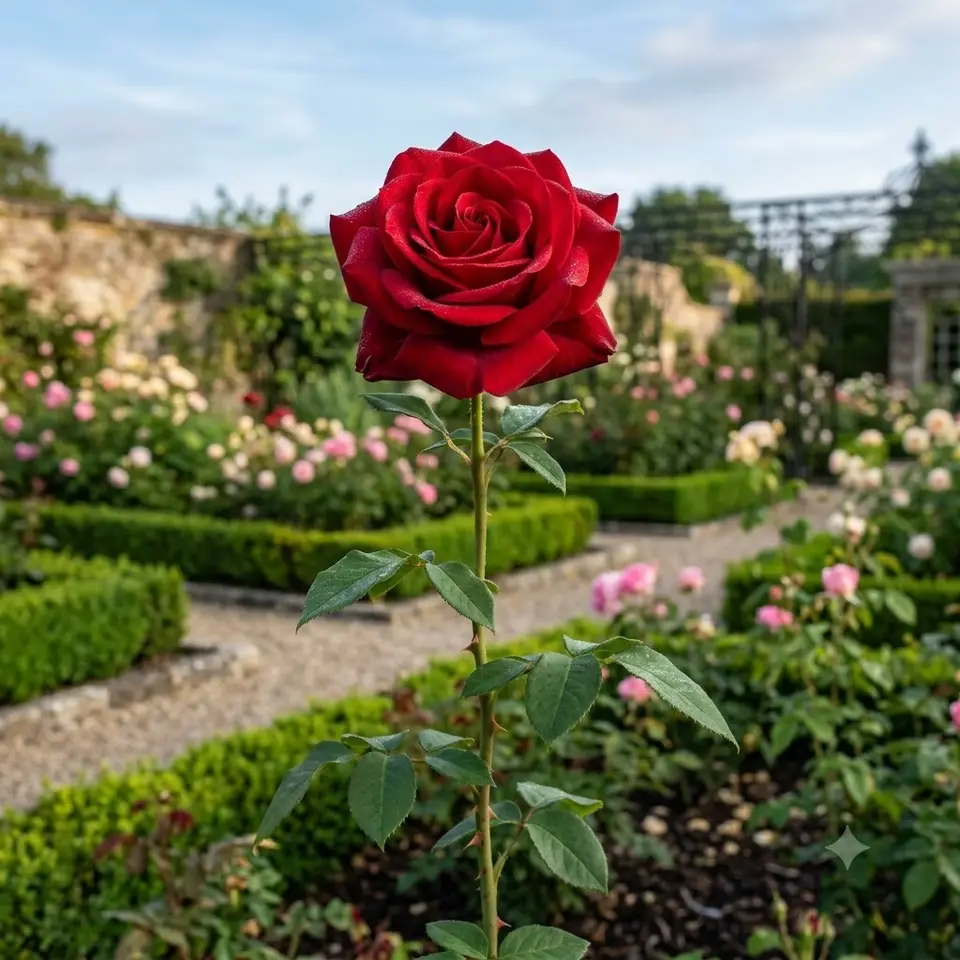
Hybrid teas are THE florist rose - one large, high-centered, spiraled bloom per long straight stem, made for the vase and the show bench.
Last reviewed: October 2026
 AI illustration
 Overview
Hybrid teas are THE florist rose - one large, high-centered, spiraled bloom per long straight stem, made for the vase and the show bench. They define what most people picture as 'a rose', and they demand the most formal care of any class in return. (Rosa: hybrid tea class.)
Origin & Natural Habitat
Born 1867 with 'La France' - the cross of hardy hybrid perpetuals with elegant tea roses that started modern rose breeding; every classic cut rose descends from here.
Appearance
Upright bushes 1-1.5 m with sparse-ish foliage and those signature solitary blooms, 10-14 cm, in every color breeding allows, on cutting-length stems.
Why People Grow It - Qualities & Benefits
- The classic long-stem cut flower from your own garden
- Show-bench form and huge color range
- Repeat flushes all season
- Many are intensely fragrant (choose for it: not all are)
Care
Light: Full sun, 6+ hours a day.
Water: Deep soak at the base about once a week, more in heat.
Soil & Feeding: As for every garden rose - the full routine is in the rose care guide.
Temperature & Hardiness: Zones 5-9 with winter protection at the cold end (mound the graft union); the most cold-tender major class.
Pruning & Maintenance: The formal class: hard annual spring pruning to 3-5 outward canes at 20-30 cm, deadhead to a 5-leaflet, remove blind shoots. The pruning IS the culture.
Planting & Propagation
Grafted commercially; home gardeners buy bare-root or potted. Plant with the graft union at or just below soil per your climate.
Common Problems & Pests
- Blackspot and mildew: the class's curse; choose resistant modern varieties
- Winter dieback without protection
- Sparse 'legs': underplant them
- Aphids on the succulent new growth
Toxicity & Safety
Roses are non-toxic to dogs and cats - the thorns are the only hazard.
Pros & Cons
Pros
- Unmatched bloom form & stems
- Full color spectrum
- The cutting-garden standard
Cons
- Most disease-prone class
- Formal pruning required
- Stiff, gawky bush shape
Best Suited For
- Cutting gardens
- Formal rose beds
- Show growers
- Fragrance collectors (chosen varieties)
FAQ
Why do mine get black spots every year?
Blackspot is endemic to the class - water at the base in mornings, clear fallen leaves, and above all plant modern resistant hybrid teas; resistance is the real cure.
When do I prune?
Early spring at bud-swell (forsythia bloom is the folk signal): hard, to outward-facing buds, removing dead and crossing wood entirely.
Gear for growing hybrid tea roses
Links go to Amazon or a partner store (such as Adagio Teas) and may earn us a commission at no extra cost to you. As an Amazon Associate we earn from qualifying purchases. We link gear types, not sponsors' picks: you choose the exact product.