Garnet Japanese Maple
Garnet is a laceleaf (dissectum) cultivar of Japanese maple grown for its deeply cut, feathery foliage that holds a rich garnet-red colour through much of the growing season - longer than many red dissectums, which fade to bronze or green by midsummer (Acer palmatum var. dissectum 'Garnet').
Last reviewed: September 2026
 AI illustration
 Overview
Garnet is a laceleaf (dissectum) cultivar of Japanese maple grown for its deeply cut, feathery foliage that holds a rich garnet-red colour through much of the growing season - longer than many red dissectums, which fade to bronze or green by midsummer (Acer palmatum var. dissectum 'Garnet'). It forms a broad, cascading mound of weeping branches, making it one of the more vigorous and reliable red laceleaf maples for garden use.
Origin & Background
The species Acer palmatum is native to Japan, Korea, and parts of eastern China, where it grows as an understorey tree in cool, humid woodlands. 'Garnet' is a dissectum selection developed in the Western nursery trade in the 20th century and prized for combining strong red colour retention with the somewhat larger, faster growth typical of the more robust laceleaf cultivars.
Appearance
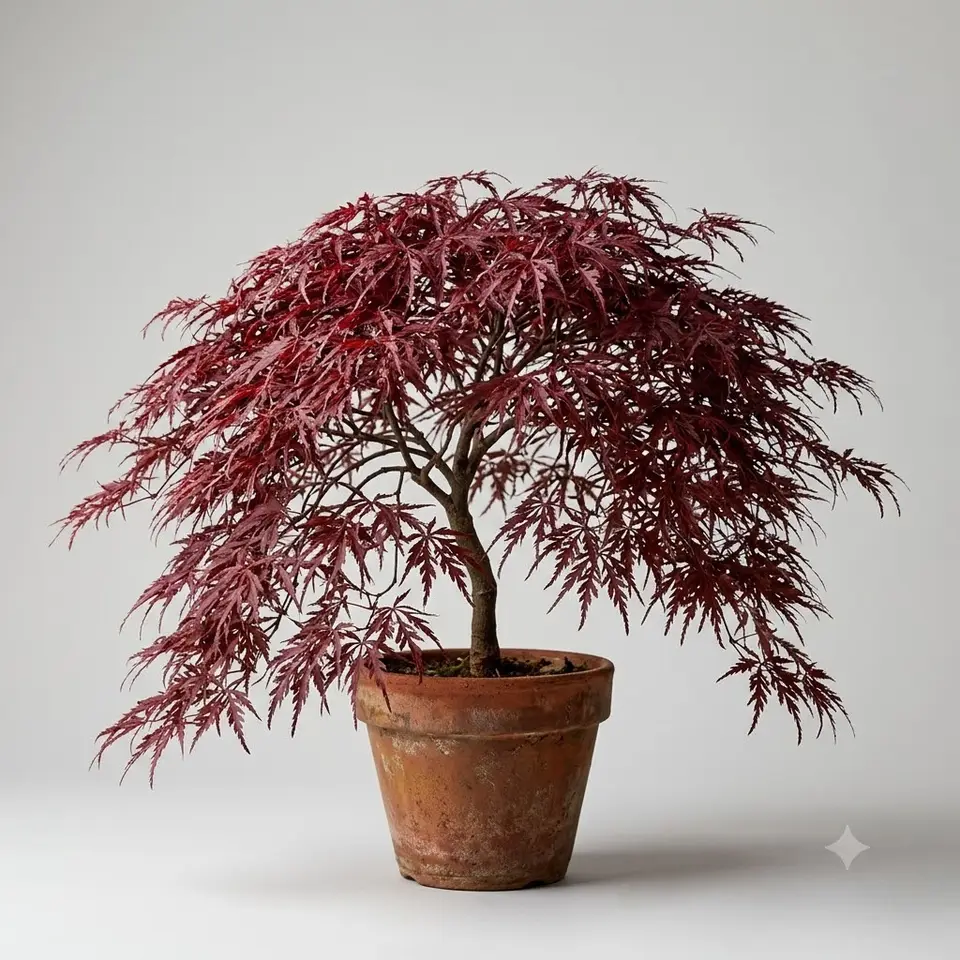
The leaves are palmate and finely dissected, each lobe cut almost to the midrib and further toothed, giving a lacy, fern-like texture. New growth and summer foliage are a deep garnet to orange-red, holding colour better in good light than many red dissectums before shifting to brilliant scarlet and crimson in autumn. Small reddish-purple spring flowers are followed by winged samaras, but the plant is grown chiefly for foliage and form. Habit is a low, weeping, dome-shaped mound; over 10 to 15 years it reaches roughly 2.4 to 3 m tall and can spread 3 to 3.6 m wide, wider than tall with age.
Why People Grow It - Qualities & Benefits
- Strong garnet-red foliage that resists fading through summer better than many laceleaf cultivars
- Elegant cascading, mounding form that suits focal points and container planting
- Two-season interest: red summer colour followed by fiery scarlet autumn display
- More vigorous and adaptable than many delicate dissectums, so it establishes reliably
Care
Light: Prefers dappled shade or morning sun with afternoon shade; tolerates more sun in cooler, northern climates but scorches in hot afternoon sun. Water: Needs consistent, even moisture in well-drained soil; water deeply during dry spells and avoid both drought stress and waterlogging. Soil: Fertile, humus-rich, moisture-retentive but sharply drained soil; slightly acidic pH (about 5.5 to 6.5) is ideal. Hardiness: USDA zones 5 to 8. Bloom or Season: Foliage plant from spring leaf-out through autumn; garnet-red spring and summer leaves turn scarlet-crimson before autumn leaf drop, then bare weeping branches give winter structure. Extra: Sheltered siting matters most - protect from harsh afternoon sun and drying wind to keep the fine foliage from crisping at the edges. Non-toxic to cats and dogs.
Planting & Propagation
Plant in spring or autumn in a sheltered spot, setting the graft union at or just above soil level and mulching to keep roots cool and evenly moist. 'Garnet' is almost always propagated by grafting onto seed-grown Acer palmatum rootstock, since seedlings do not come true to the parent. Home gardeners can attempt air-layering on established plants, though grafting remains the standard nursery method.
Common Problems & Pests
- Leaf scorch from too much sun, wind, or dry soil, showing as browned, crispy leaf margins
- Aphids and scale insects, plus occasional mites on stressed plants
- Verticillium wilt, anthracnose, and root rot in poorly drained or overly wet soils
Toxicity & Safety
Non-toxic to cats and dogs. Japanese maple (Acer palmatum) is not listed as toxic to pets, so 'Garnet' is a safe choice for gardens shared with animals. As with any plant, curious nibbling may cause mild, passing stomach upset, but it carries no known serious toxic risk.
Pros & Cons
Pros
- Holds red colour longer through summer than most laceleaf maples
- Graceful weeping form works as a specimen, in containers, or over water features
Cons
- Fine foliage scorches easily in exposed, hot, or windy sites
- Slow to moderate growth and grafted stock make it a higher-cost, patience-testing plant
Best Suited For
- Gardeners wanting a red-leaved focal specimen for a courtyard, patio, or entry bed
- Sheltered woodland-edge or Japanese-style gardens with dappled light and rich, moist soil
FAQ
Does Garnet keep its red colour all summer?
Better than most. Its garnet-red foliage resists the midsummer fade to bronze or green that affects many red dissectums, though colour is strongest in bright, indirect light and cooler conditions.
How big does a Garnet Japanese Maple get?
Expect a broad weeping mound of about 2.4 to 3 m tall and 3 to 3.6 m wide over 10 to 15 years, usually wider than it is tall.
Gear for growing garnet japanese maple
Links go to Amazon or a partner store (such as Adagio Teas) and may earn us a commission at no extra cost to you. As an Amazon Associate we earn from qualifying purchases. We link gear types, not sponsors' picks: you choose the exact product.