Glory-of-the-Snow
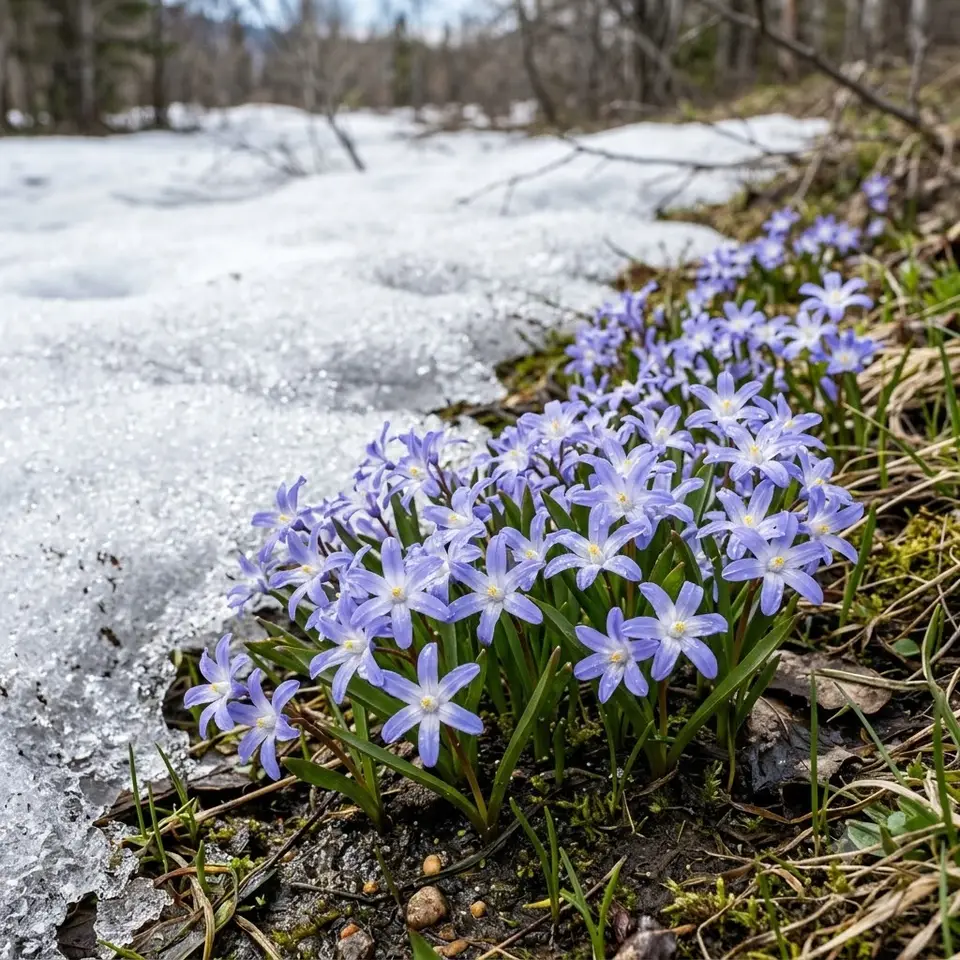
Glory-of-the-snow opens star-blue flowers with white hearts the moment drifts melt - the squill's upward-facing, softer-mannered cousin that spreads politely into lavender-blue pools without the takeover tendencies.
Last reviewed: October 2026
 AI illustration
 Overview
Glory-of-the-snow opens star-blue flowers with white hearts the moment drifts melt - the squill's upward-facing, softer-mannered cousin that spreads politely into lavender-blue pools without the takeover tendencies. The gentle blue for gardens that want charm with manners. (Chionodoxa (Scilla) luciliae.)
Origin & Natural Habitat
Mountain snowmelt slopes of western Turkey - blooming literally at the retreating snow edge.
Appearance
10-15 cm sprays of upward-facing starry blooms - lavender-blue with white centers (pink and white forms too) - a softer, lighter wash than scilla's saturated hang-down bells.
Why People Grow It - Qualities & Benefits
- Snow-edge earliness
- Up-facing stars read brighter than nodding bells
- Naturalizes politely (less pushy than squill)
- White-eyed blue is exquisite close up
Care
Light: Sun at bloom (leafless canopies count); anywhere bright in early spring.
Water: Snowmelt-spring moisture; dry summers fine.
Soil: Any drained; gravel paths to borders.
Planting: Fall, 8 cm deep in generous scatters.
Hardiness: Zones 3-8.
After flowering: Six quiet weeks of foliage; seed-drop expands the pools gently.
Propagation
Self-seed and offsets; move clumps in leaf if needed - it forgives.
Common Problems & Pests
- Practically none: the well-behaved one; distinguishability from squill confuses buyers (chionodoxa faces UP with white eyes)
Toxicity & Safety
Mildly toxic if eaten like its scilla kin; rodent-resistant accordingly.
Pros & Cons
Pros
- Perfect manners + earliest blue
- Cheap abundance
- Rock-garden to lawn versatility
Cons
- Subtler than squill's deep blue
- Small (mass or miss)
- Brief bloom window
Best Suited For
- Rock gardens and path edges
- Polite naturalizing in beds
- Snow-country gardens
- Mixed early-blue tapestries with squill and iris
FAQ
Chionodoxa or scilla - which blue for my garden?
Both, layered: chionodoxa's pale up-facing stars start at snowmelt, squill's deep nodding bells follow - three weeks of shifting blue. If choosing one where spreading worries you, chionodoxa is the gentler citizen.
Why 'glory of the snow'?
It flowers at the snowline as drifts retreat - Turkish mountainsides show rings of blue tracking the melt uphill. Gardens re-stage the trick each March.
Gear for growing glory-of-the-snow
Links go to Amazon or a partner store (such as Adagio Teas) and may earn us a commission at no extra cost to you. As an Amazon Associate we earn from qualifying purchases. We link gear types, not sponsors' picks: you choose the exact product.