Coral Bark Japanese Maple
The Coral Bark Japanese Maple (Acer palmatum 'Sango-kaku') is a deciduous small tree grown above all for its winter bark, which turns a glowing coral-red on young stems once the leaves drop.
Last reviewed: September 2026
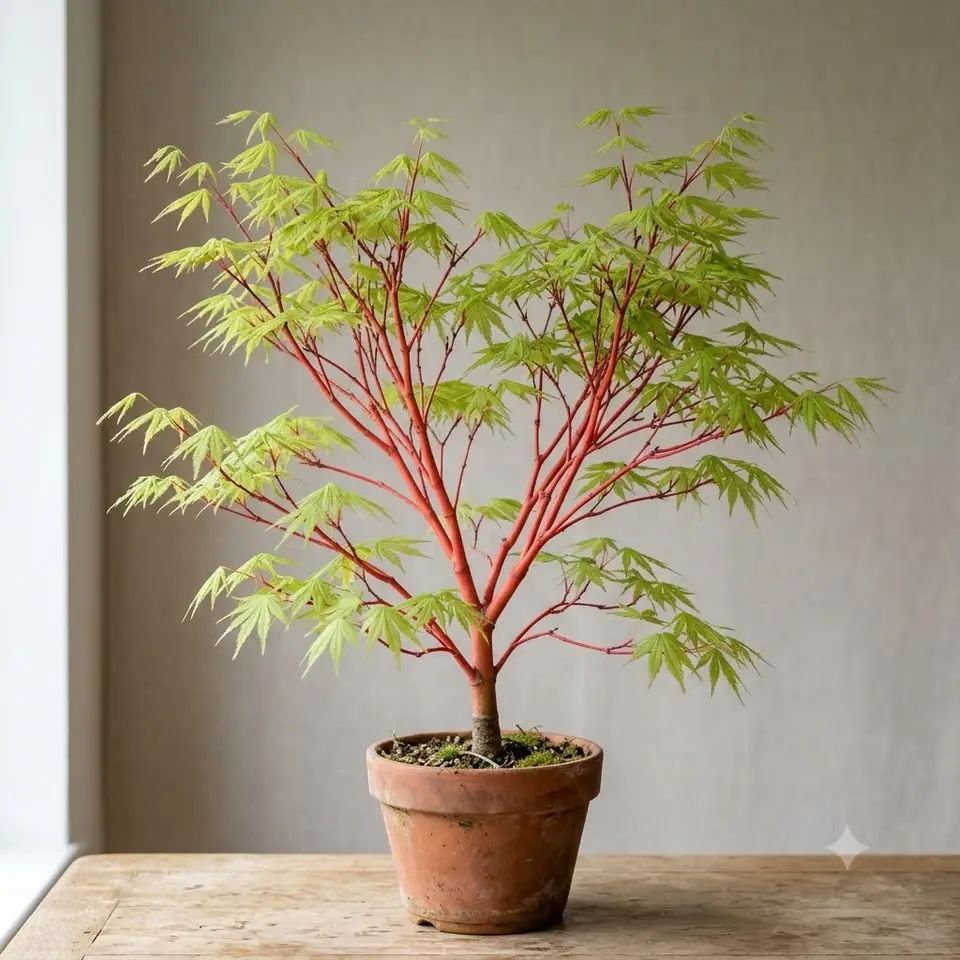 AI illustration
 Overview
The Coral Bark Japanese Maple (Acer palmatum 'Sango-kaku') is a deciduous small tree grown above all for its winter bark, which turns a glowing coral-red on young stems once the leaves drop. Where most Japanese maples earn their keep with foliage alone, this cultivar delivers a genuine four-season display, from red-edged spring leaves to golden autumn colour to bright winter twigs. It is one of the few maples that is arguably more striking in January than in July.
Origin & Background
The species Acer palmatum is native to Japan, Korea, and parts of China, where it grows as an understory tree in cool, humid woodlands. 'Sango-kaku' (the name means "coral tower," and it is sometimes sold under the older name 'Senkaki') is a long-established Japanese selection that has been cultivated for well over a century and remains one of the most popular coral-bark forms in the trade. It is propagated commercially by grafting to keep its bark colour and habit true.
Appearance
The signature feature is the bark: current-season and one- to two-year-old stems flush a vivid coral to salmon-red in cold weather, brightening as temperatures drop and fading toward green-brown as wood ages. The palmate, five- to seven-lobed leaves emerge yellow-green with reddish margins in spring, settle to soft green through summer, then turn warm yellow-gold, often with apricot and pink tones, in autumn. Spring brings small, inconspicuous reddish flowers followed by winged samaras. The habit is upright and vase-shaped when young, broadening with age. It is slow to moderate growing, reaching roughly 6 to 7.5 m tall and 4.5 to 6 m wide over many years, though it is often kept smaller.
Why People Grow It - Qualities & Benefits
- Standout coral-red winter bark that lights up dormant-season gardens
- True four-season interest: spring flush, green summer, gold autumn, coloured winter stems
- Upright form fits smaller yards and courtyards better than spreading maples
- Reliable, well-known cultivar that grafts true and performs across a wide climate range
Care
Light: Full sun to part shade. Some direct sun, especially winter sun, deepens the bark colour, but in hot-summer regions give afternoon shade to prevent leaf scorch. Water: Consistent, moderate moisture. Keep the root zone evenly moist, never waterlogged, and water deeply during heat and drought, particularly in the first few years. Soil: Moist, humus-rich, well-drained soil that is slightly acidic (pH about 5.5 to 6.5). Avoid heavy, soggy, or strongly alkaline ground. Hardiness: USDA zones 5 to 8. Bloom or Season: Grown for foliage and bark, not flowers. Expect red-tinged new leaves in spring, green summer foliage, golden-yellow autumn colour, and peak coral bark through late autumn and winter. Extra: Bark colour is most intense on young wood, so light annual pruning to encourage fresh stems keeps the winter show vivid; colour also runs richer in colder winters and cooler exposures. Non-toxic to cats and dogs.
Planting & Propagation
Plant in spring or autumn in a sheltered spot out of harsh wind and hot reflected heat, setting the tree at the same depth it grew in the pot and mulching to keep roots cool and moist. This cultivar does not come true from seed, so it is almost always propagated by grafting onto seedling Acer palmatum rootstock; home gardeners can attempt softwood cuttings or air layering, though both are slow and success rates are modest.
Common Problems & Pests
- Leaf scorch and crisped margins from too much sun, wind, or dry soil
- Aphids and scale insects, which can be followed by sooty mould
- Verticillium wilt and occasional stem canker or dieback in stressed trees
Toxicity & Safety
Non-toxic to cats and dogs. Japanese maple (Acer palmatum) is not listed as toxic to pets by the ASPCA, so a Coral Bark Japanese Maple is a safe choice for households and gardens with animals. As a sensible precaution, discourage pets from chewing on foliage or bark, since eating large amounts of any plant can cause mild digestive upset.
Pros & Cons
Pros
- Rare winter bark colour gives interest when the rest of the garden is bare
- Compact upright shape suits small gardens, borders, and containers
Cons
- Prone to leaf scorch in hot, exposed, or dry sites
- Slow growing and usually sold grafted, so quality specimens can be pricey
Best Suited For
- Gardeners wanting a small specimen tree with genuine four-season appeal
- Sheltered courtyards, entryways, and mixed borders in zones 5 to 8
FAQ
Why has the coral bark colour faded on my tree?
The brightest colour appears on young stems in cold, bright winter conditions. Older bark naturally dulls to green-brown, mild winters produce softer tones, and heavy shade reduces intensity. Light pruning to stimulate fresh growth restores the effect.
How big will a Coral Bark Japanese Maple get?
It is slow to moderate growing and typically reaches about 6 to 7.5 m tall and 4.5 to 6 m wide over many years, though many stay smaller and it responds well to pruning if you need to keep it compact.
Gear for growing coral bark japanese maple
Links go to Amazon or a partner store (such as Adagio Teas) and may earn us a commission at no extra cost to you. As an Amazon Associate we earn from qualifying purchases. We link gear types, not sponsors' picks: you choose the exact product.