Bartzella Itoh Peony
Bartzella is an Itoh (intersectional) peony, a hybrid that crosses a herbaceous peony with a tree peony to combine the best of both (Paeonia 'Bartzella').
Last reviewed: September 2026
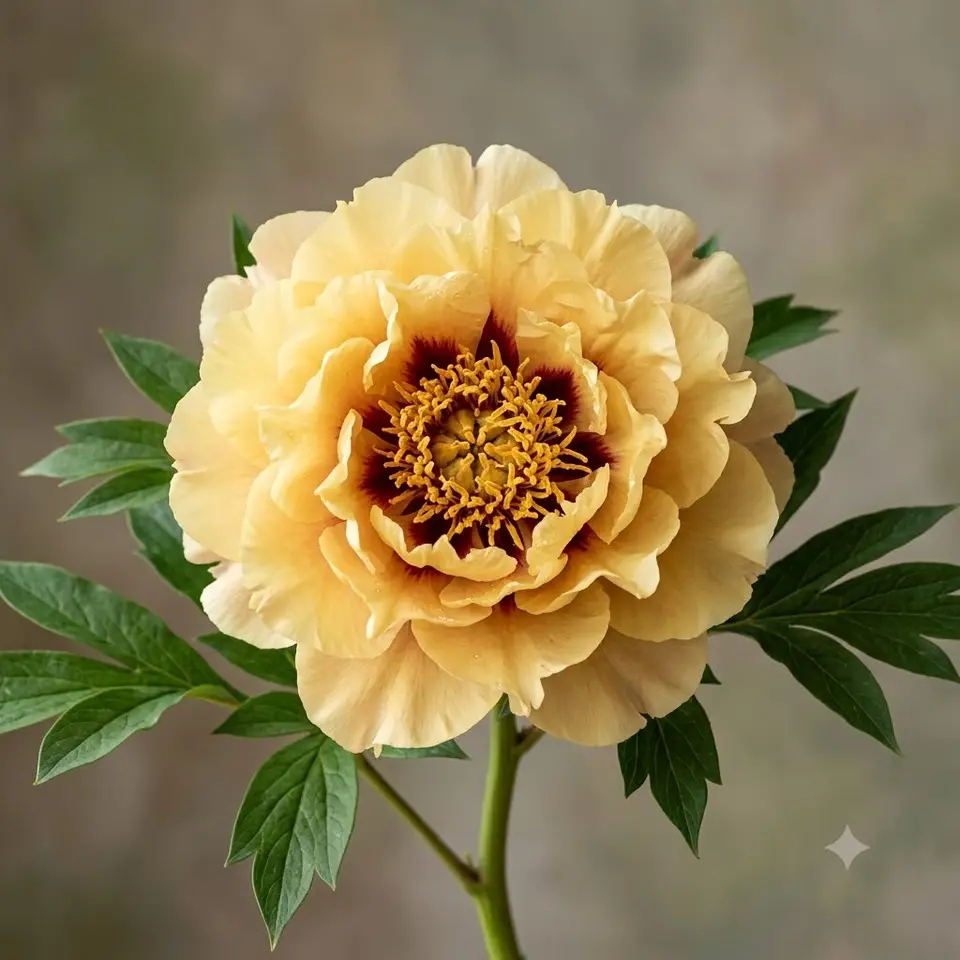 AI illustration
 Overview
Bartzella is an Itoh (intersectional) peony, a hybrid that crosses a herbaceous peony with a tree peony to combine the best of both (Paeonia 'Bartzella'). It is prized for enormous lemon-yellow, lightly ruffled blooms with a soft red flare at the centre, carried on sturdy stems above deeply cut, tree-peony-like foliage. Unlike old-fashioned garden peonies, its strong stalks rarely flop, so the flowers stay upright even after rain.
Origin & Background
The genus Paeonia is native across the Northern Hemisphere, with species in the mountains and woodland edges of Europe, western North America, and especially China, where tree and herbaceous peonies have been cultivated for centuries. 'Bartzella' itself is a modern intersectional hybrid raised by American breeder Roger Anderson and introduced in the late 1980s, following the pioneering intersectional work of Toichi Itoh in Japan. It went on to win the American Peony Society Gold Medal, cementing its reputation as one of the finest yellow peonies available.
Appearance
The flowers are large, often 15 to 20 cm across, semi-double to double, in a clear soft yellow with a small raspberry-red blotch at the base of the inner petals. Blooms open in late spring to early summer and carry a light, fresh, lemon-like scent. A single established clump produces many buds that open in succession, extending the show. The plant forms a rounded, shrubby mound roughly 75 to 90 cm tall and about 90 to 120 cm wide, with glossy, dark green, finely divided leaves that stay attractive through summer and take on bronze tints before dying back in autumn.
Why People Grow It - Qualities & Benefits
- True yellow flowers, a colour that is rare and hard to find among peonies
- Strong, self-supporting stems that seldom need staking
- Long bloom period thanks to many buds opening in sequence
- Handsome cut foliage that looks good long after the flowers fade
Care
Light: Full sun is best (at least 6 hours daily); light afternoon shade is tolerated in hot regions and can help flower colour last. Water: Moderate and even moisture while establishing; once settled it is fairly drought tolerant and dislikes waterlogged soil. Soil: Fertile, deep, well-drained loam with a neutral to slightly alkaline pH (about 6.5 to 7.5); enrich with compost at planting. Hardiness: USDA zones 4 to 9. Bloom or Season: Late spring into early summer, with the display typically lasting 2 to 3 weeks as successive buds open. Extra: Itoh peonies die back to the ground each winter like herbaceous types, so cut old stems down in late autumn. Note for pet owners: peonies are toxic to cats and dogs, containing paeonol concentrated in the bark and roots, and ingestion can cause vomiting and diarrhoea.
Planting & Propagation
Plant dormant roots in early autumn so the eyes (growth buds) sit only about 3 to 5 cm below the soil surface; planting too deep is the most common reason peonies fail to bloom. To propagate, lift the tuberous root mass in early autumn and divide it with a clean, sharp knife into sections that each carry 3 to 5 healthy eyes and a good piece of root. Replant divisions promptly at the correct depth and water in. Growing from seed is possible but very slow and will not come true to the parent, so division is the reliable method; expect a year or two before divisions bloom well.
Common Problems & Pests
- Botrytis (grey mould) in cool, wet springs, causing blackened buds and stem rot; improve airflow and remove affected growth
- Failure to flower, almost always from planting the eyes too deep or too much shade
- Occasional nibbling by deer, plus minor ants on buds (the ants are harmless and need no control)
Toxicity & Safety
Peonies are toxic to cats and dogs. They contain paeonol, a compound most concentrated in the bark and roots, and chewing or swallowing plant material can cause vomiting and diarrhoea. Symptoms are usually mild to moderate, but it is sensible to discourage pets from grazing on the plant and to be especially tidy with root pieces during autumn division. If you suspect your pet has eaten a significant amount, contact your veterinarian.
Pros & Cons
Pros
- Rare, dependable yellow colour on a robust, low-maintenance plant
- Sturdy stems and long-lived clumps that improve with age
Cons
- Toxic to cats and dogs, so not ideal where pets graze freely
- Slow to bulk up and relatively expensive to buy compared with common peonies
Best Suited For
- Gardeners wanting a standout yellow flowering shrub-like perennial for a sunny border
- Cold-climate and low-fuss gardens where a reliable, self-supporting peony is valued
FAQ
Does Bartzella need staking like other peonies?
Usually not. One of its main advantages is thick, strong stems inherited from its tree-peony parent, so the heavy blooms typically stay upright without rings or supports.
How long until a new plant flowers well?
Give it patience. A young division may show a few blooms in its first year or two, but Itoh peonies really hit their stride around the third season, after which the clump grows fuller and flowers more freely each year.
Gear for growing bartzella itoh peony
Links go to Amazon or a partner store (such as Adagio Teas) and may earn us a commission at no extra cost to you. As an Amazon Associate we earn from qualifying purchases. We link gear types, not sponsors' picks: you choose the exact product.