Annabelle Hydrangea
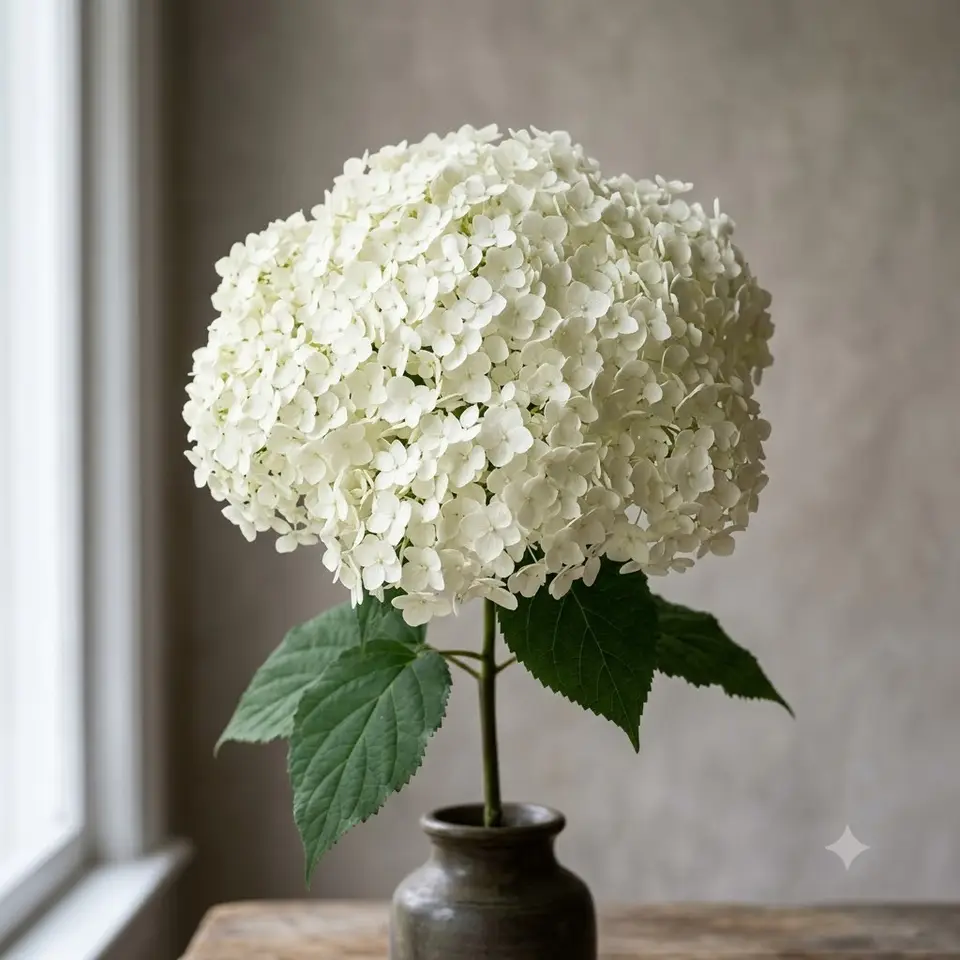
Annabelle is a smooth hydrangea prized for its enormous rounded heads of pure white flowers, often the size of a dinner plate, carried on a tidy rounded shrub (Hydrangea arborescens 'Annabelle').
Last reviewed: September 2026
 AI illustration
 Overview
Annabelle is a smooth hydrangea prized for its enormous rounded heads of pure white flowers, often the size of a dinner plate, carried on a tidy rounded shrub (Hydrangea arborescens 'Annabelle'). Unlike the bigleaf hydrangeas so many gardeners struggle with, it blooms reliably every year because it flowers on new growth, so a hard spring pruning never costs you the show. It is one of the most cold hardy and forgiving hydrangeas you can grow.
Origin & Background
The species, Hydrangea arborescens, is native to the woodlands and shady slopes of the eastern United States. The 'Annabelle' cultivar traces back to a wild plant found near the town of Anna, Illinois, in the early 1900s, later propagated and brought into the nursery trade where it became the benchmark white smooth hydrangea. Its name is a nod to that Illinois origin.
Appearance
Annabelle produces large mophead clusters of sterile white florets, commonly 20 to 30 cm across, held above bright green heart-shaped foliage. The blooms open a soft lime green, mature to clean white through summer, then age back to green and finally a papery tan that can be left for winter interest. It forms a rounded, multi-stemmed shrub roughly 90 to 150 cm tall and 90 to 150 cm wide. Flowering runs from early summer into late summer, with the heaviest heads sometimes bowing the stems after rain.
Why People Grow It - Qualities & Benefits
- Huge, dependable white flower heads every single year, even after a hard winter
- Blooms on new wood, so pruning mistakes do not cancel the bloom
- Exceptionally cold hardy and tolerant of more shade than most hydrangeas
- Dried heads hold their shape into autumn and winter for lasting structure
Care
Light: Full sun to part shade; in hot southern gardens it appreciates afternoon shade to prevent wilting and scorch. Water: Consistent, even moisture is important because of its shallow roots; water deeply during heat and drought. Soil: Moist, fertile, well-drained soil rich in organic matter. It grows across a range of soil pH. Note that only bigleaf hydrangeas (Hydrangea macrophylla) shift between blue and pink with soil pH; Annabelle stays white regardless of pH. Hardiness: USDA zones 3 to 9. Bloom or Season: Early to late summer, with a long display as heads shift from green to white and back to green. Extra: Because it blooms on new wood, you can cut it back hard in late winter or early spring for a strong flush; the trade-off is that very large heads may flop after rain, so some gardeners prune slightly less hard or add support. Note for pet owners: hydrangea is toxic to cats, dogs and horses, so keep prunings and fallen blooms out of reach.
Planting & Propagation
Plant in spring or autumn in enriched, moisture-retentive soil, setting the crown at the same depth it grew in the pot and mulching to keep roots cool and damp. As a named cultivar it will not come true from seed, so propagate vegetatively: take softwood cuttings in early summer or hardwood cuttings in the dormant season, and root them in a moist, free-draining mix. Simple layering also works well, pinning a low flexible stem to the soil until it roots, after which it can be severed and moved. Established clumps can be divided in early spring.
Common Problems & Pests
- Flopping stems and lodged flower heads after heavy rain, especially on hard-pruned plants
- Wilting and leaf scorch in full sun or dry soil due to shallow roots
- Powdery mildew, leaf spot, aphids and spider mites, usually cosmetic and manageable
Toxicity & Safety
All parts of hydrangea, including the leaves and flowers, contain a cyanogenic glycoside and are toxic to cats, dogs and horses if eaten. Ingestion can cause vomiting, diarrhoea and lethargy. Poisoning is uncommon and usually requires eating a fair amount of plant material, but it is sensible to keep pets from grazing the shrub and to clear away prunings and spent blooms. Contact a vet if you suspect your animal has eaten any.
Pros & Cons
Pros
- Reliable, spectacular white blooms every year with minimal fuss
- Very cold hardy, shade tolerant and easy for beginners
Cons
- Heavy heads can flop and need support after rain
- Needs steady moisture and will wilt quickly if it dries out
Best Suited For
- Beginner gardeners and cold-climate gardens wanting guaranteed hydrangea flowers
- Shrub borders, foundation plantings and cottage-style beds needing bold summer white
FAQ
Why is my Annabelle hydrangea flopping over?
The flower heads are large and heavy, and rain adds weight that bends the relatively soft new stems. Pruning a little less hard, leaving stems slightly taller, or adding a discreet grow-through support will help hold them upright.
Can I change the flower colour to blue?
No. Colour-changing with soil pH is a trait of bigleaf hydrangeas. Annabelle is a smooth hydrangea and its flowers stay white, opening green and ageing back to green, no matter the soil.
Sources
Pet toxicity: checked against the ASPCA Animal Poison Control Center lists of toxic and non-toxic plants for cats and dogs, entry "Hydrangea" (Hydrangea arborescens): toxic to cats and dogs. Lists read on 10 October 2026.
Gear for growing annabelle hydrangea
Links go to Amazon or a partner store (such as Adagio Teas) and may earn us a commission at no extra cost to you. As an Amazon Associate we earn from qualifying purchases. We link gear types, not sponsors' picks: you choose the exact product.