Autumn Crocus (Colchicum)
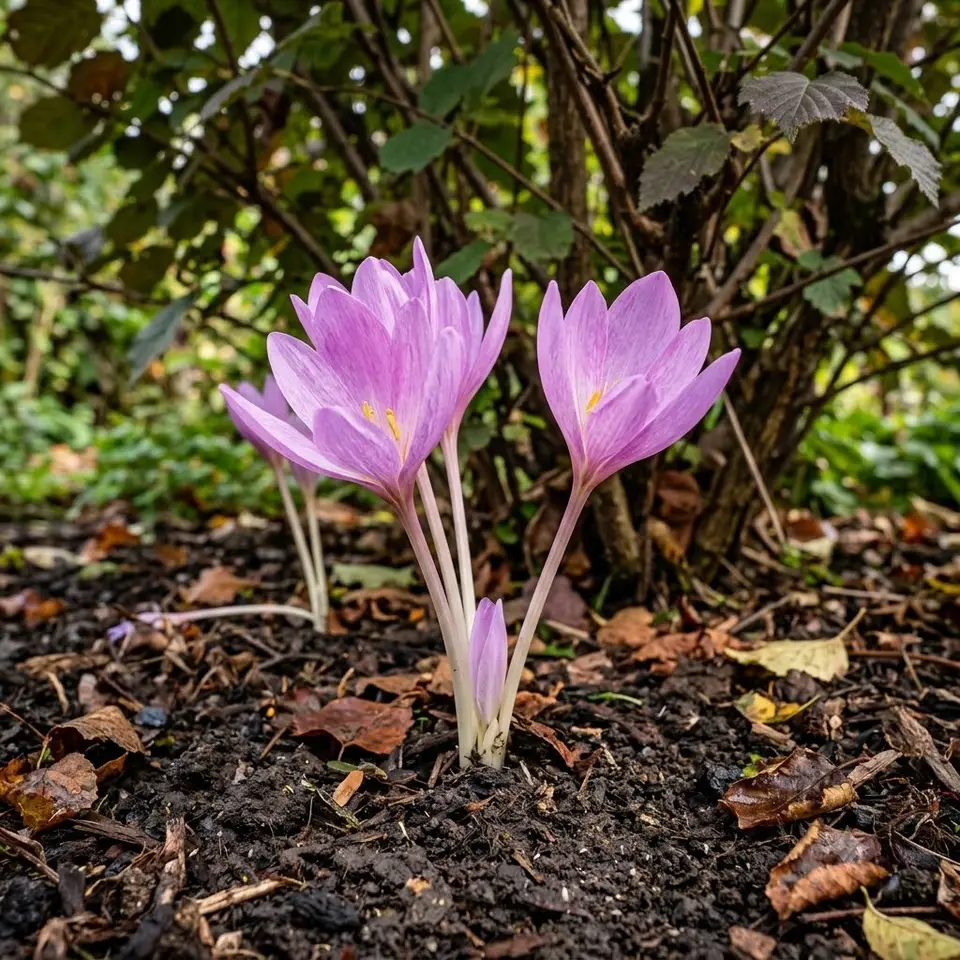
Colchicums, sometimes called naked ladies, flower in September: goblet blooms of pink-lilac erupting leafless from bare soil, bigger and blowsier than any true crocus, with spring foliage arriving months later like a delayed apology.
Last reviewed: October 2026
 AI illustration
 Overview
Colchicums, sometimes called naked ladies, flower in September: goblet blooms of pink-lilac erupting leafless from bare soil, bigger and blowsier than any true crocus, with spring foliage arriving months later like a delayed apology. Beautiful, permanent, and seriously toxic, which their deer-proof carefree life reflects. (Colchicum autumnale.)
Origin & Natural Habitat
European meadows; the source of colchicine (gout medicine and plant-breeding tool) - chemistry with consequences.
Appearance
15-25 cm chalices - lilac-pink, checkered ('Waterlily' double) - in Sep-Oct from bare earth; broad glossy leaves follow in SPRING then die by summer.
Why People Grow It - Qualities & Benefits
- Surprise goblets in tired September beds
- Huge (for 'crocus') blousy blooms
- Immortal, deer/rodent/everything-proof
- Blooms even sitting dry on a windowsill (party trick)
Care
Light: Sun to half-shade; under shrubs, in rough grass.
Water: Rain-fed; utterly independent.
Soil: Any decent drained soil.
Planting: Late summer (they bloom WEEKS after planting - instant gratification), 10 cm deep.
Hardiness: Zones 4-8.
After flowering: Tolerate the big spring foliage (it feeds the show) and mow/tidy only when it yellows in June.
Propagation
Divide congested clumps in summer dormancy; they build steadily solo.
Common Problems & Pests
- Spring leaf-mass surprises the unwarned (site accordingly)
- Slugs on petals
- Confusion with saffron (see FAQ: important)
Toxicity & Safety
SERIOUSLY toxic (colchicine) - all parts, to people and pets; never confuse with edible saffron crocus, never plant near forage areas; the spring leaves also resemble wild garlic (ramsons) and are a well-known cause of accidental poisonings in Europe; handle bulbs with gloves if skin-sensitive. Its pest-proof life is this chemistry.
Pros & Cons
Pros
- Effortless autumn spectacle
- Truly permanent
- Deer and rodents leave it alone
Cons
- Real toxicity to respect
- Big sloppy spring leaves
- Floppy blooms in heavy rain
Best Suited For
- Under roses and shrubs (leaf camo)
- Rough grass corners
- September-tired borders
- Low-maintenance forever-gardens
FAQ
Is this where saffron comes from?
NO - saffron is true autumn-flowering Crocus sativus; colchicum is unrelated and poisonous. Never harvest 'saffron' from a garden unless you planted labeled C. sativus yourself.
It bloomed on my shelf before planting?!
Colchicums carry a charge - dry corms bloom unplanted as a famous parlor trick. Plant after; the roots follow in soil.
Sources
Pet toxicity: checked against the ASPCA Animal Poison Control Center lists of toxic and non-toxic plants for cats and dogs, entry "Autumn Crocus" (Colchicum autumnale): toxic to cats and dogs. Lists read on 10 October 2026.
Gear for growing autumn crocus (colchicum)
Links go to Amazon or a partner store (such as Adagio Teas) and may earn us a commission at no extra cost to you. As an Amazon Associate we earn from qualifying purchases. We link gear types, not sponsors' picks: you choose the exact product.