Dragon Wing Begonia
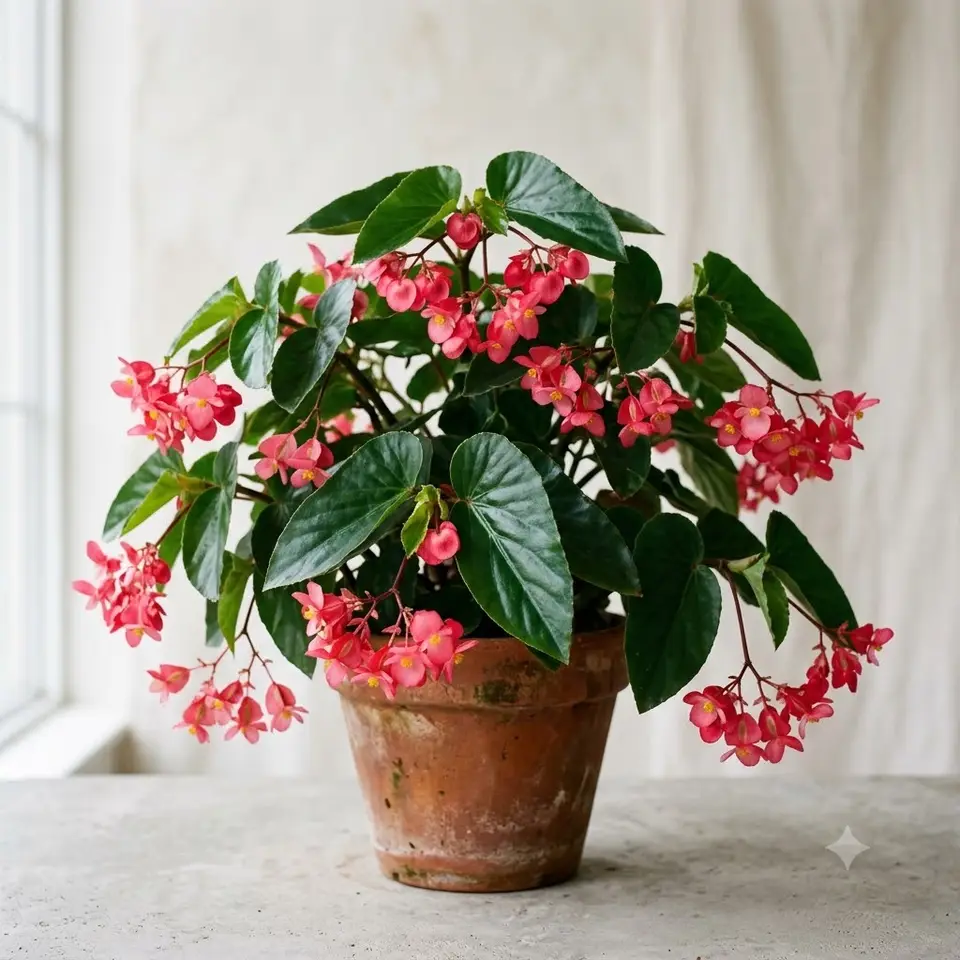
The Dragon Wing Begonia is a vigorous, fibrous-rooted cane begonia prized for its glossy wing-shaped leaves and near-constant showers of pendant flowers.
Last reviewed: September 2026
 AI illustration
 Overview
The Dragon Wing Begonia is a vigorous, fibrous-rooted cane begonia prized for its glossy wing-shaped leaves and near-constant showers of pendant flowers. Collectors love it because it delivers the lush, arching look of a fussy angel-wing begonia while being one of the most forgiving members of the genus. It is a garden hybrid sold as (Begonia × hybrida 'Dragon Wing').
Origin & Natural Habitat
Dragon Wing is a cultivated hybrid with no wild population, bred from a cane-type parent related to Begonia coccinea (native to the shaded, humid forests of southeastern Brazil) crossed with a wax begonia. Its parentage traces to the warm, moist understory of South American tropics.
Appearance
The leaves are large, glossy, and asymmetrically wing-shaped, deep green on top with a reddish flush on the undersides, carried on smooth, cane-like stems that arch and cascade. Loose clusters of waxy red or pink flowers dangle from the leaf axils almost year-round in good conditions. Indoors it forms a full mound roughly 30 to 60 cm tall and wide, with stems that trail nicely over a pot edge or hanging basket.
Why People Grow It - Qualities & Benefits
- Blooms heavily and repeatedly, giving color that most foliage plants cannot
- Fast, forgiving growth that fills a pot quickly
- Handsome arching habit that suits shelves, tables, and hanging baskets
- Roots from cuttings almost effortlessly, so one plant becomes many
Care
Light: Bright, indirect light. It tolerates a few hours of gentle morning sun but scorches in harsh midday sun; too little light means leggy stems and few flowers.
Water: Keep the mix lightly and evenly moist, letting the top 2-3 cm dry between waterings. It is thirsty when actively growing but rots fast if left soggy, so never let it stand in water.
Soil: A light, fast-draining, peat- or coir-based potting mix with added perlite. Good aeration at the roots is essential to prevent rot.
Temperature & Humidity: Warmth-loving; happiest at 18 to 27°C and unhappy below about 13°C. It prefers moderate to high humidity (50% or more); in dry indoor air leaf edges can crisp, so a pebble tray or room humidifier helps.
Feeding: Feed every 2 to 4 weeks through spring and summer with a balanced, diluted liquid fertilizer. Ease off in the darker winter months.
Extra: Unlike tuberous begonias, Dragon Wing does not die back to a dormant tuber, but its growth slows and flowering thins in winter, so cut back on water then and be patient. Toxic to cats and dogs (soluble oxalates, worst in the tubers of tuberous types) - keep out of reach of pets and children.
Propagation
Easiest by stem cuttings. Snip an 8 to 10 cm tip below a node, remove the lower leaves, and root it in water or directly in moist, airy mix; roots usually appear within two to three weeks.
Common Problems & Pests
- Powdery mildew is the classic begonia problem in still, humid, crowded conditions - improve airflow and avoid wetting the foliage
- Root and stem rot from overwatering or heavy soil, showing as mushy, blackening stem bases
- Spider mites and mealybugs in dry indoor air, plus botrytis on spent flowers and old leaves; remove debris promptly
Toxicity & Safety
All begonias, including Dragon Wing, are toxic to cats and dogs. They contain soluble oxalates, most concentrated in the underground parts and worst in the tubers of tuberous types, which can cause oral irritation, intense drooling, mouth pawing, and vomiting if chewed. The sap can also irritate sensitive skin, so wash your hands after taking cuttings and site the plant where curious pets and small children cannot reach it.
Pros & Cons
Pros
- Long-blooming and lush with very little effort
- Roots and multiplies with almost guaranteed success
Cons
- Toxic to cats and dogs, so not pet-safe
- Resents soggy soil and dry air, and can catch powdery mildew
Best Suited For
- Beginners who want flowers, not just foliage, from an easy plant
- Homes with bright indirect light and a hanging basket or high shelf away from pets
FAQ
Does Dragon Wing Begonia go dormant like tuberous begonias?
No. It is fibrous-rooted, so it does not form a tuber or die back. It simply slows down and flowers less in winter, then rebounds in spring.
Why is my Dragon Wing leggy with few flowers?
Almost always too little light. Move it somewhere brighter (still indirect) and pinch back the longest stems to encourage bushier, more floriferous growth.
Sources
Pet toxicity: checked against the ASPCA Animal Poison Control Center lists of toxic and non-toxic plants for cats and dogs, genus-wide entry "Begonia" (Begonia spp.): toxic to cats and dogs. Lists read on 10 October 2026.
Gear for growing dragon wing begonia
Links go to Amazon or a partner store (such as Adagio Teas) and may earn us a commission at no extra cost to you. As an Amazon Associate we earn from qualifying purchases. We link gear types, not sponsors' picks: you choose the exact product.