Comtesse de Bouchaud Clematis
Comtesse de Bouchaud is one of the most dependable and free-flowering large-flowered clematis, prized for masses of soft mauve-pink blooms across mid to late summer (Clematis 'Comtesse de Bouchaud').
Last reviewed: September 2026
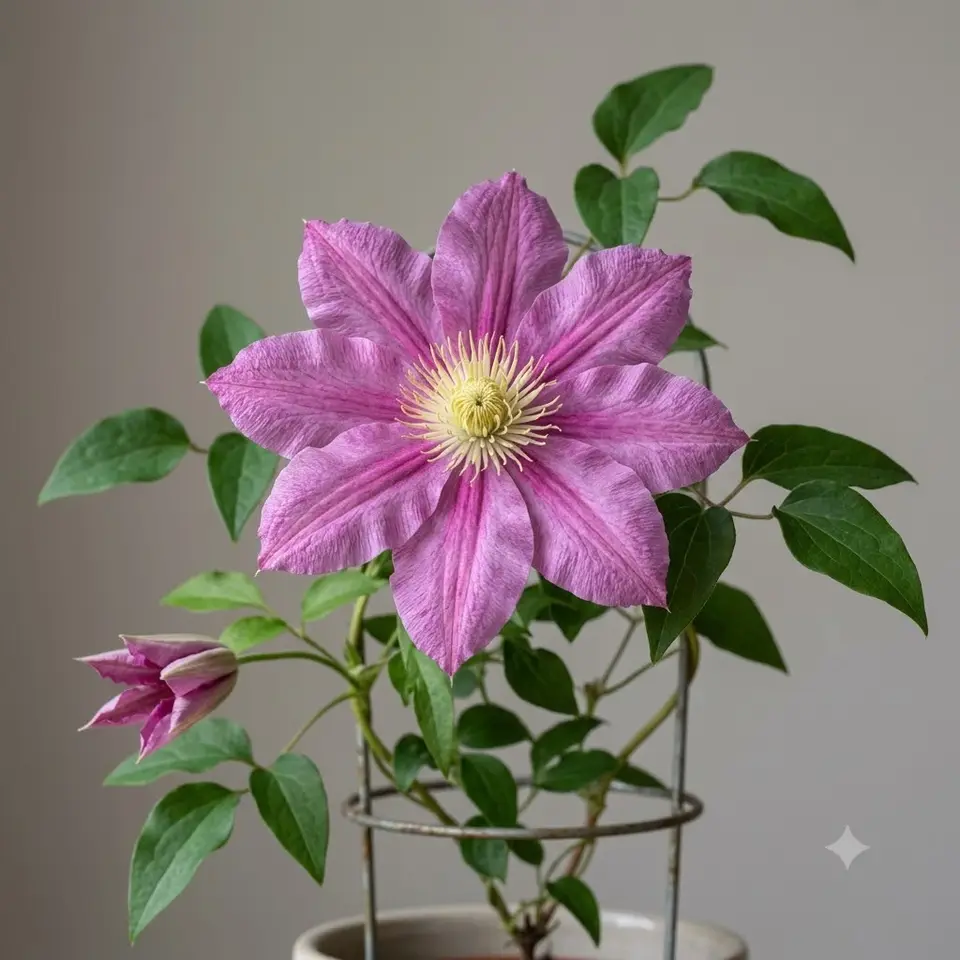 AI illustration
 Overview
Comtesse de Bouchaud is one of the most dependable and free-flowering large-flowered clematis, prized for masses of soft mauve-pink blooms across mid to late summer (Clematis 'Comtesse de Bouchaud'). It stands out for its vigour, disease resistance and forgiving nature, which makes it a favourite starter clematis. The gappy, slightly recurved sepals and creamy anthers give the flowers a relaxed, informal charm rather than a stiff, formal look.
Origin & Background
The genus Clematis is widespread across the temperate Northern Hemisphere, with species native to Europe, Asia and North America, and many climbers trace back to Asian parentage. This particular cultivar is a classic French hybrid raised by the nurseryman Francisque Morel of Lyon and introduced in the early 1900s. It has remained in cultivation for well over a century and holds the Royal Horticultural Society Award of Garden Merit, a testament to its lasting garden performance.
Appearance
The flowers are a satiny mauve-pink, often deepening at the sepal tips and paling toward the centre, and measure roughly 10 to 15 cm across. Each bloom usually carries six broad sepals with gently frilled, slightly recurved edges and small gaps between them, centred on a boss of pale creamy-yellow anthers. Flowering runs from early or midsummer into early autumn on the current season's growth. The plant climbs to about 2.5 to 3.5 m tall with a spread of around 1 to 1.5 m, clothed in mid-green divided leaves that die back over winter before fresh growth returns each spring.
Why People Grow It - Qualities & Benefits
- Exceptionally free-flowering, producing a long, generous display through the second half of summer
- Vigorous and reliable, quickly covering trellis, arches, fences and obelisks
- Forgiving and low-maintenance, making it one of the best clematis for beginners
- Soft mauve-pink colouring blends easily with roses, other climbers and mixed borders
Care
Light: Full sun to partial shade; it flowers best with its top growth in sun while the roots stay cool and shaded. Water: Moderate and consistent; keep the soil evenly moist, especially in the first couple of years and during dry spells, without letting it sit waterlogged. Soil: Fertile, humus-rich, well-drained soil; tolerant of a range of pH but happiest in neutral to slightly alkaline ground. Hardiness: USDA zones 4 to 9. Bloom or Season: Early or midsummer through to early autumn, giving a long flowering season of two to three months. Extra: This is a pruning Group 3 (late-flowering) clematis, so cut all stems back hard to a pair of strong buds about 20 to 30 cm above the ground in late winter or early spring. Note for pet owners: like all clematis, this plant is toxic to cats and dogs if chewed.
Planting & Propagation
Plant in spring or autumn, setting the crown about 5 to 8 cm deeper than it sat in its pot to encourage strong basal shoots, and shade the root zone with low planting or a mulch. As a named cultivar it does not come true from seed, so propagate it vegetatively: take semi-hardwood cuttings in summer, or peg down a low stem for layering in summer and separate the rooted section once established, typically the following season.
Common Problems & Pests
- Clematis wilt can cause sudden collapse of stems, though Group 3 large-flowered types like this are generally more resistant; cut affected growth back to healthy tissue
- Aphids, earwigs and slugs or snails may nibble soft new growth, especially in spring
- Powdery mildew can appear on foliage in humid, crowded conditions with poor air movement
Toxicity & Safety
Comtesse de Bouchaud, like other clematis, is toxic to cats and dogs. The sap contains protoanemonin, an irritant compound released when the plant is chewed or crushed. Ingestion can cause drooling, irritation of the mouth, vomiting and diarrhoea. Reactions are usually mild because the bitter, acrid taste tends to stop pets from eating a large amount, but it is still sensible to site the plant where curious animals are less likely to browse on it.
Pros & Cons
Pros
- Long, prolific summer flowering with minimal fuss
- Simple, once-a-year hard pruning that suits new gardeners
Cons
- Deciduous, so it offers no winter presence and looks bare until spring
- Roots resent hot, dry, exposed positions and need shading and steady moisture
Best Suited For
- Beginners wanting a reliable, forgiving flowering climber
- Clothing arches, trellis, obelisks and fences, or scrambling through roses and shrubs
FAQ
How and when do I prune Comtesse de Bouchaud?
It belongs to pruning Group 3, the late-flowering group. In late winter or early spring, cut every stem back hard to a pair of healthy buds around 20 to 30 cm from the ground. It flowers on new growth, so this yearly cutback keeps it tidy and full of bloom.
Why is my clematis flowering well at the top but bare at the base?
This is common in large-flowered clematis grown without hard pruning. Because Comtesse de Bouchaud is a Group 3 type, an annual hard prune resets the plant low down and encourages flowering shoots from nearer the base, giving a fuller, better-clothed climber.
Gear for growing comtesse de bouchaud clematis
Links go to Amazon or a partner store (such as Adagio Teas) and may earn us a commission at no extra cost to you. As an Amazon Associate we earn from qualifying purchases. We link gear types, not sponsors' picks: you choose the exact product.