Growing an Avocado Tree
How to grow an avocado tree from university extension guidance - the well-drained soil it needs and the mound for wet sites, planting depth, watering, cold limits, why a pit-grown tree rarely gives the same fruit, and the two flower types that affect pollination - plus a potting mix for containers.
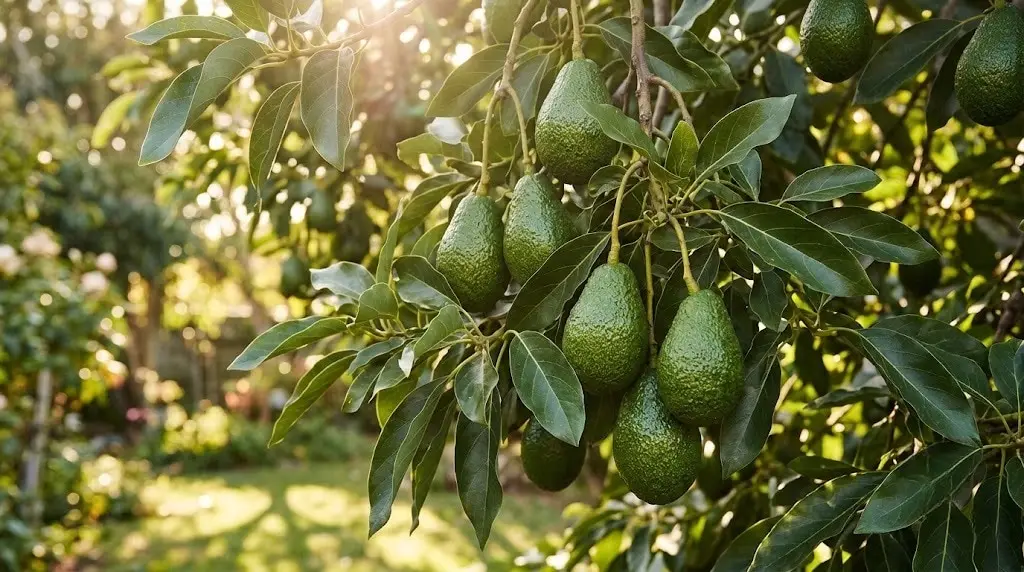
The short answer: avocados need drainage above everything else. University of Florida extension says avocado trees do not tolerate flooding or poorly drained soils, but adapt to many types of well-drained soil (UF/IFAS). In continuously wet ground they grow poorly and can die, and they become highly susceptible to Phytophthora root rot. UC’s home garden guide adds that there should be no hardpan or rock layer within 3 feet of the surface, and that lime deposits in the soil can cause poor growth (UC IPM).
The Best Soil for an Avocado Tree
In the ground, the best soil is your own, if it drains. UC’s planting instructions say to backfill the hole with native soil rather than a special mix. Where the ground can flood or stay wet, UF recommends planting on a large mound of native soil, 2 to 4 feet high and 4 to 6 feet across.
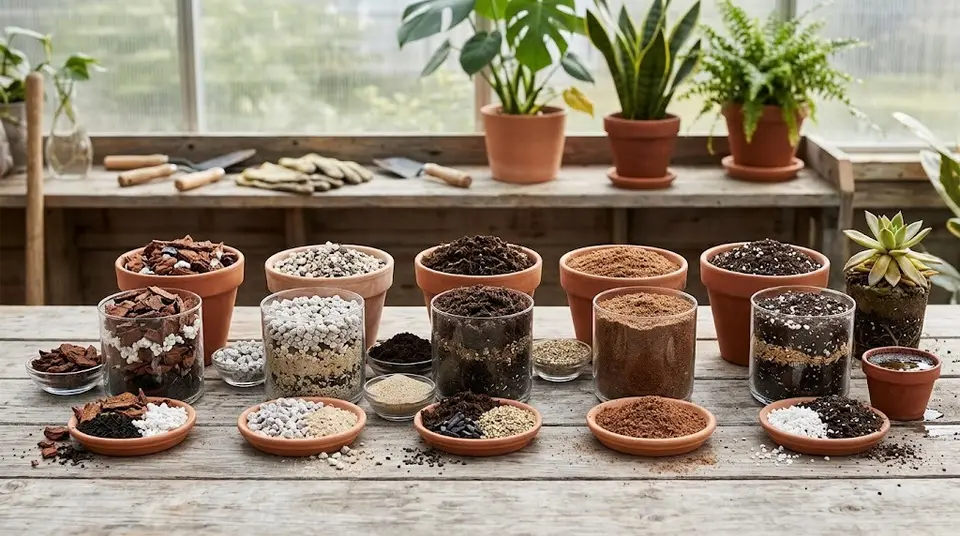
In a container, use a fast-draining potting mix and a pot with a drainage hole. Neither university names a brand. One example is Espoma Organic Cactus Mix: the maker lists it for cactus, succulent, palm and citrus container plants. Its ingredients are processed forest products, sphagnum peat moss, perlite, humus and limestone, with yucca extract and mycorrhizal fungi (Espoma). See it on Amazon. We have not grown avocados in it. Avocados are not on the maker’s list, so treat it as an example of a free-draining mix, not a tested match.
Planting
From UC’s guide:
- When: after the last frost in spring, so the tree establishes before hot weather.
- Depth: plant at the same depth as in the nursery container. Too deep, and soil and water stand against the trunk, which invites crown and root rot. Too high, and the roots dry out. UC suggests a hole that leaves the root ball about 1 inch above the soil line, twice as wide as the root ball.
- Backfill with native soil, water in thoroughly, and build a watering basin about 1 foot from the trunk. Keep the trunk dry.
- Sun: paint exposed trunks with a 50:50 mix of white latex paint and water to prevent sunburn.
UF adds that a nursery tree is usually sold in a 3-gallon container at 2 to 4 feet tall. Avoid a large tree in a small pot, whose roots may be circling. In a home landscape, UF suggests planting 23 to 30 feet or more from buildings and other trees.
Watering and Feeding
Watering is critical, UC says. Too little gives small fruit prone to sunburn, and too much leads to root and crown rot. A mature tree needs about 2 inches of water a week in summer heat, and the root zone is shallow. Most mature trees need regular nitrogen, applied in fall or winter. Trees in containers may need less fertilizer. For fertilizers, see our guide to fertilizer for fruit trees: one of the mixes there, Down to Earth Citrus Mix, lists avocados among its uses on the maker’s page.
Cold
UC gives the damage thresholds by race. Guatemalan types are injured between 27 and 30 °F (-3 to -1 °C), and Mexican types between 24 and 26 °F (-4 to -3 °C). How long the cold lasts, the weather before it and the tree’s position all matter too.
Growing an Avocado From a Pit
You can sprout a pit, but don’t expect the fruit you ate. UF says most avocado varieties do not come true from seed, so they are propagated by grafting. Seedlings are used as rootstocks, and a named variety is grafted on top. A pit-grown seedling is what growers use as rootstock; as a fruit tree on its own, it is a gamble.
Why One Tree May Not Fruit Well
Avocado flowers open in two patterns, called A and B types, and varieties differ in how much they need the other type nearby, UF explains. Some fruit well alone. Others do better with a variety of the opposite type flowering at the same time. UF’s advice: look for other avocado trees in the neighborhood before planting. If there are none, consider planting one A-type and one B-type.
Harvest
Avocados do not soften on the tree. UC says they are picked mature and soften afterwards. To test, pick one and see whether it softens without shriveling. A shriveling fruit is not ready. Clip fruit with a little stem left on rather than pulling, which speeds decay.