Ludwigia Repens
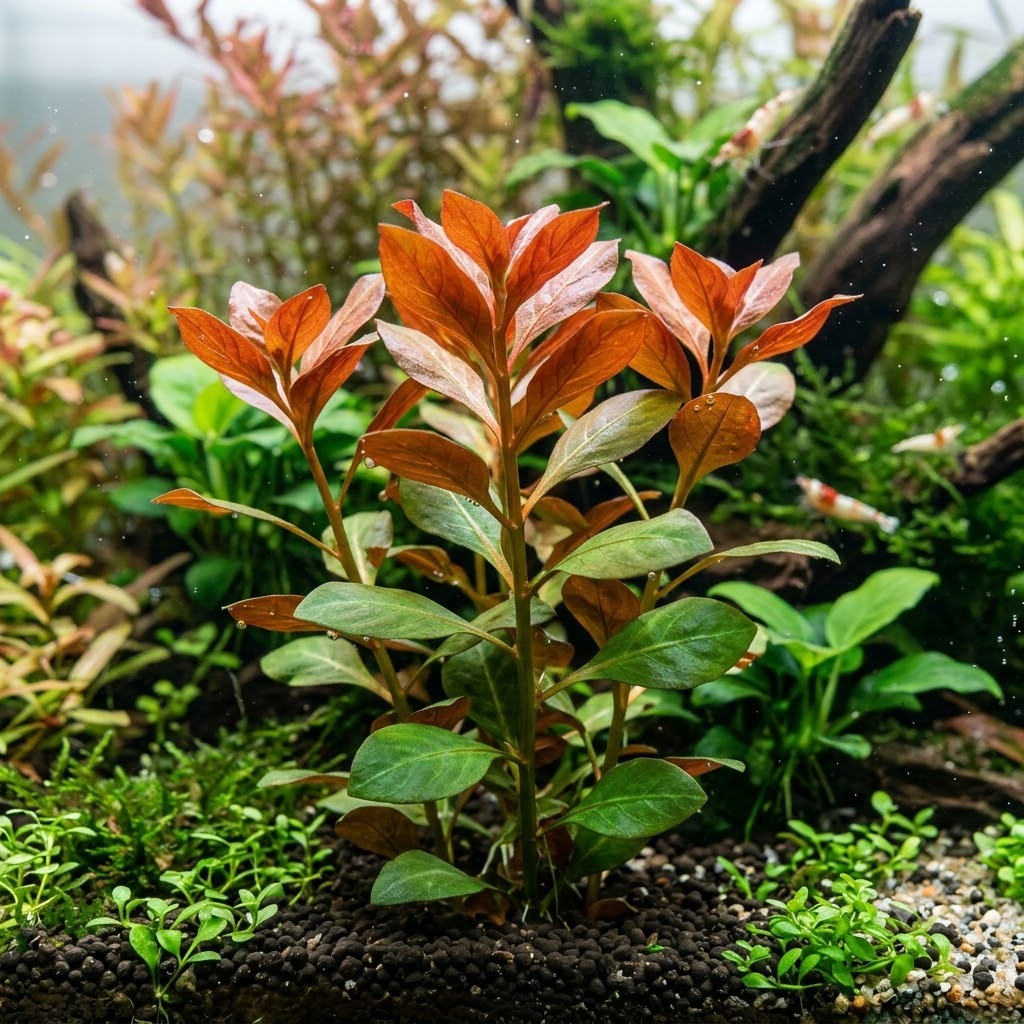
Ludwigia repens is the easiest red stem plant in the hobby - coppery-red leaves without CO2, exotic-looking colour on beginner-level care.
🗓️ Last reviewed: July 2026
Overview
Ludwigia repens is the easiest red stem plant in the hobby - coppery-red leaves without CO2, exotic-looking colour on beginner-level care. It grows fast, forgives mistakes, and shows honestly how good your light is: strong light means red tops, weak light means plain green. (Ludwigia repens, sold in several very similar forms and hybrids.)
Origin & Natural Habitat
Southern United States, Mexico and the Caribbean - shallow streams, pond margins and ditches, often growing half in and half out of the water. It is native in the US, but some relatives (the water primroses) are serious invasives in Europe, so the standing rule applies: never release aquarium plants into waterways.
Appearance
Upright stems with paired oval leaves - olive to bright green on top, flushed red to burgundy beneath and at the growing tips. With strong light the whole top of the plant turns copper-red. Grown emersed it forms creeping stems with glossier leaves.
Why People Grow It - Qualities & Benefits
- Real red colour without CO2 or advanced skills
- Fast, predictable growth and easy trimming
- Amphibious - works in paludariums and open-top tanks
- Cheap, common and hard to kill
Care
Light: Moderate at minimum, strong for the best reds. This is the main lever - colour fades to green in dim tanks.
Water: 20-28°C, pH 6.0-7.5 preferred but tolerant of harder, more alkaline water than most red plants.
Substrate: Any rooting substrate; it feeds through both roots and water column. A nutrient soil or root tabs speed it up but are not mandatory.
CO₂ & feeding: Not required. CO2 and iron-containing fertiliser deepen the red and tighten the growth, but the plant does fine without either.
Placement: Midground to background groups - a cluster of red tops against green plants is the classic use.
Extra: Trim the tops regularly and replant them; untrimmed stems go leggy and shade their own lower leaves bare.
Propagation
Cut healthy tops 10-15 cm long and plant them; the rooted base branches into new shoots. It also creeps and roots at the nodes when it reaches the surface.
Common Problems & Pests
Green, leggy growth in weak light; bare lower stems when the canopy gets dense; some leaf loss while converting from emersed-grown nursery stock. Pests are rare; snails and shrimp ignore healthy leaves.
Toxicity & Safety
Not known to be toxic to cats, dogs or aquarium livestock. Shrimp-safe.
Best Suited For
- Beginners who want their first red plant
- Low-tech tanks with decent lighting
- Paludariums and emersed setups
- Aquascapers needing a reliable warm accent
FAQ
Why is my ludwigia green instead of red?
Light, almost every time. Moderate to strong light brings out the red tips; iron-rich fertiliser helps a little more. In a dim tank the plant stays healthy but plain green.
How often should I trim it?
Whenever the tops reach the surface or the stand looks crowded - typically every couple of weeks in a healthy tank. Replant the cut tops and discard the oldest, barest stems.