Heart Fern
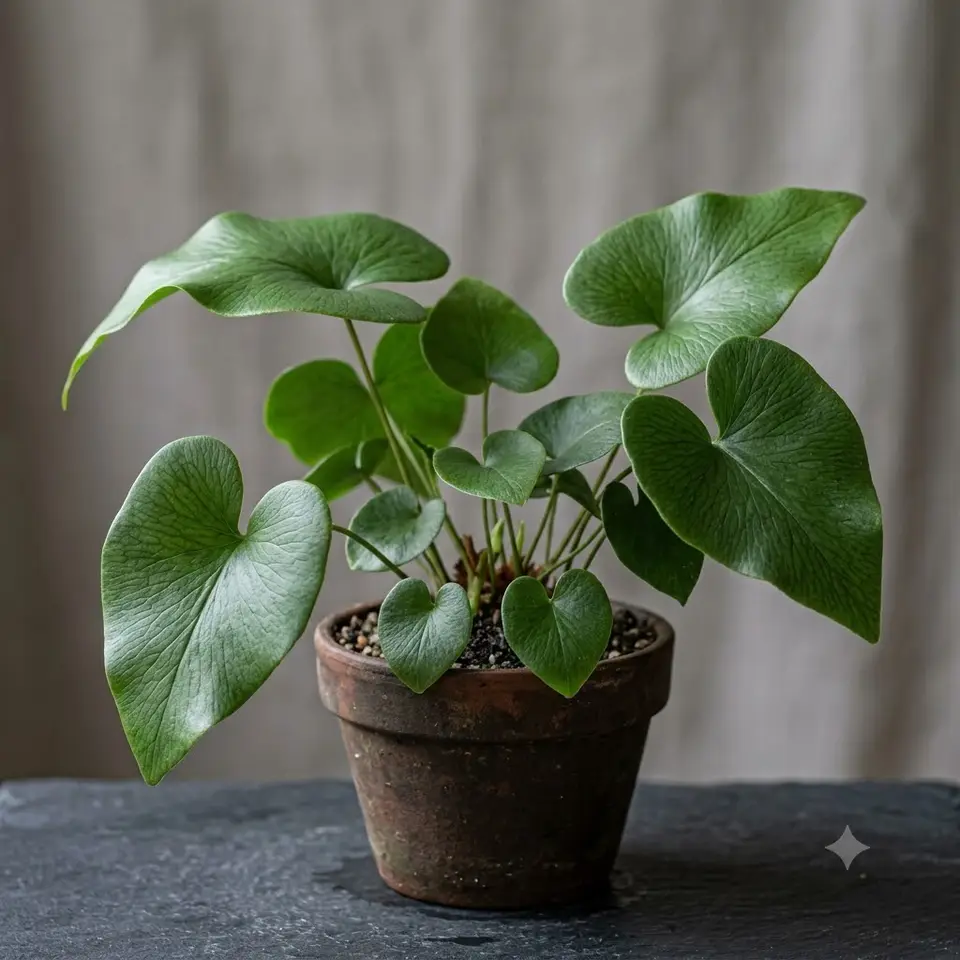
The heart fern is a tiny surprise - small, glossy, heart-shaped leaves on dark wiry stems, looking more like a little vine than a fern.
Last reviewed: October 2026
 AI illustration
 Overview
The heart fern is a tiny surprise - small, glossy, heart-shaped leaves on dark wiry stems, looking more like a little vine than a fern. Compact and charming, it's a terrarium darling that wants warmth and humidity to thrive. (Hemionitis arifolia.)
Origin & Natural Habitat
Tropical Southeast Asia, growing in warm, humid, shaded forest floors and rocks.
Appearance
Small (10-20 cm), glossy, dark-green heart-shaped fronds on thin dark stems; a low, compact clump - unusually un-ferny.
Why People Grow It - Qualities & Benefits
- Adorable heart-shaped glossy leaves
- Tiny: perfect for terrariums
- Unusual, un-fern-like look
- Pet-safe (non-toxic true fern)
Care
Light: Bright indirect light; no direct sun.
Water: Keep consistently, evenly moist (never soggy) - it dislikes drying out; distilled/rain water if your tap is hard.
Soil: Airy, moisture-retentive, well-draining mix.
Temperature & Humidity: 18-27°C warmth; high humidity (60%+) - really a terrarium or humid-case plant rather than an open shelf.
Feeding: Quarter-strength feed occasionally in the growing season - a very light feeder.
Extra: Best treated as a terrarium plant: it sulks and crisps in dry open rooms. Warm, humid and evenly moist is the whole recipe.
Propagation
Divide a mature clump in spring, keeping roots on each piece, or sow spores on moist mix under a clear cover - slower, but it works.
Common Problems & Pests
Crisping and shrivelling = too dry/low humidity; the commonest failure in open rooms. Keep it cased and humid.
Toxicity & Safety
Non-toxic to cats and dogs.
Best Suited For
- Growers ready for a little extra care
- Pet households (this fern is non-toxic)
- Shade and bright-indirect spots
- Terrariums and humid rooms
FAQ
Why does my heart fern keep crisping?
It needs high humidity and steady moisture - open dry rooms crisp it fast. A terrarium or humid case is the reliable way to grow it.
How do I propagate it?
Divide a mature clump in spring so each piece keeps roots, or raise new plants from spores under a clear cover - slower, but reliable in steady humidity.
Gear for growing heart fern
Links go to Amazon or a partner store (such as Adagio Teas) and may earn us a commission at no extra cost to you. As an Amazon Associate we earn from qualifying purchases. We link gear types, not sponsors' picks: you choose the exact product.