Crocodile Fern
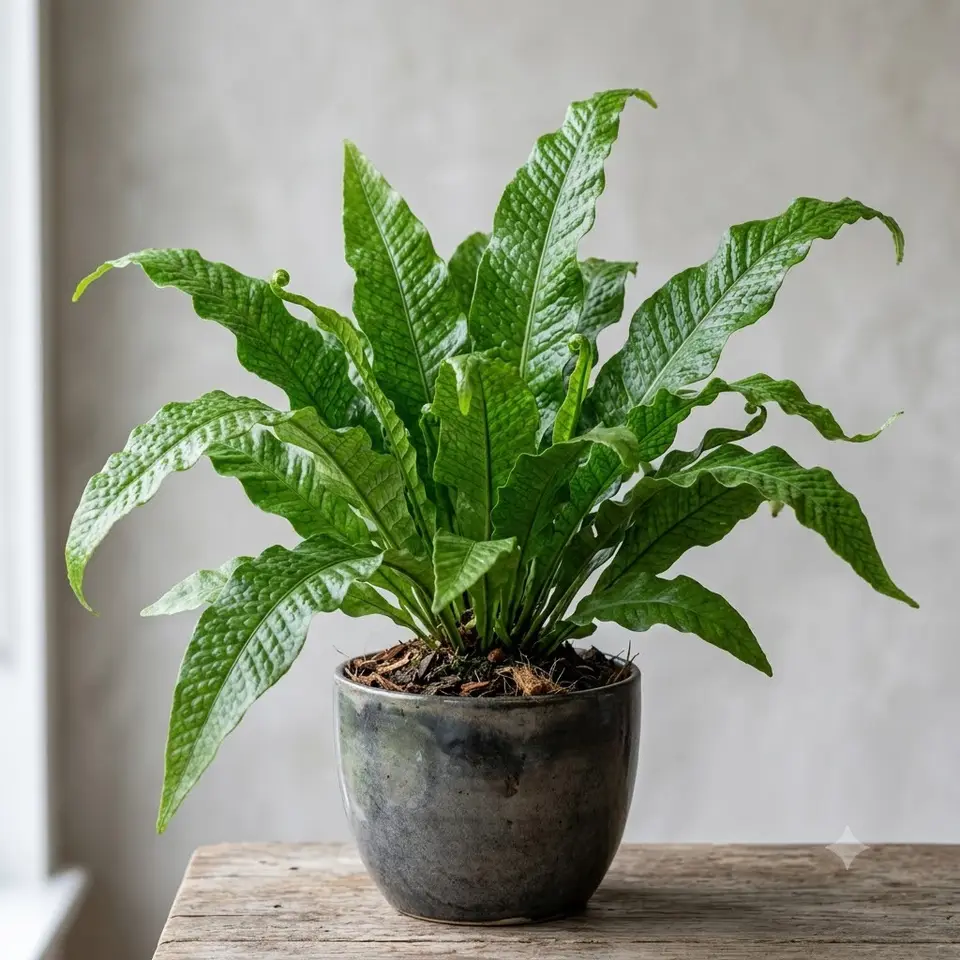
The crocodile fern earns its name with big, undivided, leathery fronds textured like reptile skin - a bold, sculptural fern that looks nothing like the frilly stereotype.
Last reviewed: October 2026
 AI illustration
 Overview
The crocodile fern earns its name with big, undivided, leathery fronds textured like reptile skin - a bold, sculptural fern that looks nothing like the frilly stereotype. A statement plant with the added bonus of being pet-safe. (Microsorum musifolium.)
Origin & Natural Habitat
Southeast Asian rainforests, growing as an epiphyte on trees - hence its love of airy roots and humidity.
Appearance
Large, wide, undivided strap-like fronds with a raised puckered vein network resembling crocodile hide; grows from a creeping rhizome.
Why People Grow It - Qualities & Benefits
- Bold reptile-textured foliage
- Undivided fronds: no fern frilliness
- Architectural statement plant
- Pet-safe (non-toxic true fern)
Care
Light: Bright indirect light; no direct sun (scorches the broad fronds).
Water: Keep evenly moist; as an epiphyte it hates soggy roots but dislikes drying out - water when the top feels barely dry.
Soil: Airy, chunky epiphyte mix (bark + perlite + a little potting mix); good drainage is essential.
Temperature & Humidity: 18-27°C; wants higher humidity (50%+) - a bathroom, grouped plants or a humidifier suits it.
Feeding: Half-strength balanced feed monthly in spring-summer.
Extra: Handle the rhizome gently and don't bury it; it creeps along the surface. Brown crispy edges usually mean the air's too dry.
Propagation
Divide the creeping rhizome in spring, ensuring each piece has fronds and roots.
Common Problems & Pests
Crispy edges = low humidity; rot = over-wet, dense soil. Wipe the big fronds to keep them clean.
Toxicity & Safety
Non-toxic to cats and dogs.
Best Suited For
- Growers ready for a little extra care
- Pet households (this fern is non-toxic)
- Shade and bright-indirect spots
- Terrariums and humid rooms
FAQ
Why does it look like crocodile skin?
The raised, netted vein pattern on the leathery fronds gives a puckered, reptilian texture - the whole appeal of the plant.
Does it need high humidity?
It prefers 50%+ - a bathroom, humidifier or pebble tray helps; in dry rooms the broad fronds crisp at the edges.
Gear for growing crocodile fern
Links go to Amazon or a partner store (such as Adagio Teas) and may earn us a commission at no extra cost to you. As an Amazon Associate we earn from qualifying purchases. We link gear types, not sponsors' picks: you choose the exact product.