Cymbidium Orchid
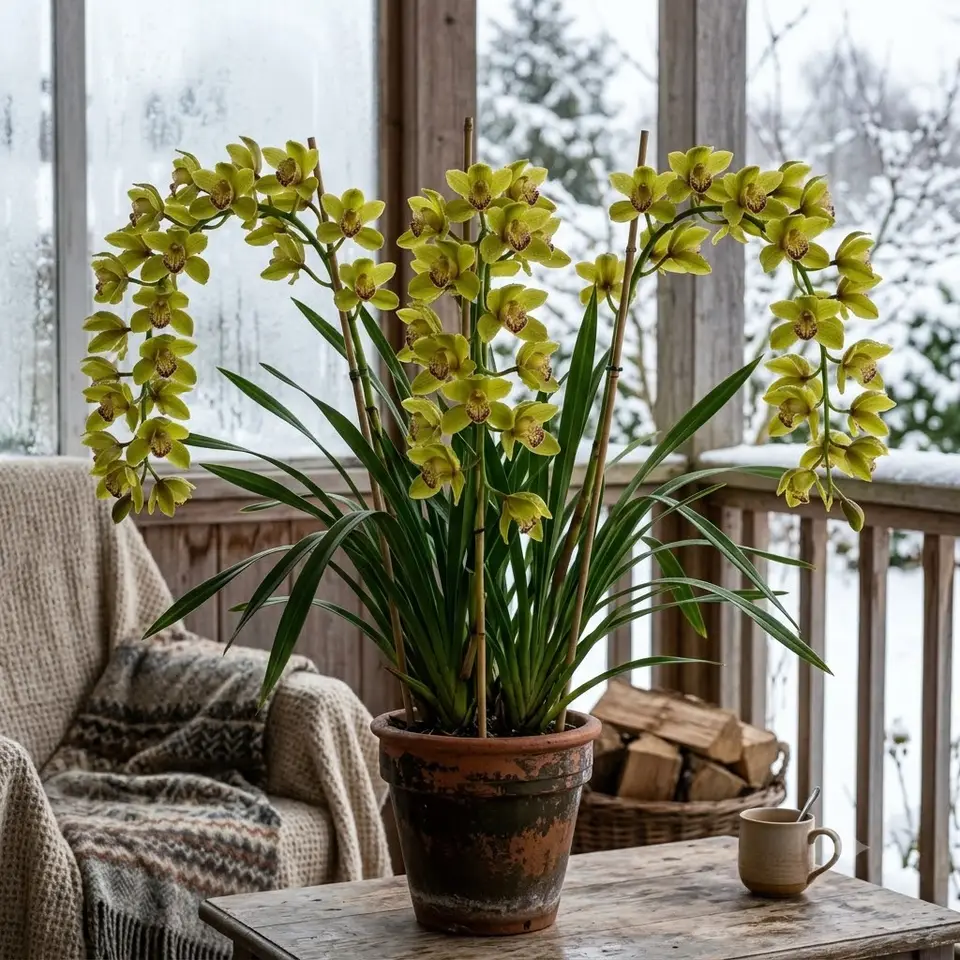
Cymbidiums are grassy-leaved orchids carrying tall spikes of 10-25 waxy blooms that last two months in winter, exactly when nothing else performs.
Last reviewed: October 2026
 AI illustration
 Overview
Cymbidiums are grassy-leaved orchids carrying tall spikes of 10-25 waxy blooms that last two months in winter, exactly when nothing else performs. Their secret is contrarian: they WANT cold nights, and mild-climate porches suit them better than warm living rooms. (Cymbidium.)
Origin & Natural Habitat
Himalayan foothills through China, Japan and down to Australia - cool, bright, seasonal habitats; the 'boat orchids' of Asian horticulture for millennia.
Appearance
Arching grass-like leaves from fat pseudobulbs, 40-90 cm; winter spikes carry many 5-12 cm waxy blooms (greens, golds, pinks, whites) lasting 6-10 weeks.
Why People Grow It - Qualities & Benefits
- Two-month winter flower spikes
- Cold-tolerant to near-frost: porch and patio hardy in mild zones
- Cut spikes last weeks in a vase
- Old plants become bloom fountains
Care
Light: Very bright - outdoor bright shade or gentle sun most of the year; the summer-outdoors, autumn-chill routine IS the culture.
Water: Evenly moist in growth (they're thirstier than bark-orchids suggest); drier in winter rest.
Potting medium: Fine-to-medium bark mix; deep pots for their vigorous roots.
Temperature & Humidity: The trigger: autumn nights of 7-12°C for several weeks set the spikes - the reason indoor-only cymbidiums never flower. Hardy-ish to a light touch of frost briefly.
Feeding: Generous in summer growth (they're the heavy feeders of orchids), lean in autumn.
Rest & rebloom: Summer outside → autumn chill → winter bloom indoors or on a cool porch: the annual loop that makes them easy once learned.
Propagation
Division of big clumps (3+ bulbs per piece) at spring repotting; backbulbs (leafless old bulbs) can sprout new plants planted separately.
Common Problems & Pests
- No spikes = missed the autumn cold, the universal answer
- Red spider mite in hot dry spells
- Snails adore the spikes outdoors
- Sunburn if moved abruptly to full sun
Toxicity & Safety
Orchids are non-toxic to cats and dogs - one of the safest flowering houseplant families.
Pros & Cons
Pros
- Longest-lasting bloom spikes in the hobby
- Near-hardy toughness
- Winter color when it counts
Cons
- Needs the outdoor/chill routine
- Big plants, real estate
- Summer watering commitment
Best Suited For
- Mild-winter climates (zones 9-10 gardens)
- Cool porches and conservatories
- Cut-flower growers
- Patio-plant people
FAQ
Can I grow one purely indoors?
It will live but rarely flower - the autumn night-chill is the bloom trigger. Even a few weeks on a fire escape or cold windowsill in fall changes everything.
When do I divide?
Spring, after bloom, when pots are bursting - every 3-4 years. Fresh divisions sulk a season then return stronger.
Gear for growing cymbidium orchid
Links go to Amazon or a partner store (such as Adagio Teas) and may earn us a commission at no extra cost to you. As an Amazon Associate we earn from qualifying purchases. We link gear types, not sponsors' picks: you choose the exact product.