Patriot Hosta
Patriot is one of the most popular white-edged hostas, prized for the exceptionally wide, crisp ivory margins that frame its dark green centres (Hosta 'Patriot').
Last reviewed: September 2026
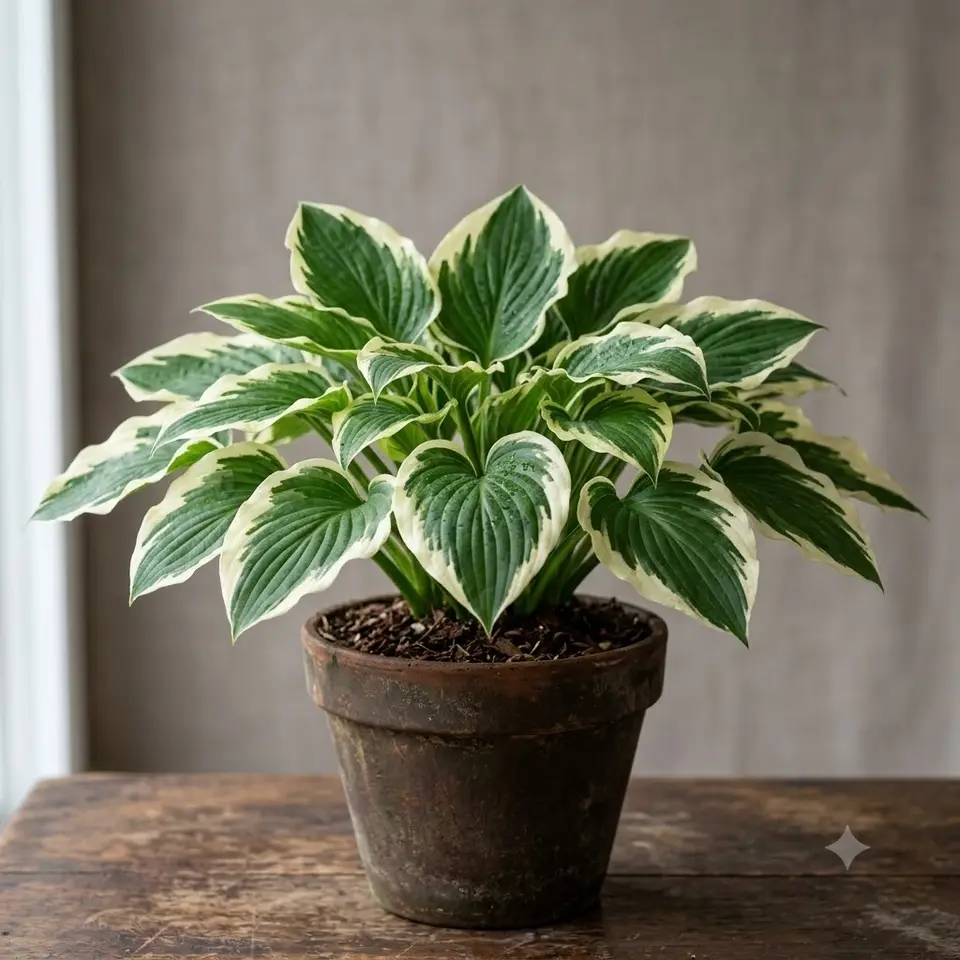 AI illustration
 Overview
Patriot is one of the most popular white-edged hostas, prized for the exceptionally wide, crisp ivory margins that frame its dark green centres (Hosta 'Patriot'). It is a sport of the classic 'Francee' and pushes that plant's variegation further, with a broader, brighter white border that lights up shady borders. Named the American Hosta Growers Association Hosta of the Year in 1997, it remains a reliable, easy-to-grow benchmark for margined varieties.
Origin & Background
The genus Hosta is native to eastern Asia, chiefly Japan, Korea, China and the Russian Far East, where the wild species grow in woodland edges, damp meadows and along streams. 'Patriot' itself is a garden cultivar rather than a wild plant: it arose as a sport (a spontaneous mutation) of 'Francee' and was introduced by John Machen Jr. in the early 1990s, quickly earning a place as an improved, wider-margined alternative to its parent.
Appearance
The leaves are broadly oval to heart-shaped with a matte, slightly rippled surface. Each blade has a deep green to blue-green centre surrounded by a wide, clean white to ivory margin, with the two zones separated by a soft grey-green transition. Individual leaves streak more heavily with white in cooler spring conditions and settle as they mature. It forms a dense, mounding clump roughly 45 to 55 cm tall and 75 to 90 cm wide at maturity. In mid to late summer, slender scapes rise well above the foliage carrying funnel-shaped lavender flowers. As a deciduous perennial the foliage yellows and dies back with autumn frosts, and the plant rests over winter before flushing again in spring.
Why People Grow It - Qualities & Benefits
- Bold, high-contrast white margins that brighten shade and dark corners
- Tough, reliable and low-maintenance once established
- Forms a tidy, weed-suppressing mound that returns year after year
- Adds structure and long-season foliage interest where many flowers struggle
Care
Light: Part shade to full shade; morning sun with afternoon shade keeps the white margins crisp, while deep shade slows growth and hot midday sun scorches the pale edges. Water: Consistent, even moisture; water during dry spells and never let the crown sit in waterlogged soil. Soil: Rich, humus-heavy, well-drained soil that stays moist; slightly acidic to neutral pH (around 6.0 to 7.0) is ideal. Hardiness: USDA zones 3 to 8. Bloom or Season: Grown mainly for its spring-to-autumn foliage; lavender flowers appear in mid to late summer, and the leaves fade to yellow before dying back in autumn. Extra: The white margin is widest and brightest with cool temperatures and a little gentle morning light, so placement matters more than feeding. Note: hostas are toxic to cats and dogs, so keep pets away and discourage chewing.
Planting & Propagation
Plant in spring or early autumn, setting the crown level with the soil surface in ground enriched with compost or leaf mould, and space clumps to allow for the full mature spread. Water in well and mulch to conserve moisture and moderate soil temperature. Propagation is easiest by division: lift a mature clump in early spring as the shoots (eyes) emerge, split it into sections each with roots and several eyes using a sharp spade or knife, and replant promptly at the same depth. Because 'Patriot' is a variegated cultivar, division is the only way to keep it true to type.
Common Problems & Pests
- Slugs and snails, which chew ragged holes in the leaves, worst in damp weather
- Leaf scorch and browning of the white margins from too much sun or dry soil
- Crown rot in heavy, poorly drained soils that stay saturated, plus occasional vine weevil or deer browsing
Toxicity & Safety
Hostas, including 'Patriot', are toxic to cats and dogs. The plants contain saponins, and ingestion of leaves, flowers or roots can cause vomiting, diarrhoea and depression (lethargy). Signs are usually mild to moderate, but keep pets from chewing the plant, site it away from areas where animals graze, and contact a vet if a pet eats a significant amount or shows persistent symptoms.
Pros & Cons
Pros
- Striking wide white margins with excellent, dependable contrast
- Hardy, long-lived and genuinely easy for beginners
Cons
- Toxic to cats and dogs if eaten
- A magnet for slugs and snails, and dies back completely in winter
Best Suited For
- Shade and woodland gardens, north-facing borders and under trees or shrubs
- Gardeners wanting bold foliage colour and edging in low-light spots, including containers
FAQ
How big does Patriot Hosta get?
Expect a mound around 45 to 55 cm tall and 75 to 90 cm wide once mature, with flower scapes rising taller above the leaves in summer.
Will it grow in full sun?
It performs best in part to full shade. A little morning sun keeps the white margins crisp, but hot afternoon sun and dry soil scorch the pale edges, so avoid open, sunny sites.
Gear for growing patriot hosta
Links go to Amazon or a partner store (such as Adagio Teas) and may earn us a commission at no extra cost to you. As an Amazon Associate we earn from qualifying purchases. We link gear types, not sponsors' picks: you choose the exact product.