David Howard Dahlia
David Howard is a decorative dahlia prized for the strong contrast between its warm apricot-orange blooms and its dark, bronze-black foliage (Dahlia 'David Howard').
Last reviewed: July 2026
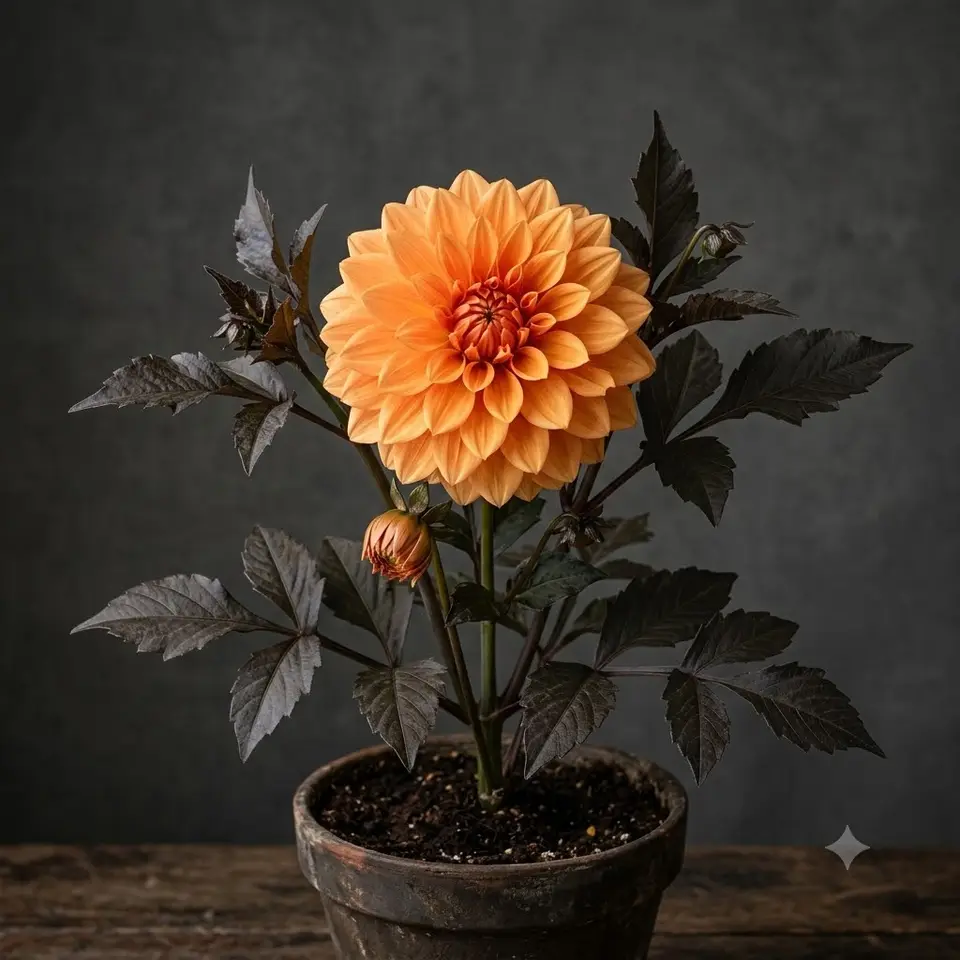 AI illustration
 Overview
David Howard is a decorative dahlia prized for the strong contrast between its warm apricot-orange blooms and its dark, bronze-black foliage (Dahlia 'David Howard'). That colour pairing, unusual in a dahlia, makes it read as a single dramatic accent rather than just another cut-flower plant. It is a compact, free-flowering border dahlia that holds a Royal Horticultural Society Award of Garden Merit.
Origin & Background
The genus Dahlia is native to the highlands of Mexico and Central America, where the wild species grow as tuberous perennials. Garden dahlias are complex hybrids bred from these species over the last two centuries. 'David Howard' is a British-raised decorative cultivar introduced in the mid-1960s and has stayed popular ever since for its reliable dark-leaf-and-orange-flower combination.
Appearance
The flowers are fully double, rounded decorative blooms roughly 8 to 10 cm across, in a warm apricot to burnt-orange shade that deepens toward the centre. The real signature is the foliage: deeply cut leaves emerge chocolate-bronze to near black, giving the whole plant a smoky look that sets off the blooms. Mature height is around 90 to 110 cm with a spread of about 45 to 60 cm, forming a bushy, upright clump. It flowers from midsummer, roughly July, and keeps going until the first hard frost knocks it back.
Why People Grow It - Qualities & Benefits
- Striking colour contrast of dark foliage against apricot-orange flowers on one plant
- Long flowering run from midsummer to first frost, especially with regular deadheading
- Excellent, long-lasting cut flower for late-season arrangements
- A magnet for bees and other pollinators when the blooms are not too tightly packed
Care
Light: Full sun, at least six hours a day, which also intensifies the dark leaf colour. Water: Moderate but consistent; water deeply in dry spells and never let the tubers sit waterlogged. Soil: Rich, fertile, free-draining soil with plenty of organic matter, ideally slightly acidic to neutral (pH about 6.5 to 7.0). Hardiness: USDA zones 8 to 11 in the ground; in zones 3 to 7 it is grown as a tender plant with tubers lifted over winter. Bloom or Season: Midsummer through to the first autumn frost, often July to October, with peak flush in late summer. Extra: Tall stems benefit from staking, and pinching the growing tip early encourages a bushier, more floriferous plant. Note that this dahlia is mildly toxic to cats and dogs, so site it where pets are unlikely to chew the leaves or dig the tubers.
Planting & Propagation
Plant tubers in spring once the danger of frost has passed, setting them about 10 to 15 cm deep with the growing eye facing up, or start them earlier under cover in pots. Named cultivars like David Howard do not come true from seed, so propagation is done by lifting and dividing the tuber clumps in autumn or early spring, making sure each division carries a piece of the old stem with a viable eye. Basal cuttings taken from sprouting tubers in early spring are another reliable way to increase your stock.
Common Problems & Pests
- Slugs and snails, which shred young shoots as they emerge in spring
- Earwigs and aphids, which chew petals and distort new growth
- Powdery mildew and grey mould (botrytis) in crowded, damp, poorly ventilated plantings
Toxicity & Safety
Dahlias, including 'David Howard', are considered mildly toxic to cats and dogs. Eating leaves, stems, flowers, or tubers can cause mild gastrointestinal upset such as drooling, vomiting, and diarrhoea, and contact with the milky sap can cause mild skin irritation or dermatitis in sensitive animals. Reactions are generally mild rather than life-threatening, but it is sensible to discourage pets from grazing on the plants and to wear gloves if the sap bothers your skin. If a pet eats a large amount or shows persistent symptoms, contact a veterinarian.
Pros & Cons
Pros
- Distinctive dark foliage plus warm flowers give strong impact from a single plant
- Very long bloom season and reliable performance as a cut flower
Cons
- Tubers must be lifted and stored over winter in colder zones, adding yearly work
- Needs staking, deadheading, and slug control to look its best
Best Suited For
- Gardeners who want a bold, long-flowering focal plant in a sunny border
- Cut-flower growers and cottage-garden or late-summer colour schemes
FAQ
Do I have to dig up the tubers every winter?
Only in colder regions. In USDA zones 8 and warmer you can usually leave tubers in the ground under a mulch, but in zones 3 to 7 lift them after the first frost, dry them off, and store them somewhere cool and frost-free until spring.
Why is the foliage dark, and will it stay that way?
The bronze-black leaf colour is a genetic trait of this cultivar. It is strongest in full sun and on young growth; leaves can green up slightly in shade or as they age, so a bright, open position keeps the contrast at its best.
Gear for growing david howard dahlia
Links go to Amazon or a partner store (such as Adagio Teas) and may earn us a commission at no extra cost to you. As an Amazon Associate we earn from qualifying purchases. We link gear types, not sponsors' picks: you choose the exact product.