Chicago Apache Daylily
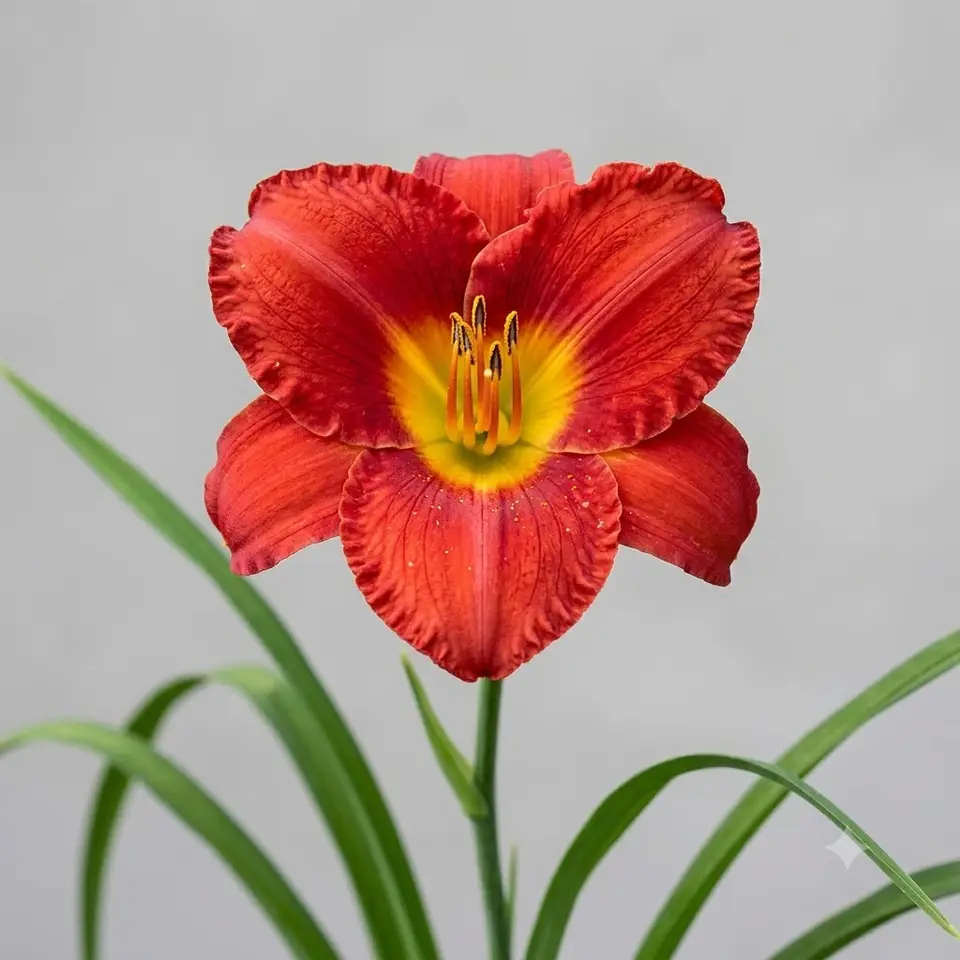
Chicago Apache is a bold, tetraploid daylily prized for its saturated scarlet-red flowers with a small green-gold throat and lightly ruffled, velvety petals (Hemerocallis 'Chicago Apache').
Last reviewed: October 2026
 AI illustration
 Overview
Chicago Apache is a bold, tetraploid daylily prized for its saturated scarlet-red flowers with a small green-gold throat and lightly ruffled, velvety petals (Hemerocallis 'Chicago Apache'). It holds its clear red colour well in strong sun, where many red daylilies fade or spot, which is a big part of why it has stayed popular for decades. The result is a tough, clump-forming perennial that reads as a true fire-engine red in the garden.
Origin & Background
The genus Hemerocallis is native to eastern Asia, ranging across China, Korea, Japan and eastern Siberia, where the wild species grow in meadows, forest edges and along streams. 'Chicago Apache' is a garden hybrid, not a wild plant. It comes from the well-known "Chicago" line of daylilies developed by American hybridiser James Marsh and later associated with the Klehm nursery family, and it was registered in the early 1980s, remaining a benchmark red ever since.
Appearance
This is a mid-sized daylily forming a dense fountain of arching, strap-like green leaves. Scapes rise to roughly 66 to 70 cm tall, with a clump spreading to around 45 to 60 cm wide over a few seasons. Each flower is a broad, rounded trumpet about 13 cm across, in a deep ruby to scarlet red with faintly ruffled, recurved petal edges and a modest yellow-green throat. Bloom season is midsummer, and the foliage is dormant, dying back for winter and flushing fresh in spring; individual flowers last a single day, as the name daylily suggests, but a healthy clump opens a steady succession of buds.
Why People Grow It - Qualities & Benefits
- Rich, sun-fast red that stays vivid rather than bleaching or spotting in heat
- Extremely hardy and low-maintenance once established, tolerating a wide range of soils
- Long midsummer display from many buds per scape, with some rebloom in good conditions
- Reliable clump former that divides easily to fill beds or share with friends
Care
Light: Full sun is best for strongest colour and flowering; it tolerates light afternoon shade but blooms less. Water: Average, even moisture; water deeply during establishment and in droughts, then it is quite drought-tolerant. Soil: Adaptable, but prefers fertile, well-drained loam; happy in a slightly acidic to neutral pH around 6.0 to 7.0. Hardiness: USDA zones 3 to 9. Bloom or Season: Midseason bloomer in early to midsummer, with each clump flowering over several weeks and occasional rebloom. Extra: Deadhead spent blooms to keep the clump tidy and cut back tired scapes after flowering. Important pet-safety note: daylilies are extremely dangerous to cats and can cause fatal kidney failure from even small amounts, so keep cats away and call a vet at once if one nibbles any part.
Planting & Propagation
Plant in spring or early autumn, setting the crown about 2.5 cm below the soil surface and spacing clumps 45 to 60 cm apart. Water in well and mulch lightly to conserve moisture. Propagate by division every 3 to 5 years: lift the clump when dormant or just after flowering, wash off soil, and pull or cut it into fans that each carry roots and foliage, then replant promptly. Division is by far the most reliable way to keep this cultivar true, since seed will not come true to type.
Common Problems & Pests
- Daylily rust and leaf streak can spot or brown the foliage in humid climates; remove affected leaves and improve airflow
- Aphids and thrips may distort buds and new growth, especially in spring
- Crown or root rot can set in on heavy, waterlogged soils, so ensure good drainage
Toxicity & Safety
Daylilies pose a serious, specific danger to cats. All parts of the plant, including leaves, flowers, pollen and even the water from a vase of cut stems, can trigger acute kidney failure in cats, and even small amounts can be fatal. If you keep cats, treat this plant as a genuine hazard and seek veterinary help immediately at any sign of ingestion, such as drooling, vomiting or lethargy, because prompt treatment greatly improves the outcome. For dogs the risk is much lower, usually limited to mild stomach upset, though it is still sensible to discourage chewing. The ASPCA lists daylilies (Hemerocallis) as toxic to cats. For dogs, the ASPCA lists them as non-toxic.
Pros & Cons
Pros
- Outstanding, sun-resistant red colour that holds up in heat
- Cold-hardy, drought-tolerant and forgiving of poor soils
Cons
- Each flower lasts only one day, so tidy gardeners deadhead often
- Genuinely dangerous to cats, making it a poor choice for cat households
Best Suited For
- Beginner gardeners wanting a tough, showy perennial with minimal fuss
- Sunny borders, mass plantings and hot-colour schemes in zones 3 to 9
FAQ
Does Chicago Apache daylily rebloom?
It is primarily a midseason bloomer with a strong main flush, and in warm regions with good moisture and feeding it will often send up a lighter second round of scapes later in the season.
Will the red flowers fade in full sun?
No, that is one of its main selling points. Unlike many red daylilies that spot or bleach in strong sun, Chicago Apache holds its deep scarlet colour well, which is why it stays a favourite for hot, exposed beds.
Gear for growing chicago apache daylily
Links go to Amazon or a partner store (such as Adagio Teas) and may earn us a commission at no extra cost to you. As an Amazon Associate we earn from qualifying purchases. We link gear types, not sponsors' picks: you choose the exact product.