Pineapple Quince
Quince variety
Quince is the orchard's forgotten treasure - golden, intensely perfumed fruit inedible raw but transformed by cooking into rose-pink membrillo, jelly and roasts; Pineapple is the best garden variety.
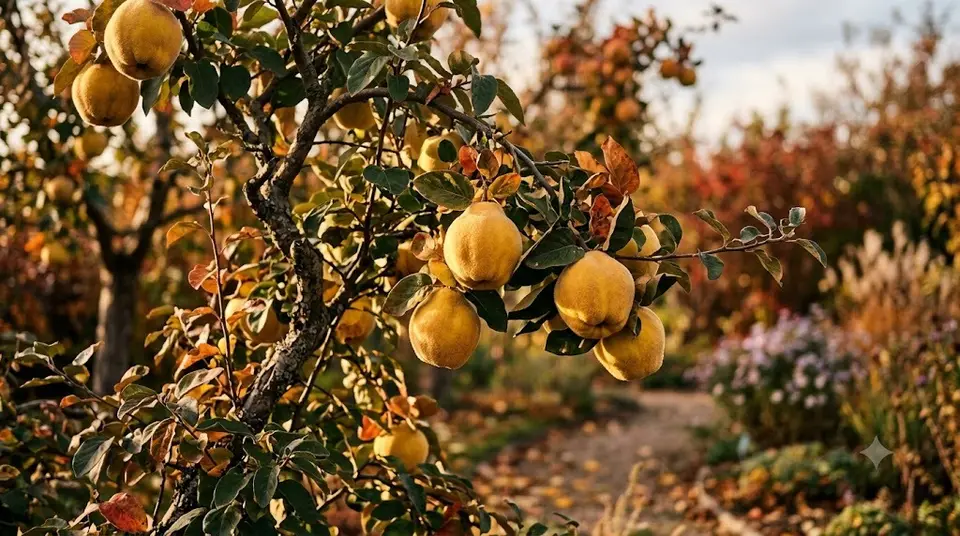
One ripe quince perfumes an entire room - a heady blend of pineapple, guava, vanilla and rose that no other temperate fruit approaches, and Burbank's Pineapple variety is the finest garden form of this 4,000-year-old fruit. You cannot eat it raw (hard, astringent, sour); you cook it, and cooking is the magic trick: the pale flesh blushes deep rose-pink and the perfume becomes flavor. Membrillo, jelly, poached quince with everything: the most under-planted reward in fruit growing.
Fruit & flavor
Large, lumpy-golden and downy, ferociously aromatic; raw it is wood, cooked it turns rose-pink, tender and perfumed - the entire point. Pineapple's namesake tropical note is the strongest of any variety, and it's tenderer-fleshed (some eat it raw at dead-ripeness in warm climates: the only quince with that claim).
Tree size & rootstocks
A naturally small, crooked, picturesque tree: 3-4 m own-rooted or on quince stock, no dwarfing needed. Huge single pale-pink spring blossoms - genuinely one of the prettiest flowering fruit trees.
Pollination
Self-fertile - one tree, full crop, always.
Climate & hardiness
Zones 5-9, unbothered by heat, tolerating cold to -25°; late bloom dodges spring frost almost entirely - quince simply doesn't share stone fruit's anxiety.
Site & soil
Sun, any reasonable soil including heavier clay than most fruit accepts; moisture-tolerant roots (quince historically edged ponds and ditches).
Pruning & care
Nearly none: shape lightly in winter, remove suckers and crossing wood. No thinning, no spraying in most gardens - fireblight is the one regional caution (as for pears).
Harvest & storage
October, when fruit turns full gold and the perfume is announcing itself across the garden; pick before hard frost. Stores 2-3 months in a cool room - kept apart, unless you want everything nearby to smell wonderful (you might).
Problems
Fireblight where endemic, quince leaf blight (cosmetic spotting) in wet years, codling moth occasionally. Among the healthiest and least demanding trees in this catalog.
FAQ
Why does the flesh turn pink when cooked?
Long, slow heat converts the fruit's colorless anthocyanin precursors into rosy pigments - the deeper the simmer, the deeper the rose. It's chemistry, and it never fails to delight.
What do I actually make with quince?
Membrillo (quince paste for cheese), amber jelly, quince poached in syrup, and slices roasted alongside pork or lamb - one tree covers holiday gifts for years.
Varieties behave differently by region, rootstock and season - ripening months here assume a mid-temperate northern-hemisphere garden. Check local nursery guidance for your exact climate, and never rely on a single source for spray decisions.
Kit for fruit trees
Links go to Amazon or a partner store (such as Adagio Teas) and may earn us a commission at no extra cost to you. As an Amazon Associate we earn from qualifying purchases. We link gear types, not sponsors' picks: you choose the exact product.