How to Plant Spring Bulbs
Tulips, daffodils, crocuses and alliums go in during autumn, once the soil cools. When to plant by climate, how deep each bulb goes, the drainage rule that matters most, and how to stop squirrels digging up the lot.
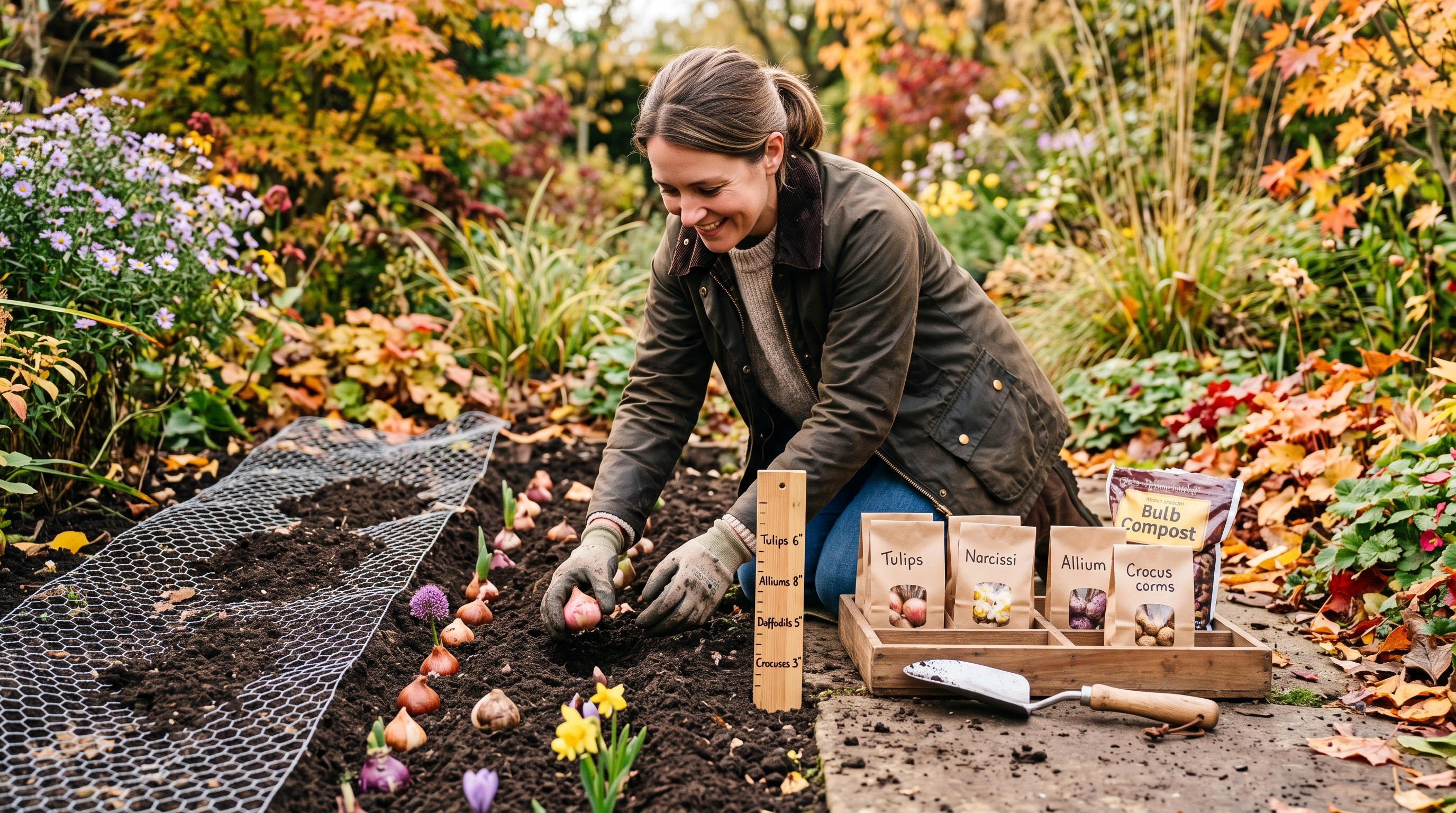
The short version: spring bulbs are planted in autumn, after the soil has cooled but several weeks before it freezes. Plant each bulb pointed end up at roughly two to three times its own height deep, in soil that drains well, water it in once, and then leave it alone. That is genuinely most of it. Bulbs arrive with the flower already formed inside - your job is to give them cold, drainage and time to grow roots before winter.
The details below are where good displays and disappointing ones separate.
When to plant: soil temperature, not the calendar
Most spring bulbs need two things from autumn: cool soil to start rooting, and a long cold period over winter to trigger flowering. The practical signal is soil temperature dropping below roughly 13-15°C (55-60°F), which typically happens after a few weeks of cool nights.
A rough guide by climate:
- Cold climates (US zones 3-5 and similar): September to early October.
- Temperate climates (zones 6-7): October to early November.
- Mild climates (zone 8): November into December.
- Warm climates (zones 9-10): most tulips and hyacinths will not get enough natural cold. Gardeners there either treat them as annuals or pre-chill bulbs in a refrigerator for around 10-14 weeks before planting in December or January - keep them in a paper bag and away from ripening fruit, whose ethylene gas can damage the flower bud inside.
Not sure which zone you garden in? Our hardiness zone tool will tell you, and the planting calendar lines up timing for your area.
Within that window, order matters a little. Daffodils, snowdrops and crocuses benefit from going in earlier, because they like time to root. Tulips are best planted last - cooler soil reduces the risk of fungal diseases such as tulip fire. If you are late, plant anyway: a bulb in cold ground in December almost always does better than a bulb left in a bag in the shed until spring.
How deep and how far apart
The rule of thumb is depth equal to two to three times the bulb’s height, measured to the base of the bulb. Some typical figures:
| Bulb | Planting depth (to base) | Spacing |
|---|---|---|
| Snowdrop, crocus, grape hyacinth | 8-10 cm (3-4 in) | 5-8 cm (2-3 in) |
| Hyacinth | 15 cm (6 in) | 10-15 cm (4-6 in) |
| Daffodil | 15 cm (6 in) | 10-15 cm (4-6 in) |
| Tulip | 15-20 cm (6-8 in) | 10-15 cm (4-6 in) |
| Large allium | 15-20 cm (6-8 in) | 20-30 cm (8-12 in) |
Deeper is usually safer than shallower: shallow bulbs are more exposed to frost heave and digging animals, and tulips planted deeper often return more reliably. In light sandy soil go toward the deeper end; in heavy clay stay a little shallower.
Which way up? Pointed end up, roots or flat base down. With odd shapes like anemone corms or some allium, set them on their side - the shoot will find its way.
Spacing for effect. Bulbs look best in generous clumps or drifts, not single-file rows. Seven to fifteen tulips in a group reads as a planting; three reads as an accident.
Drainage is the rule that matters most
The number one killer of spring bulbs is not cold - it is sitting wet all winter and rotting. Before you plant, dig a test hole and fill it with water. If it has not drained within a few hours, either choose a different spot, raise the bed, or work in plenty of coarse organic matter and grit across the whole area (not just into the planting hole, which can turn into a sump).
After planting, water once to settle soil around the bulbs and start root growth. Unless your autumn is unusually dry, rain does the rest. A light layer of mulch helps even out soil temperature in cold areas. For general bed preparation, our fall garden checklist covers the other jobs worth doing at the same time.
Feeding: less than you think
A healthy bulb carries its own food supply for this spring’s flowers. If your soil is reasonably fertile, planting needs nothing added. If you want to feed for future years, a balanced slow-release fertiliser worked into the soil at planting, or a light feed as the shoots emerge, is enough.
One common suggestion to reconsider: bone meal. Its smell can attract dogs, foxes and rodents that dig up exactly what you just planted.
Squirrels, voles and pets
Squirrels love freshly dug soil and tulip and crocus bulbs. What tends to work:
- Clean up. Remove papery tunics and bulb debris from the surface - the scent draws diggers.
- Cover the bed. Lay chicken wire or hardware mesh flat over the planted area, pinned down and covered with a little soil or mulch. Shoots grow through the holes; paws cannot dig through. Lift it in late winter if you prefer.
- Choose less appealing bulbs. Daffodils, alliums, snowdrops and grape hyacinths are generally left alone by squirrels and voles.
That same resistance comes from compounds that make many bulbs toxic. Tulip, daffodil and hyacinth bulbs are harmful to dogs and cats, and dogs in particular sometimes dig them up. Store bags out of reach and keep an eye on curious pets in newly planted areas. Our pet-safe plants guide is a good place to check what else in your home and garden to be careful with, and your vet is the person to call if a pet has chewed a bulb.
After they flower
The work that makes bulbs come back happens after the show. Snap off faded tulip and daffodil flower heads so energy is not spent on seed, but leave the foliage until it yellows and flops, usually around six weeks. Those leaves are refilling the bulb for next year. Cutting, braiding or tying them early is the most common reason daffodils stop flowering.
Daffodils, crocuses, snowdrops and grape hyacinths naturalise well and often multiply for decades. Many modern tulips give their best display in the first year and decline after - species tulips and some Darwin hybrids are the more reliable returners.
Quick checklist
- Wait for cool soil, then plant before the ground freezes.
- Pointed end up, two to three times the bulb’s height deep.
- Test drainage first; wet feet rot bulbs.
- Water in once, then leave them.
- Mesh over tulips and crocuses where squirrels are active.
- Keep bulbs away from pets.
- Deadhead after flowering, but let the leaves die back naturally.