Growing Amaryllis Indoors
How to pot an amaryllis bulb for winter flowers indoors: planting depth, light, watering, what to do after it blooms, and the rest period that lets the same bulb flower again next year.
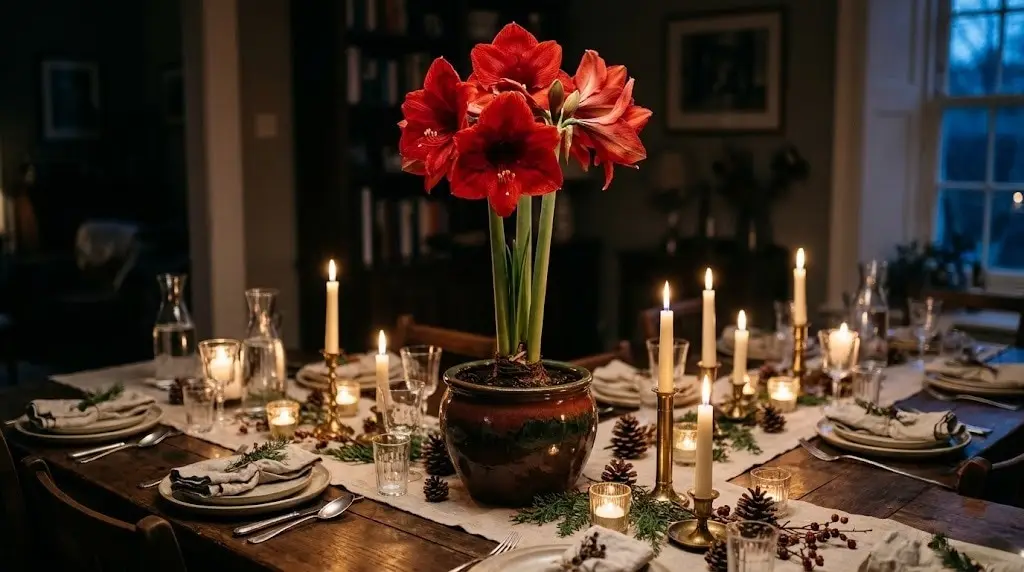
Pot an amaryllis bulb in autumn or early winter, set it in a warm, bright room, and water sparingly until growth starts. The Royal Horticultural Society’s hippeastrum growing guide suggests planting from October to January and says flowers appear about six to eight weeks later, which is why a bulb potted around now can be in bloom for the winter holidays. After flowering, the same bulb can be kept growing, rested and brought back into flower the next year.
Pets in the house: the ASPCA lists amaryllis as toxic to dogs, cats and horses. Keep the bulb, leaves and flowers out of reach of pets, and if an animal chews any part of the plant, call your vet or a pet poison helpline. Our list of houseplants safe for cats and dogs covers alternatives for homes where pets get into everything.
What you are buying
The plant sold as amaryllis is a hybrid of the genus Hippeastrum. It arrives as a large, dry bulb, sometimes already potted or waxed. Pick a bulb that feels firm and heavy for its size, with no soft patches or mould at the base.
Waxed bulbs are sold as decorations that flower without water or soil. They are set up for one season of flowers, so if you want a bulb that keeps going for years, buy a plain one and pot it yourself.
Potting the bulb
- Choose a snug pot. The RHS guide recommends a pot only a little larger than the bulb. A heavy pot (terracotta or glazed ceramic) helps keep a tall, top-heavy stalk from tipping over.
- Use a free-draining mix. A general multipurpose potting mix works; the pot needs a drainage hole.
- Leave the shoulders out. The RHS advises planting so that two-thirds of the bulb stays above the surface. Firm the mix around the roots and the lower part of the bulb.
- Water once, then wait. Water the mix lightly after planting and let the excess drain away.
Light, warmth and water while it grows
Put the pot in the brightest warm spot you have. The RHS guide suggests a well-lit position at around 21°C (70°F) to start the bulb, and moving the plant somewhere cooler once it opens, which makes the flowers last longer.
Water sparingly until you see new growth, then more regularly, so the mix stays lightly moist without sitting wet. Do not leave water standing in the saucer. A bulb sitting in cold, wet mix before it has roots is a common way to lose it to rot. Our page on how to water houseplants covers checking moisture with a finger before you pour.
The flower stalk grows toward the light. Turn the pot a little every day or two to keep it upright, and add a thin stake if the flower heads are large and the stalk starts to lean.
After the flowers fade
This is the part that decides whether the bulb flowers again.
- Cut the flower stalk, keep the leaves. Once the flowers wither, cut the stalk down near the top of the bulb. The strap-like leaves that follow are what feed the bulb for next year, so leave them on.
- Feed while the leaves grow. The RHS suggests feeding with a balanced liquid fertiliser through the growing period. Follow the dilution on the fertiliser label.
- Give it summer light. Keep the plant in good light through spring and summer. The RHS notes it can go outdoors or into a greenhouse in summer, shaded from harsh sun, and be watered regularly.
The rest that brings it back into flower
To flower again, the bulb needs a cool, dry rest after a summer of growth. The RHS guide describes two ways to do it, both starting in late September:
- Semi-dormant. Move the plant to a cool, bright spot, stop feeding and cut back on water for eight to ten weeks, then trim the old leaves, refresh the top layer of mix and restart it like a new bulb.
- Fully dry. Stop watering, let the leaves die back, and keep the pot somewhere cool and dark, such as a garage, for one to two months. Then bring it back in, start watering and feeding, and it regrows.
If your bulb from last year has been growing on a windowsill all along, you can still give it a rest now; expect it to flower later than a freshly bought bulb. Repotting is only needed every few years, after flowering, as the RHS guide explains. When a bulb sends up small offsets beside it, these can be potted separately, though they take a few years to reach flowering size.
For other bulbs that brighten the winter and spring, our bulb guides cover what to plant outdoors in autumn, and the Christmas cactus guide covers another houseplant that is timed for the holidays.
Recommended Gear on Amazon
- Amaryllis bulbs - browse current options and reviews on Amazon.
- Heavy ceramic bulb pots - browse current options and reviews on Amazon.
- Plant support stakes - browse current options and reviews on Amazon.
As an Amazon Associate, we earn from qualifying purchases - at no extra cost to you. This helps us keep producing free, in-depth guides.