Wax Begonia
The Wax Begonia is a compact, fibrous-rooted begonia prized for its glossy, almost lacquered leaves and its habit of flowering nearly nonstop in bright conditions.
Last reviewed: September 2026
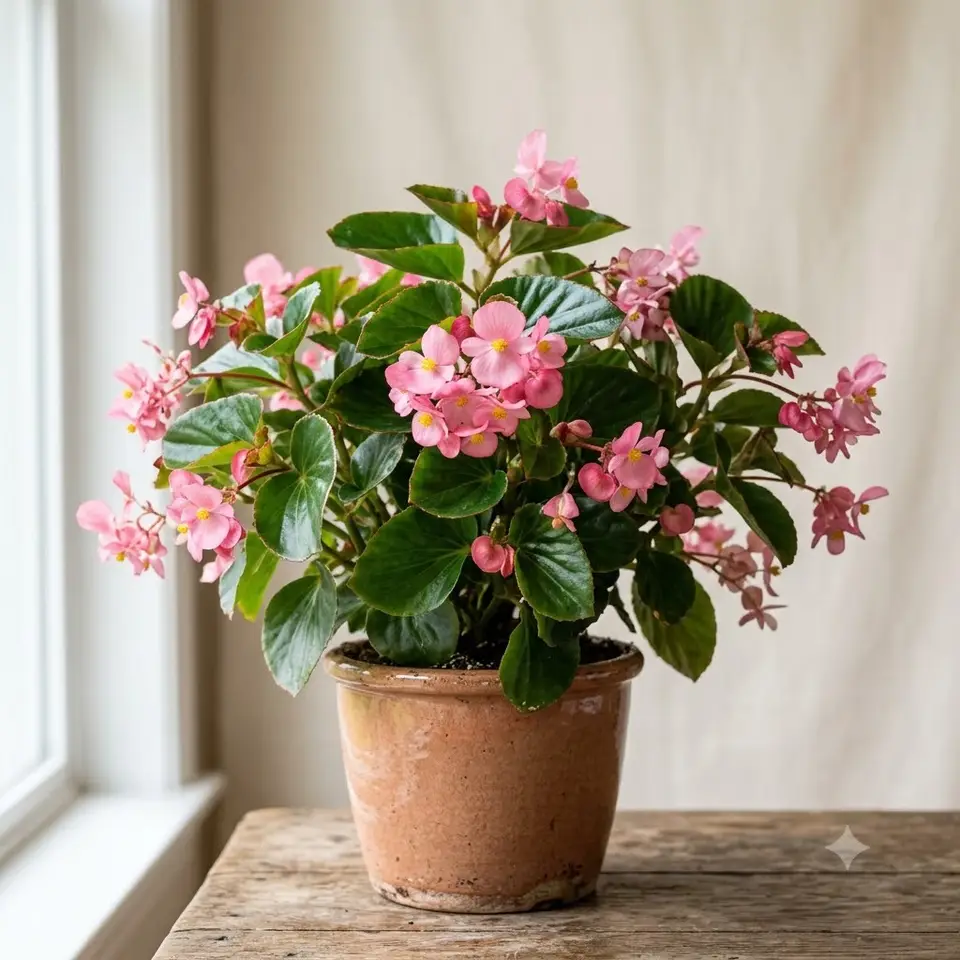 AI illustration
 Overview
The Wax Begonia is a compact, fibrous-rooted begonia prized for its glossy, almost lacquered leaves and its habit of flowering nearly nonstop in bright conditions. Collectors reach for it as a dependable, forgiving foundation plant that comes in green, bronze, and deep mahogany foliage forms, often with contrasting pink, white, or red bloom clusters. It is one of the more beginner-friendly members of a famously fussy genus (Begonia cucullata).
Origin & Natural Habitat
Wax begonias descend from Begonia cucullata, native to the warm, humid regions of South America, including Brazil, Argentina, Uruguay, and Paraguay. In the wild it grows in moist, partly shaded ground along forest edges and disturbed clearings, which explains its taste for warmth, steady moisture, and filtered light.
Appearance
The leaves are rounded to oval, thick, and waxy, with a smooth glossy surface that ranges from bright green to bronze, copper, or near-chocolate depending on the cultivar. Plants form a tidy, mounding clump usually 15 to 30 cm tall and wide, with succulent, brittle stems and clusters of small single or double flowers held just above the foliage. It stays neat and compact rather than sprawling or vining, which makes it easy to place.
Why People Grow It - Qualities & Benefits
- Blooms almost continuously in good light, unlike most foliage begonias
- Glossy, colorful leaves look good even between flushes of flower
- Genuinely beginner-friendly and tolerant of ordinary indoor conditions
- Compact size suits shelves, windowsills, and small collections
Care
Light: Bright, indirect light. A little morning sun deepens leaf color and boosts flowering, but harsh midday sun scorches the waxy leaves.
Water: Keep the mix lightly moist but never soggy. Let the top 2-3 cm dry between waterings; the succulent stems rot quickly if left waterlogged.
Soil: A light, well-draining mix - standard potting soil cut with perlite or bark works well. Good drainage matters more than richness.
Temperature & Humidity: Warmth-loving, happiest at 18 to 24°C and unhappy below about 13°C. It tolerates average household humidity better than fancier begonias, but does best with moderate humidity around 40 to 50%. Avoid cold drafts and sudden chills.
Feeding: Feed every 2 to 4 weeks in spring and summer with a balanced or bloom-leaning liquid fertilizer at half strength. Ease off in the darker months.
Extra: Unlike tuberous begonias, the wax begonia is fibrous-rooted and does not die back to a tuber, though it slows and flowers less in low winter light - keep it warmer and drier then. Toxic to cats and dogs (soluble calcium oxalates, most concentrated in the roots and underground parts) - keep out of reach of pets and children.
Propagation
Easiest from stem tip cuttings. Snip a healthy 8 to 10 cm shoot below a node, remove the lower leaves, and root it in water or moist mix in a warm, bright spot; roots usually form within a couple of weeks. Leaf cuttings and division of larger clumps also work.
Common Problems & Pests
- Powdery mildew shows as a white dusty film on leaves in stagnant, humid air - improve airflow and avoid wetting the foliage
- Stem and root rot from overwatering, signaled by mushy, collapsing stems at the base
- Occasional spider mites, mealybugs, or fungus gnats, especially in dry indoor air or soggy soil
Toxicity & Safety
Wax begonias are toxic to cats and dogs. Like the rest of the genus, they contain soluble calcium oxalates, with the highest concentration in the roots and underground portions. If chewed, they can cause oral irritation, drooling, mouth pain, and vomiting; the sap may also irritate sensitive skin. Site the plant where curious pets and small children cannot reach it, and wash your hands after taking cuttings.
Pros & Cons
Pros
- Reliable, near-constant bloom in decent light
- Forgiving and low-drama compared to most begonias
Cons
- Brittle, snap-prone stems and easy to overwater
- Toxic to pets, so placement needs thought
Best Suited For
- Beginners who want a begonia that actually forgives mistakes
- Small, bright spaces where a compact flowering plant fits
FAQ
Why is my wax begonia getting leggy and blooming less?
Almost always too little light. Move it to a brighter, indirectly lit spot and pinch back the stretched stems to encourage bushier, more floriferous growth.
Does the wax begonia go dormant like tuberous begonias?
No. It is fibrous-rooted, so it does not form a tuber or fully die back. It simply slows down in low winter light, so water less and keep it warm until growth picks up again.
Sources
Pet toxicity: checked against the ASPCA Animal Poison Control Center lists of toxic and non-toxic plants for cats and dogs, genus-wide entry "Begonia" (Begonia spp.): toxic to cats and dogs. Lists read on 10 October 2026.
Gear for growing wax begonia
Links go to Amazon or a partner store (such as Adagio Teas) and may earn us a commission at no extra cost to you. As an Amazon Associate we earn from qualifying purchases. We link gear types, not sponsors' picks: you choose the exact product.