Willow Bonsai Care
Salix
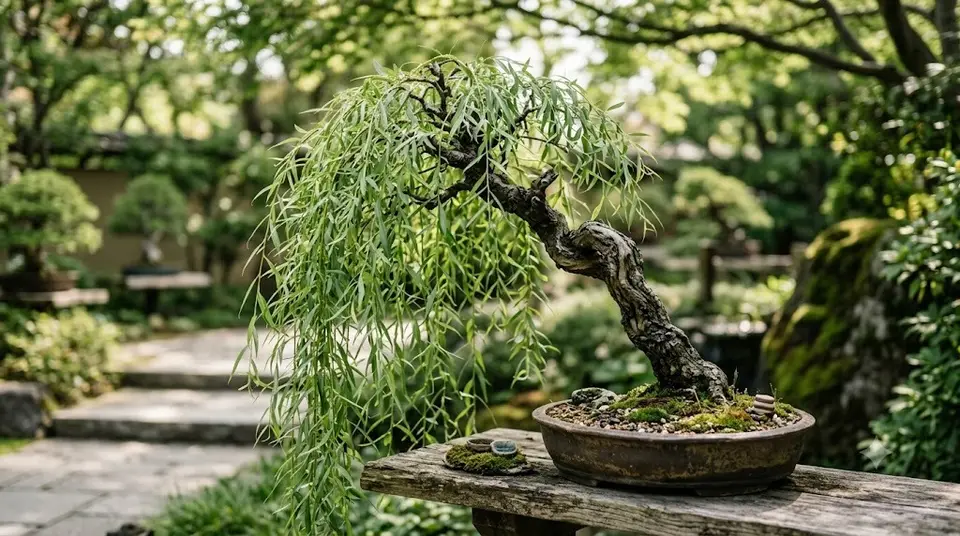
The willow makes a graceful weeping bonsai with long trailing branches - a fast, vigorous, water-loving outdoor tree that, unusually, is happy to stand in water, and roots almost too easily from cuttings.
This species needs to live outdoors with real seasons - including a cold winter rest. Kept indoors it declines and slowly dies. It is one of the commonest beginner mistakes, so give it the outdoor life it needs.
The willow brings unmatched grace to bonsai, its long slender branches trailing in the classic weeping form. It is fast, vigorous and, unusually among trees, loves water - it will happily stand in a tray of it and can hardly be overwatered in summer. It roots almost absurdly easily from cuttings and grows so quickly it needs frequent pruning. An outdoor tree that rewards you with soft, cascading movement.
Overview
A fast, vigorous deciduous tree with long, trailing branches, classic in the weeping style. Unusually water-loving (it tolerates standing in water), and roots extremely easily, but its speed demands frequent pruning.
Light & position
Full sun outdoors for strong, healthy growth. An outdoor tree that needs real seasons.
Watering
The exception among most bonsai: willows love water and can stand in a tray of it, especially in summer, when they are extremely thirsty. It is very hard to overwater a willow in growth. Reduce once dormant, but never let it dry out hard in leaf - drying out is the real danger.
Pruning & shaping
Very vigorous, so prune often and hard through the growing season to keep the weeping form in proportion and build structure - left alone it grows rank and leggy. It buds back and regrows quickly, forgiving heavy pruning.
Wiring
Young shoots wire easily and set fast; the fast growth means wire bites quickly, so check often. The weeping branches can also be trained simply by letting them trail and pruning to shape.
Repotting & soil
Repot every 1-2 years (it fills a pot fast) in spring into a moisture-retentive bonsai soil - it does not need the sharp drainage most trees want, given its love of water. It recovers strongly.
Feeding
Feed generously through the growing season to fuel the fast growth. Ease off in winter.
Winter & seasonal care
Hardy and needs winter dormancy; the bare trailing structure shows in winter. Protect the pot from the hardest freezes. Do not keep it indoors.
Common problems & pests
Willows can suffer aphids, willow beetle, and fungal issues such as anthracnose and rust. Drying out (not overwatering) is the main real danger given its thirst. Its vigour means it quickly gets out of shape without regular pruning.
FAQ
Can I really stand it in water? Yes - willows love wet feet and tolerate a water tray in summer, unlike most bonsai.
Why does it keep getting leggy? Willows grow very fast - prune often and hard to keep the weeping form compact and in proportion.
Bonsai tools and training wire are sharp - keep them away from children. Some bonsai species (and their sap, leaves or seeds) are toxic to pets if chewed; check before keeping one where animals reach. This is general growing guidance; specifics vary by climate and individual tree.
Kit for bonsai work
Links go to Amazon or a partner store (such as Adagio Teas) and may earn us a commission at no extra cost to you. As an Amazon Associate we earn from qualifying purchases. We link gear types, not sponsors' picks: you choose the exact product.