Water Jasmine Bonsai Care
Wrightia religiosa
The water jasmine is a beloved tropical bonsai across Southeast Asia, prized for its cascade of small fragrant white bell flowers over glossy leaves - a warmth-loving tree for a bright spot, with a toxic milky sap to respect.
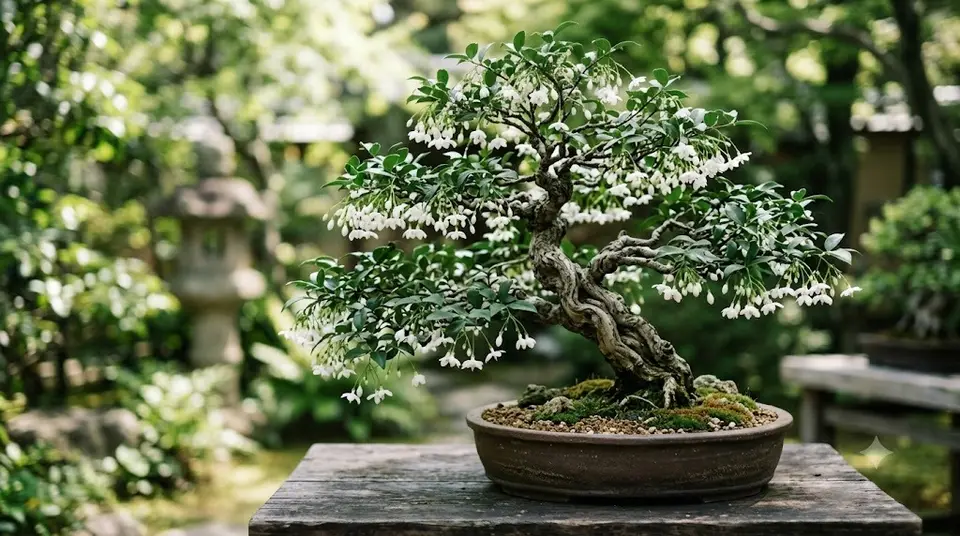
The water jasmine is one of the most cherished flowering bonsai of Southeast Asia, where old, gnarled specimens are treasured. It offers small glossy leaves, a naturally weeping habit, and (the reason everyone grows it) a near-constant cascade of small, intensely fragrant white bell flowers on slender hanging stalks. A warmth- and moisture-loving tropical, it flowers repeatedly indoors given light and steady care. Note that, like its dogbane relatives, its milky sap is toxic.
Overview
A tropical evergreen with small glossy leaves, a weeping habit and repeated flushes of fragrant, hanging white bell flowers. A classic of Southeast Asian bonsai, warmth-loving and rewarding.
Light & position
Bright light with some direct sun (a sunny windowsill or conservatory), and steady warmth. It can summer outdoors in warm, sheltered conditions, which boosts flowering.
Watering
Keep the soil consistently moist (the name is a hint, it likes water) watering when the surface begins to dry. Never let it dry out hard (it drops leaves and flowers), and never leave it waterlogged.
Pruning & shaping
Trim through the growing season to shape and to prompt repeated flowering; it back-buds well and flowers on new growth, so regular light pruning keeps the blooms coming. The weeping stems suit cascade and informal styles.
Wiring
Young shoots wire well; the fast growth means wire bites quickly, so check often. The natural weep does much of the styling.
Repotting & soil
Repot every 1-2 years in spring into free-draining but moisture-retentive bonsai soil, trimming roots. It recovers readily in warmth.
Feeding
Feed regularly through the growing season to fuel the repeated flowering; ease off in winter.
Winter & seasonal care
Frost-tender: winter it indoors above about 12-15°C, bright and humid, away from cold draughts. It takes no cold dormancy; flowering slows in low winter light.
Common problems & pests
Leaf and flower drop from drying out, cold or sudden change is the usual complaint - keep it warm, moist and steady. Spider mite, aphids and scale can appear. Note the milky sap is toxic if eaten, so keep prunings away from pets and children and wash hands after cutting.
FAQ
How do I keep it flowering? Warmth, bright light and regular light trimming - it flowers on new growth, so pruning encourages more blooms.
Is the sap dangerous? Its milky sap is toxic if eaten, like other dogbane-family plants - keep it away from pets and children and wash hands after pruning.
Bonsai tools and training wire are sharp - keep them away from children. Some bonsai species (and their sap, leaves or seeds) are toxic to pets if chewed; check before keeping one where animals reach. This is general growing guidance; specifics vary by climate and individual tree.
Kit for bonsai work
Links go to Amazon or a partner store (such as Adagio Teas) and may earn us a commission at no extra cost to you. As an Amazon Associate we earn from qualifying purchases. We link gear types, not sponsors' picks: you choose the exact product.