Tamarind Bonsai Care
Tamarindus indica
The tamarind is a beloved tropical bonsai with fine, feathery leaflets that fold up at night and a dark, rugged trunk - a warmth-lover that needs bright light and steady moisture indoors.
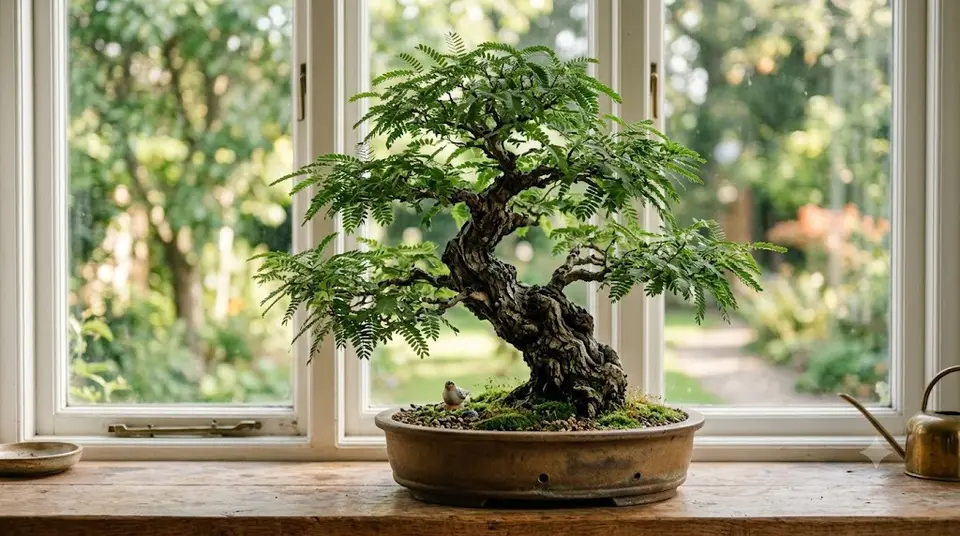
The tamarind is one of the great bonsai of the tropics - in Southeast Asia it is a prized classic. Its fine, feathery pinnate leaves give a soft, cloud-like canopy and fold closed each evening like a living clock, while the trunk grows dark, rugged and characterful with age. It wants what the tropics give: warmth, light and steady moisture: grant those indoors and it is a calm, handsome companion.
Overview
A tropical evergreen legume with fine feathery leaflets (which close at night), a dark rugged trunk and a soft rounded canopy - a classic of tropical bonsai, happiest warm and bright.
Light & position
The brightest, warmest spot you have - hours of sun on a south windowsill or in a conservatory. It can summer outdoors in real warmth. Light is the single biggest factor in its vigour.
Watering
Keep the soil evenly moist through the growing season; water when the surface begins to dry. Slightly drier in winter, but never let the fine roots dry out completely.
Pruning & shaping
Trim extending shoots back through the growing season; it buds back on old wood better than most legumes. The fine foliage rewards regular light trimming with a dense, cloudlike canopy.
Wiring
Young shoots are flexible and wire well; older branches turn brittle, so set movement early and watch for marks.
Repotting & soil
Repot every 2-3 years in late spring into free-draining bonsai soil, working the roots conservatively - tamarinds resent heavy root loss.
Feeding
Feed at modest strength through the warm growing season; stop in the cool, dim months.
Winter & seasonal care
Strictly frost-free: winter it indoors above about 12-15°C in the best light you have. Some leaflet drop in low winter light is normal; growth resumes with spring warmth.
Common problems & pests
Weak, sparse growth from too little light or warmth is the main complaint. Spider mite in dry indoor air; scale occasionally. Overwatering in a cool winter rots roots.
FAQ
Why do the leaves close in the evening? Tamarind leaflets fold at night (nyctinasty) - a normal, charming habit, not distress.
Can it live outdoors? Only in truly warm months - it is tropical and must never see frost.
Bonsai tools and training wire are sharp - keep them away from children. Some bonsai species (and their sap, leaves or seeds) are toxic to pets if chewed; check before keeping one where animals reach. This is general growing guidance; specifics vary by climate and individual tree.
Kit for bonsai work
Links go to Amazon or a partner store (such as Adagio Teas) and may earn us a commission at no extra cost to you. As an Amazon Associate we earn from qualifying purchases. We link gear types, not sponsors' picks: you choose the exact product.