Sweet Plum Bonsai Care
Sageretia theezans
The sweet plum (Sageretia) is a popular indoor bonsai with tiny glossy leaves, coppery new growth and beautiful flaking patchwork bark - rewarding, but it dislikes drying out and cold draughts.
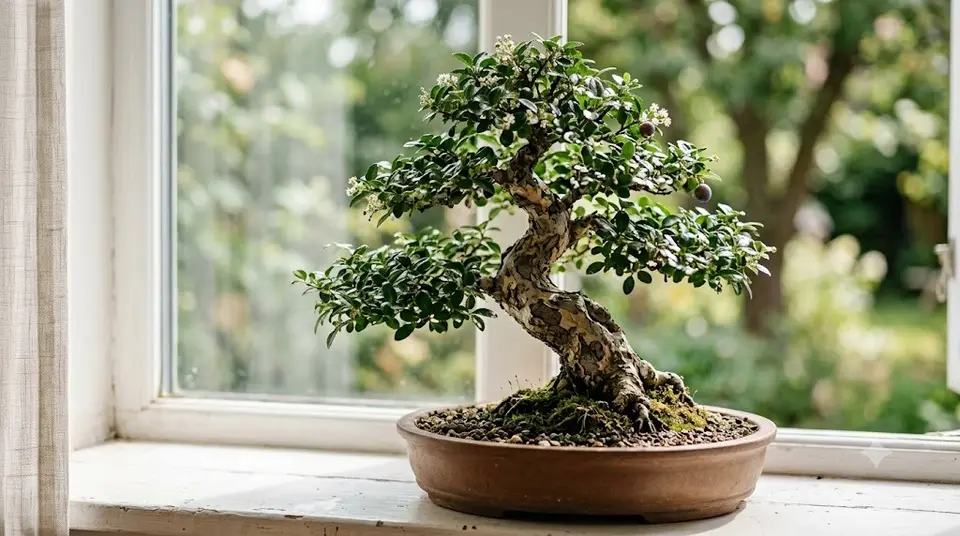
The sweet plum is one of the classic indoor bonsai of Chinese tradition: naturally tiny glossy leaves, coppery-red new shoots, and a trunk whose old bark flakes away in patches to leave a beautiful mottled patchwork of buff, grey and rust. It ramifies quickly under regular trimming. Its two dislikes are drying out completely and cold draughts - keep it evenly moist and steadily warm and it is a rewarding, refined tree.
Overview
A subtropical evergreen with tiny leaves, coppery new growth and flaking patchwork bark, quick to ramify - a refined classic of indoor bonsai that wants steady moisture and warmth.
Light & position
Bright light (a sunny windowsill with some protection from the fiercest midday glare), and steady conditions away from cold draughts and radiators. It can summer outdoors in warm, sheltered shade.
Watering
Keep the soil evenly moist at all times - the sweet plum dislikes drying out and drops leaves quickly if it does. Water as soon as the surface begins to dry; never let the root ball dry through, and never leave it waterlogged.
Pruning & shaping
Trim new shoots back to one or two leaves through the growing season - it back-buds readily and builds fine twigging fast. The coppery flush of new growth after each trim is part of its charm.
Wiring
Young shoots wire easily; older branches grow brittle, so shape early. Watch the thin bark - wire marks show, so remove wire promptly.
Repotting & soil
Repot every 2 years in spring into free-draining but moisture-retentive bonsai soil, trimming roots moderately. It recovers well kept warm and humid afterwards.
Feeding
Feed regularly at modest strength through the growing season; ease off in winter when growth slows.
Winter & seasonal care
A warmth-lover: keep it indoors above about 12°C in winter, bright and away from draughts. It is not frost-hardy and takes no cold dormancy.
Common problems & pests
Leaf drop from drying out, cold draughts or sudden change is the classic complaint - steadiness fixes it. Whitefly, aphids and mildew can appear; airflow helps. Never let it dry to a crisp. That is the one mistake it rarely forgives.
FAQ
Why is it dropping leaves? Almost always drying out, a cold draught or a sudden move - keep moisture and position steady.
Is the flaking bark a disease? No - patchwork flaking is the sweet plum's signature beauty, like a miniature plane tree.
Bonsai tools and training wire are sharp - keep them away from children. Some bonsai species (and their sap, leaves or seeds) are toxic to pets if chewed; check before keeping one where animals reach. This is general growing guidance; specifics vary by climate and individual tree.
Kit for bonsai work
Links go to Amazon or a partner store (such as Adagio Teas) and may earn us a commission at no extra cost to you. As an Amazon Associate we earn from qualifying purchases. We link gear types, not sponsors' picks: you choose the exact product.