Natal Plum Bonsai Care
Carissa macrocarpa
The natal plum is a glossy, subtropical bonsai with fragrant white star flowers, edible red fruit and forked thorns - happy in a bright indoor spot or outdoors where frost-free, though its unripe fruit and sap are best not eaten.
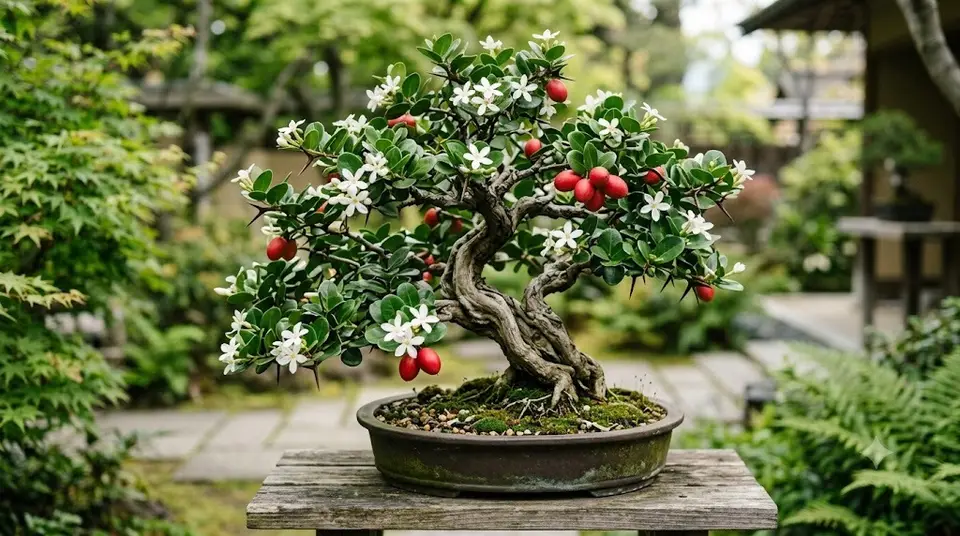
The natal plum makes a lush, glossy little bonsai that flowers and fruits with real generosity: waxy white star-shaped blooms scented of jasmine, followed by edible crimson berries, over dark evergreen leaves and stout forked thorns. Subtropical and salt-tolerant, it thrives in a bright indoor spot or outdoors where frost never comes. Handsome and rewarding - just mind the thorns and the milky sap.
Overview
A subtropical evergreen with glossy dark leaves, fragrant white flowers, edible red fruit and forked thorns. Lush and rewarding, happy indoors bright or outdoors frost-free.
Light & position
Bright light - a sunny windowsill indoors, or outdoors in warm, frost-free weather. Good light drives the flowering and fruiting; it tolerates a little shade but blooms less.
Watering
Keep the soil evenly moist but not soggy - water when the surface begins to dry. It likes steadier moisture than a desert plant, though it is fairly drought-tolerant once established. Reduce a little in winter.
Pruning & shaping
Trim through the growing season to build a dense, glossy canopy; it back-buds well. Prune with the flowers in mind, and mind the sharp forked thorns as you work.
Wiring
Young shoots wire well; older wood stiffens, so shape early. Watch for wire marks and the thorns.
Repotting & soil
Repot every 2 years in spring into free-draining bonsai soil, trimming roots. It recovers well kept warm.
Feeding
Feed regularly through the growing season with a balanced feed to support flowers and fruit; ease off in winter.
Winter & seasonal care
Frost-tender: indoors keep it above about 10°C, bright and away from cold draughts; outdoors year-round only where frost-free.
Common problems & pests
Scale, mealybugs and spider mite can appear indoors. Root rot from soggy soil is the main danger. Note the leaves, unripe fruit and milky sap are toxic if eaten (only the ripe fruit is edible), so keep prunings and unripe berries away from pets and children.
FAQ
Is the fruit edible? The ripe red fruit is edible and pleasant; the unripe fruit, leaves and milky sap are not - keep them away from pets and children.
Indoor or outdoor? Both, while frost-free - a bright indoor spot, or outside in warm weather.
Bonsai tools and training wire are sharp - keep them away from children. Some bonsai species (and their sap, leaves or seeds) are toxic to pets if chewed; check before keeping one where animals reach. This is general growing guidance; specifics vary by climate and individual tree.
Kit for bonsai work
Links go to Amazon or a partner store (such as Adagio Teas) and may earn us a commission at no extra cost to you. As an Amazon Associate we earn from qualifying purchases. We link gear types, not sponsors' picks: you choose the exact product.