Jaboticaba Bonsai Care
Plinia cauliflora
The jaboticaba is a striking Brazilian bonsai with smooth, mottled, peeling bark and the party trick of flowering and fruiting directly on its trunk - a warmth- and moisture-loving tree for a bright spot.
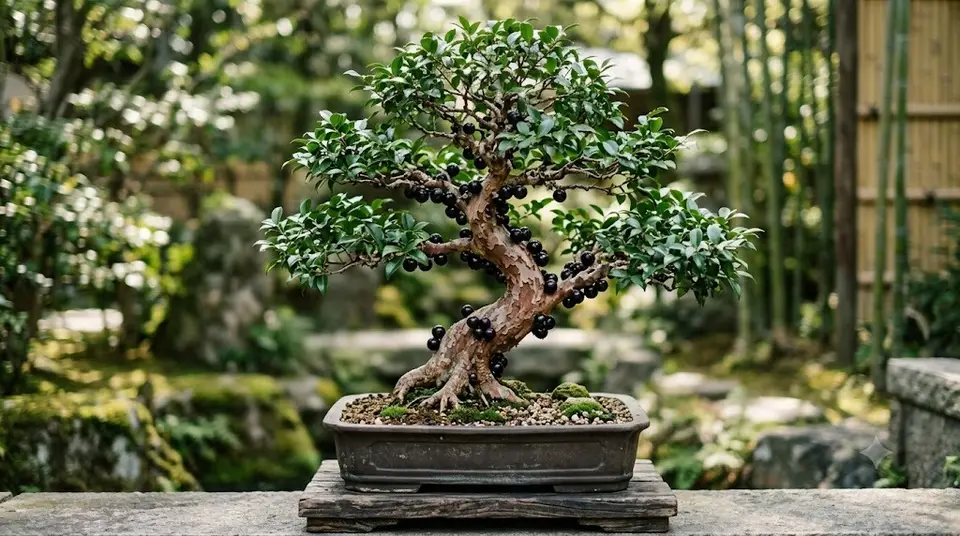
The jaboticaba, Brazil's 'tree grape', is one of the most striking bonsai you can grow: smooth, mottled bark that peels in patches like a guava's, fine glossy foliage with coppery new flushes - and, on mature trees, white fluffy flowers and dark grape-like fruit sprouting directly from the trunk itself. It loves warmth, moisture and light, hates lime and drying out, and rewards steady care with a tree unlike anything else on the shelf.
Overview
A Brazilian evergreen with smooth peeling mottled bark and cauliflorous flowers and fruit - borne straight on the trunk. Beautiful bark from youth; fruit comes only with age, warmth and steady care.
Light & position
Bright light with some direct sun (a sunny windowsill or warm conservatory), and it loves a warm, sheltered summer outdoors. Steady warmth is key.
Watering
Keep the soil consistently moist - jaboticaba is a thirsty, moisture-loving tree that resents drying out. Use soft water or rainwater where possible; it dislikes lime. Never waterlogged, but never dry.
Pruning & shaping
Trim through the growing season to shape; it back-buds reasonably and naturally forms elegant multi-trunk clumps. Avoid heavy pruning of the trunk surface where the flowers and fruit emerge.
Wiring
Young shoots wire well; the smooth bark marks easily, so protect it and remove wire early. Much of its beauty is the natural trunk line - style with a light hand.
Repotting & soil
Repot every 2 years in spring into slightly acidic, moisture-retentive but draining soil. It resents heavy root reduction - work modestly.
Feeding
Feed regularly at modest strength through the growing season with an acidic-leaning fertiliser; ease off in winter.
Winter & seasonal care
Frost-tender: winter it indoors above about 10°C, bright. It takes no freeze; a cool (not cold) rest is fine.
Common problems & pests
Chlorosis (yellowing leaves) from hard water or alkaline soil - switch to rainwater and acidic feed. Leaf scorch from drying out. Scale and mites occasionally. Patience is the other requirement: trunk fruit takes years.
FAQ
Will it really fruit on the trunk? Mature, well-kept trees flower and fruit directly on the bark (the jaboticaba's signature), but it takes years and steady warmth.
Why are the leaves yellowing? Usually lime in the water or soil - use rainwater and an acidic feed.
Bonsai tools and training wire are sharp - keep them away from children. Some bonsai species (and their sap, leaves or seeds) are toxic to pets if chewed; check before keeping one where animals reach. This is general growing guidance; specifics vary by climate and individual tree.
Kit for bonsai work
Links go to Amazon or a partner store (such as Adagio Teas) and may earn us a commission at no extra cost to you. As an Amazon Associate we earn from qualifying purchases. We link gear types, not sponsors' picks: you choose the exact product.