Holly Bonsai Care
Ilex aquifolium
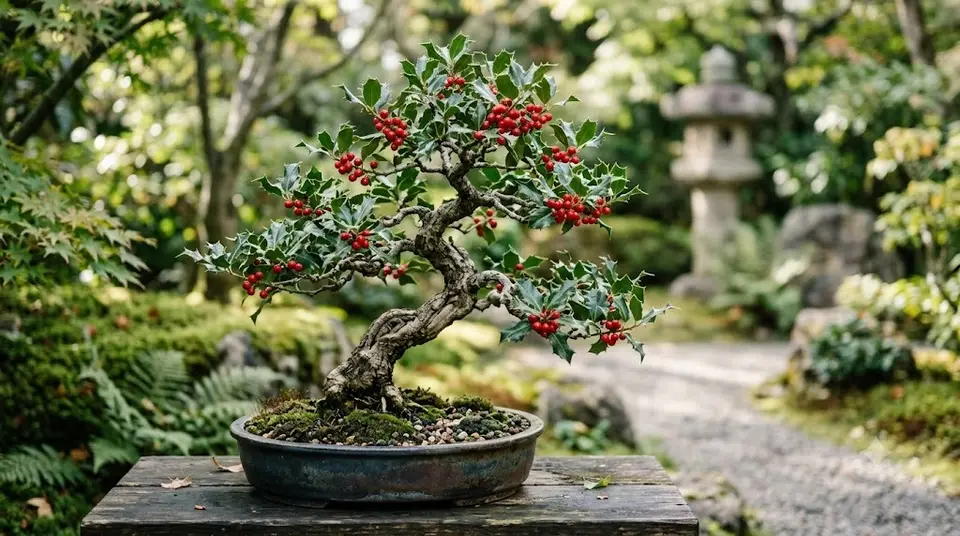
The holly makes a handsome, hardy evergreen bonsai with glossy, spine-edged dark leaves and - on female plants with a pollinator nearby - bright red winter berries. Tough and long-lived, with famously toxic berries to keep from pets and children.
This species needs to live outdoors with real seasons - including a cold winter rest. Kept indoors it declines and slowly dies. It is one of the commonest beginner mistakes, so give it the outdoor life it needs.
The holly brings its evergreen gloss and festive red berries to bonsai: dark, leathery, spine-edged leaves year-round, smooth grey bark, and, on female plants pollinated by a nearby male, bright scarlet berries that light up the winter. Hardy, slow and long-lived, it buds back well and takes clipping into dense forms. Handsome and characterful - just remember the berries are genuinely toxic, so keep them well away from pets and children.
Overview
A hardy evergreen with glossy, spine-edged dark leaves, grey bark and (on pollinated female plants) bright red winter berries. Tough, slow and long-lived - a handsome, festive bonsai.
Light & position
Full sun to part shade outdoors; hollies are adaptable and tolerate more shade than many species, though good light keeps them dense and berrying. An outdoor tree needing real seasons.
Watering
Keep the soil moist but not waterlogged - water thoroughly when the surface begins to dry. Reasonably drought-tolerant once established, but steadier moisture supports berrying.
Pruning & shaping
Clip and trim through the growing season to build dense pads - it back-buds well and takes shaping readily. Prune with berries in mind if you have a fruiting female. Use gloves against the spined leaves.
Wiring
Younger branches wire; older wood is stiff. Much of a holly's shape is built by repeated clipping. Watch for wire marks on the smooth bark.
Repotting & soil
Repot every 2-3 years in spring into free-draining bonsai soil, trimming roots. It recovers steadily.
Feeding
Feed through the growing season with a balanced feed to keep the foliage glossy; a little potash supports berrying.
Winter & seasonal care
Hardy and evergreen; the red berries are a winter feature. Shelter the pot from the hardest frost. Do not keep it indoors.
Common problems & pests
Holly leaf miner blisters the leaves; scale and, occasionally, leaf spot can appear. Root rot from soggy soil is a danger. No berries usually means a male-only plant, no pollinator nearby, or too little light. Note the berries are toxic to people and pets if eaten - keep them out of reach and clean up fallen ones.
FAQ
Why doesn't mine have berries? Only female hollies berry, and only with a male holly nearby to pollinate - plus enough light; a berry-less plant is often male or unpollinated.
Are the berries poisonous? Yes - holly berries are toxic to people and pets if eaten; keep them out of reach and sweep up any that drop.
Bonsai tools and training wire are sharp - keep them away from children. Some bonsai species (and their sap, leaves or seeds) are toxic to pets if chewed; check before keeping one where animals reach. This is general growing guidance; specifics vary by climate and individual tree.
Kit for bonsai work
Links go to Amazon or a partner store (such as Adagio Teas) and may earn us a commission at no extra cost to you. As an Amazon Associate we earn from qualifying purchases. We link gear types, not sponsors' picks: you choose the exact product.