English Oak Bonsai Care
Quercus robur
The English oak makes a powerful, characterful outdoor bonsai with lobed leaves and rugged, fissured bark - hardy and long-lived, with mildew as its main enemy and patience as its main requirement.
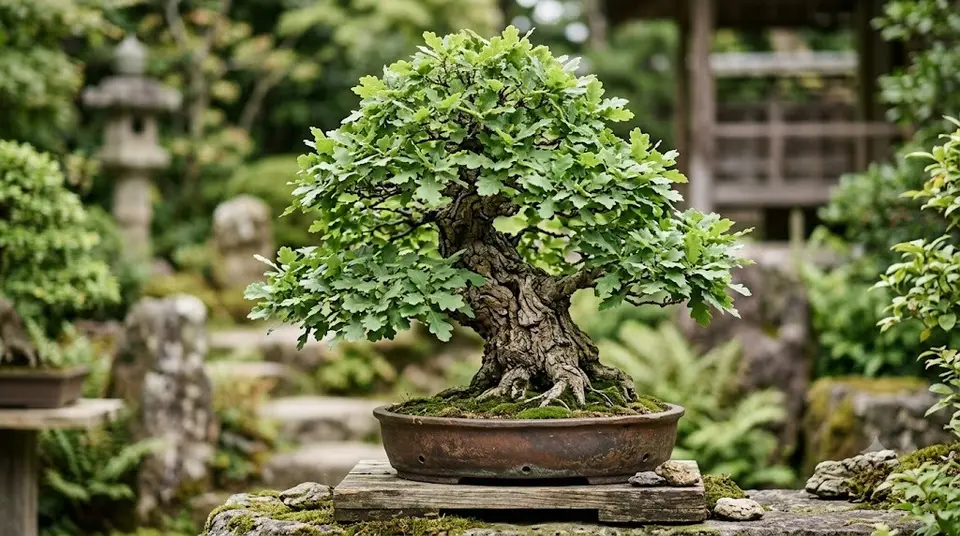
This species needs to live outdoors with real seasons - including a cold winter rest. Kept indoors it declines and slowly dies. It is one of the commonest beginner mistakes, so give it the outdoor life it needs.
There is something irresistible about a mighty oak you can lift with one hand. The English oak builds exactly what you hope for: a thick, fissured trunk, muscular branch structure and the unmistakable lobed leaves - in miniature. It is hardy, long-lived and cooperative, ramifying more slowly than an elm but rewarding patience with real presence. Watch for powdery mildew, give it sun and airflow, and it will likely outlive its owner.
Overview
A hardy, long-lived deciduous tree with lobed leaves, rugged fissured bark and powerful structure. Slower to refine than elms, but unmatched for gravitas; mildew-prone in stale air.
Light & position
Full sun and, importantly, good airflow outdoors - both keep growth compact and hold powdery mildew at bay.
Watering
Water thoroughly when the surface begins to dry; oaks dislike constant sogginess and their deep-rooted nature makes them fairly drought-tolerant in a pot once established. Reduce in winter.
Pruning & shaping
Prune structurally in late winter; trim the strong spring flush back to a few leaves to build ramification. Oaks shoot strongly from old wood, so hard restyles are possible. Build the rugged character gradually - oaks look wrong when over-refined.
Wiring
Young shoots wire well; older branches are stiff and better set by pruning. The bark fissures beautifully with age - avoid wire scars that spoil it.
Repotting & soil
Repot every 2-3 years in early spring into free-draining bonsai soil. Young oaks throw a strong taproot - reduce it progressively over repottings.
Feeding
Feed through the growing season with a balanced feed; ease off late summer to harden growth for winter.
Winter & seasonal care
Fully hardy and needs winter dormancy; brown leaves often cling into winter (marcescence), which is normal. Shelter the pot from the hardest prolonged freezes.
Common problems & pests
Powdery mildew is the classic oak problem - sun, airflow and avoiding evening leaf-wetting prevent most of it. Gall wasps cause harmless curiosities. Note acorns and oak leaves are toxic to dogs and livestock if eaten in quantity: keep prunings and acorns away from pets.
FAQ
Why are the leaves white and dusty? Powdery mildew - improve sun and airflow, remove affected leaves, and it usually stays minor.
Can I grow one from an acorn? Yes - oaks are a classic grow-your-own bonsai project; expect a satisfying trunk within a decade, not overnight.
Bonsai tools and training wire are sharp - keep them away from children. Some bonsai species (and their sap, leaves or seeds) are toxic to pets if chewed; check before keeping one where animals reach. This is general growing guidance; specifics vary by climate and individual tree.
Kit for bonsai work
Links go to Amazon or a partner store (such as Adagio Teas) and may earn us a commission at no extra cost to you. As an Amazon Associate we earn from qualifying purchases. We link gear types, not sponsors' picks: you choose the exact product.