Dwarf Schefflera Bonsai Care
Schefflera arboricola
The dwarf schefflera (Hawaiian umbrella) is one of the easiest indoor bonsai - tough, fast, tolerant of low light, and famous for the thick aerial roots that let you grow it in the dramatic banyan style.
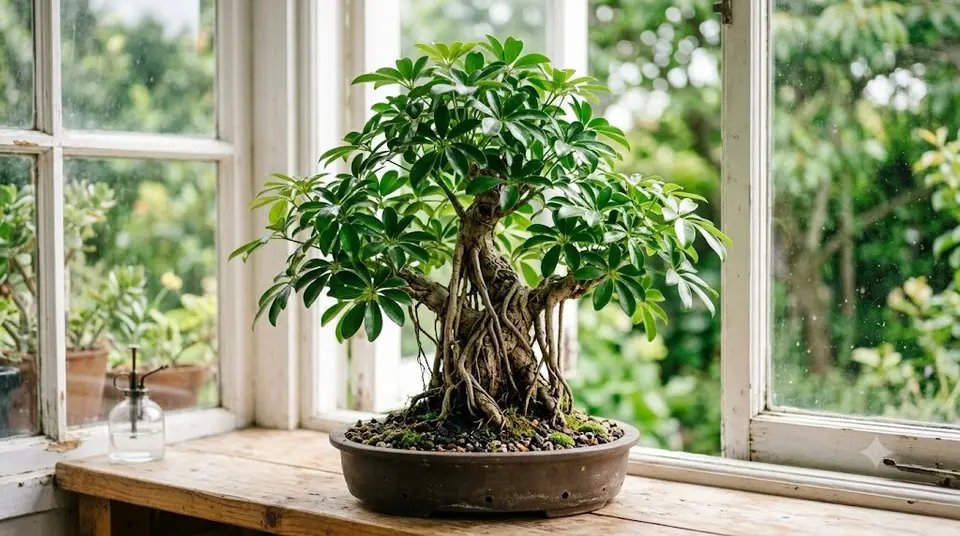
The dwarf schefflera, or Hawaiian umbrella tree, is the go-to easy indoor bonsai for good reason: it is tough, fast, shrugs off low light and irregular watering, and (best of all) readily grows thick aerial roots that drop and fuse into the trunk, letting you build the dramatic banyan style seen in tropical bonsai. It rarely needs wiring, shapes by pruning, and forgives almost everything a beginner throws at it.
Overview
A tough, fast tropical bonsai with glossy umbrella-like leaflets and a talent for aerial roots, ideal for the banyan and root-over-rock styles. Extremely tolerant and forgiving - one of the best indoor beginner trees.
Light & position
Bright indoor light is best (a sunny windowsill), but it famously tolerates lower light better than almost any bonsai. More light gives smaller leaves and tighter growth; deep shade makes it leggy.
Watering
Keep the soil lightly moist - water when the surface starts to dry. It is fairly forgiving of both a missed watering and a bit of excess, though constant sogginess still rots the roots. Higher humidity encourages the aerial roots.
Pruning & shaping
Shape almost entirely by pruning - it back-buds readily and grows fast, so trim regularly to build a compact canopy. It reduces leaf size well with pruning and good light. To build a banyan, encourage aerial roots (high humidity, misting) and guide them down into the soil.
Wiring
Rarely needed - the branches are somewhat brittle and the tree shapes readily by pruning ('clip and grow'). If you wire, use young shoots and watch for marks on the soft bark.
Repotting & soil
Repot every 1-2 years in spring into free-draining bonsai soil, trimming the roots. It tolerates root work very well.
Feeding
Feed regularly through the growing season with a balanced feed for its fast growth; ease off a little in winter when light is lower.
Winter & seasonal care
A tropical tree - keep it indoors above about 15°C in winter, bright and away from cold draughts. It does not take a cold dormancy and must not go outside in the cold.
Common problems & pests
Leaf drop from a sudden change, draught or dark spell is common but recovers. Large leaves mean too little light or too little pruning. Scale, mealybugs and spider mite can appear indoors. Note that schefflera contains calcium-oxalate compounds and is toxic to pets if chewed, so keep it out of their reach.
FAQ
Is it really that easy indoors? Yes - it's one of the most forgiving indoor bonsai, tolerating low light and irregular care.
How do I get the banyan aerial roots? Encourage them with warmth and high humidity (misting, a humid tent), then guide the roots down into the soil to thicken the trunk.
Bonsai tools and training wire are sharp - keep them away from children. Some bonsai species (and their sap, leaves or seeds) are toxic to pets if chewed; check before keeping one where animals reach. This is general growing guidance; specifics vary by climate and individual tree.
Kit for bonsai work
Links go to Amazon or a partner store (such as Adagio Teas) and may earn us a commission at no extra cost to you. As an Amazon Associate we earn from qualifying purchases. We link gear types, not sponsors' picks: you choose the exact product.